Experimental Marriage: Women in Early Hollywood

In the early days of the American film industry, it was common for women to hold a variety of jobs, including those of producer, director, editor, and writer. The unregulated, nonunionized status of this burgeoning field during the 1910s and ’20s meant that there were fewer barriers to entry; this allowed women the opportunity to excel both on and off camera, particularly on the coasts in California, New York, and New Jersey where new cinema hubs were being developed. This halcyon period of relative freedom, was short lived, however. As Hollywood grew and investors saw cinema as a means of reaping large profits, studios began to focus on producing fewer movies with bigger budgets and more popular content. Industry positions that had once been more permeable, often covering multiple jobs, were now defined by unions and stricter corporate oversight, always with an eye on the bottom line. By the 1930s, many of the earliest female directors, producers, and writers were being forced out, with no younger generation poised to replace them. This shift in the structure of film production from a collaborative, experimental endeavor toward one that operated as a vertically integrated business effectively eliminated women, creating an “old boys’ network” that persists today. 

This exhibition focuses on lobby cards advertising Hollywood and East Coast movies made largely by women for women. Typically issued in series of eight, lobby cards functioned as static trailers, showcasing key scenes within a film in order to highlight the plot and lead characters. As their name suggests, they were often displayed in the lobbies of theaters, enticing viewers to come back and see the next film. The particular movies advertised here cover three main topics: women with agency, women who work, and marriage or divorce (or both). Each story was either written, directed, produced, art-directed, edited, or had costumes designed by a woman, and would have been promoted to a predominantly female audience. As roughly 75 percent of early American silent features have since been lost, the topic of women’s participation and how it was credited or preserved remains a ripe area for scholarship. 

This exhibition comes to Poster House through a generous loan from Dwight M. Cleveland.
Women with Agency

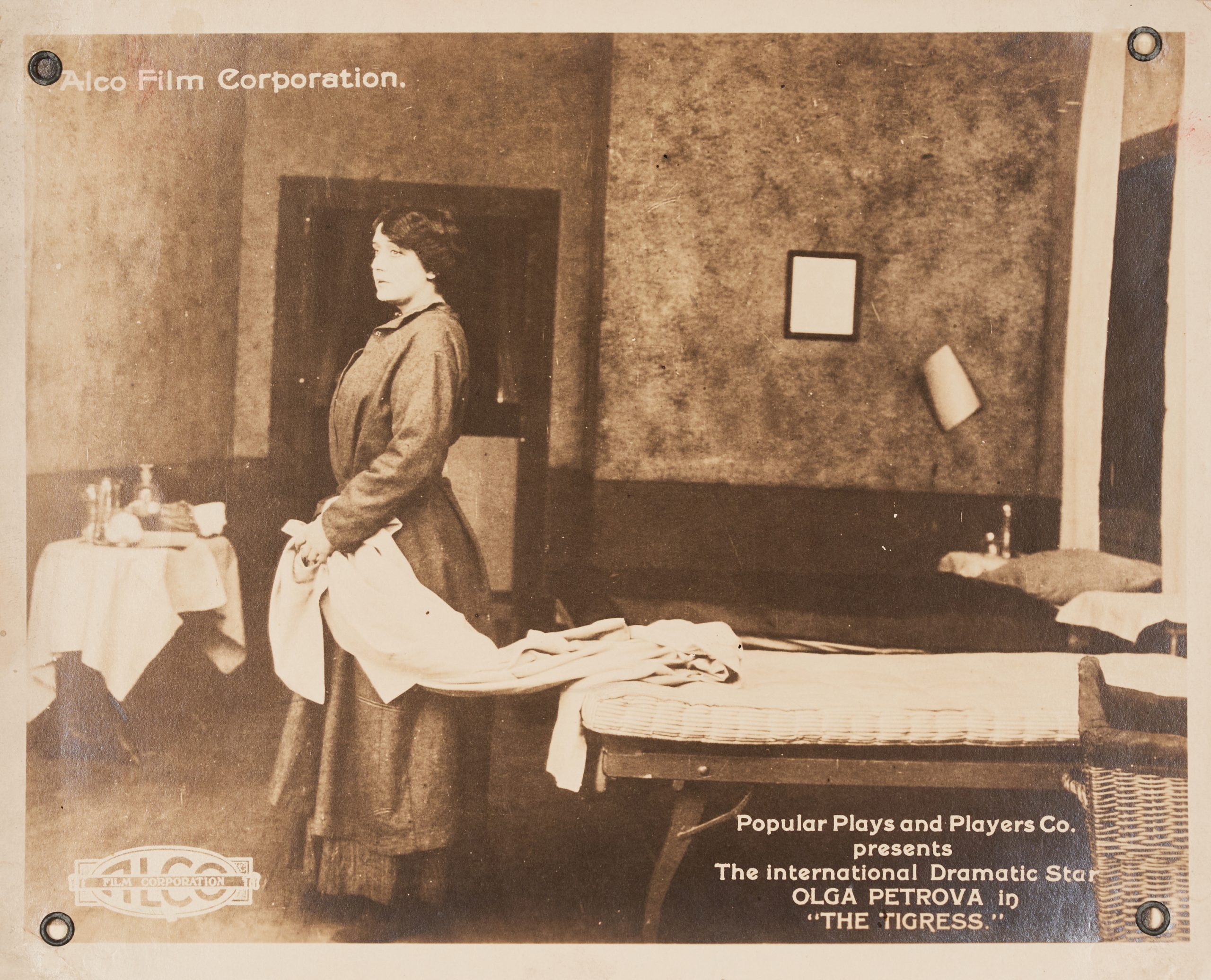
A publicity photograph of a scene with a woman holding bed linens and looking off into the distance.

The Tigress, 1914

Lost Film
Director: Alice Guy Blaché (1873–1968)
Star: Olga Petrova (1884–1977)

  • After seeing the Lumière brothers’ Workers Leaving the Lumière Factory in 1895, Alice Guy Blaché—a secretary at the Gaumont film company in France—was inspired to make motion pictures, becoming the first female filmmaker. In 1910, she moved to the United States, founding Solax Studios, an independent film production company, in Queens, New York.
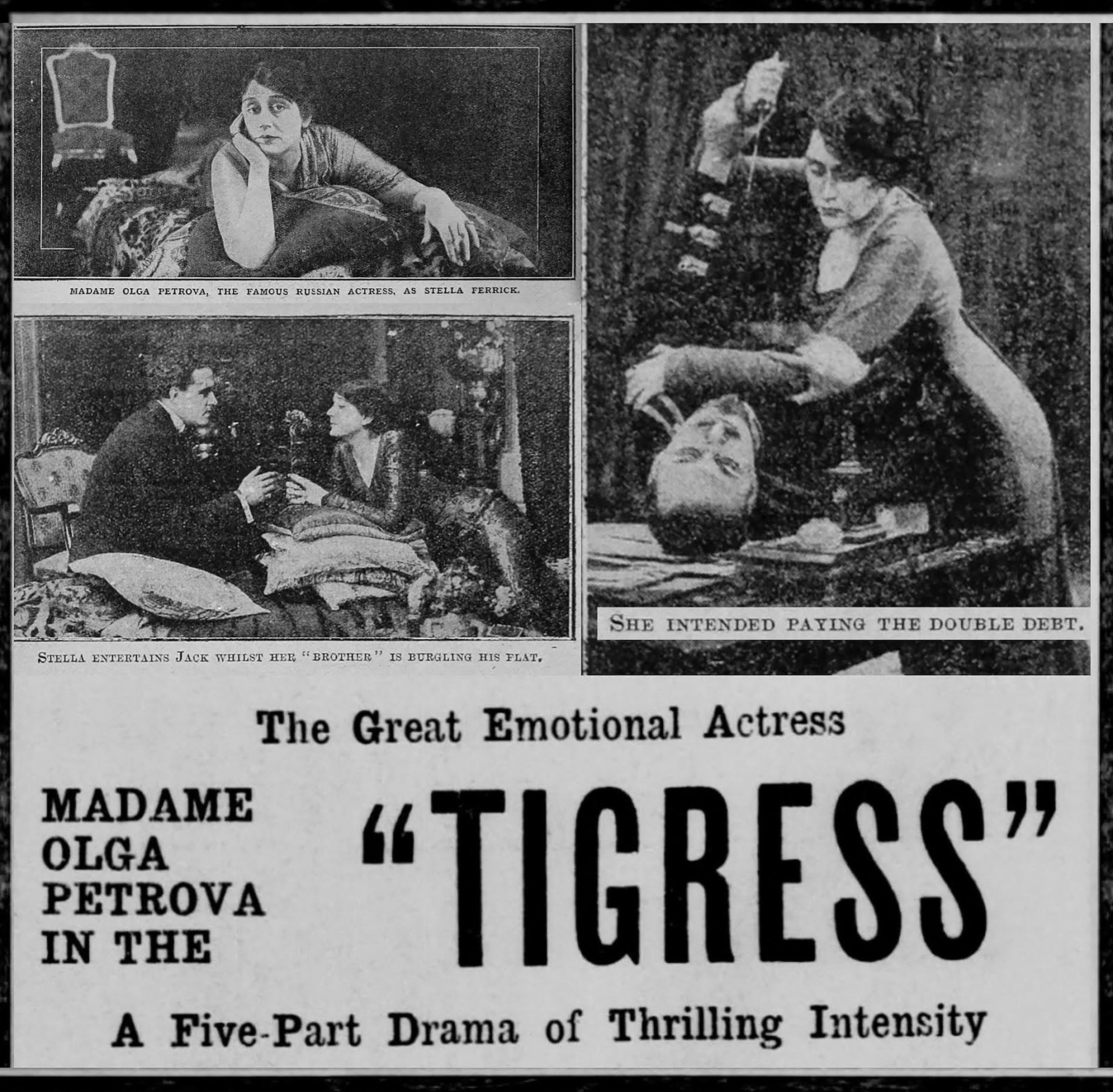
  • Set during World War I, The Tigress—a word synonymous with “vamp” or “diva”—focuses on a loving wife and mother whose reputation is destroyed by a lecherous despot. In revenge, she becomes “the tigress,” the head of a gang of international spies. Stories like this, in which a woman “turns bad” and asserts her power, were only considered acceptable if her traditional homelife had been shattered by tragedy. 
  • Unlike the other images in this exhibition, this is not a lobby card but a publicity photograph of a scene from the film. Such stills served multiple functions; they were often reproduced in articles or reviews in newspapers and magazines, hung in the lobbies of movie theaters that could not afford to rent official movie posters or lobby cards, and used for general publicity purposes. The grommets in the corners indicate that this photograph was probably used like a traditional lobby card and hung indoors as advertising.

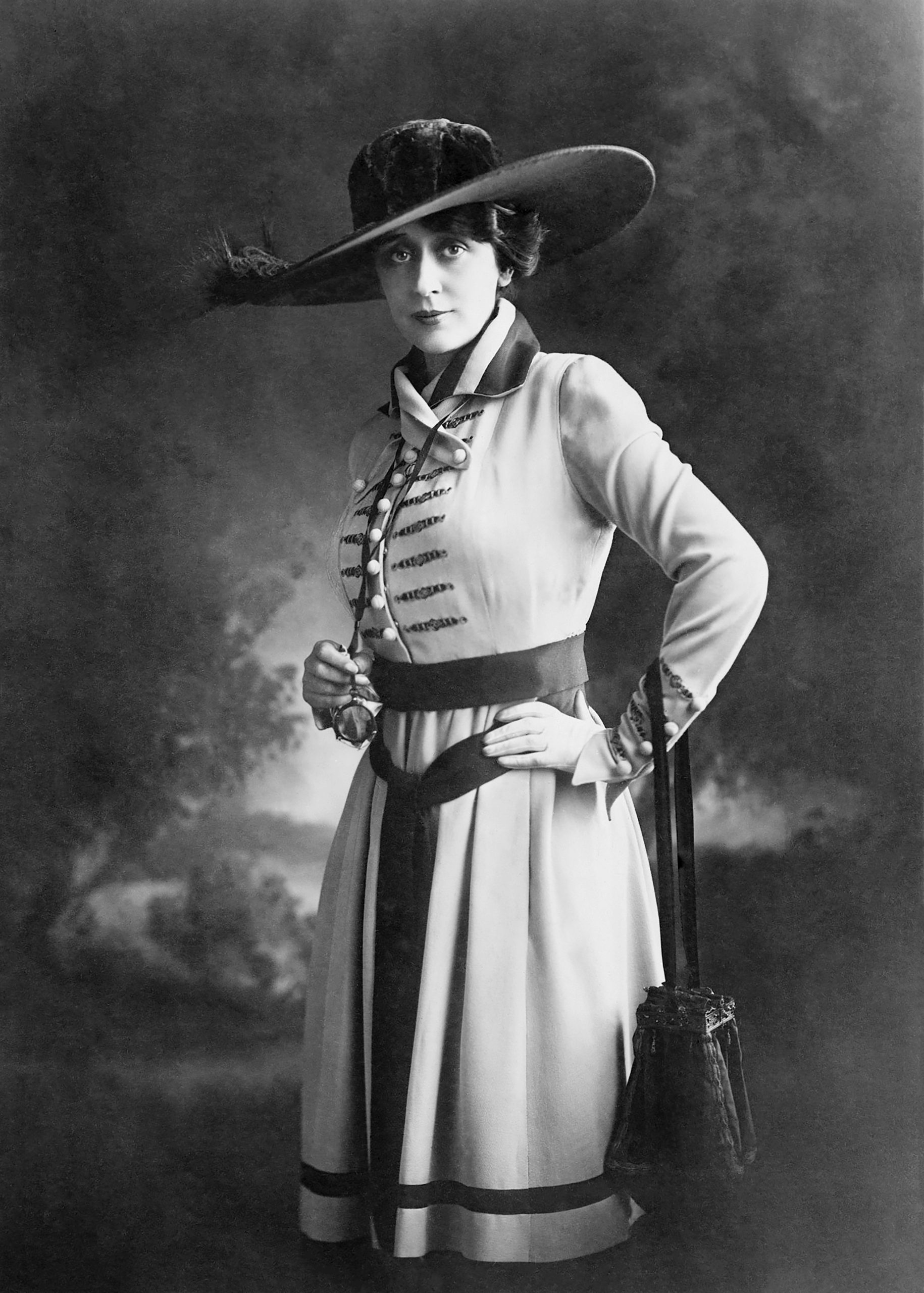
A black-and-white photograph of a female movie star.

Advertisement with three film stills featuring its main characters. One shows a woman trying to cut off the head of a man with a knife.

Left: Olga Petrova, c. 1917

Right: The Tigress, newspaper ad, c. 1914

**This image is for reference only and does not appear in the exhibition

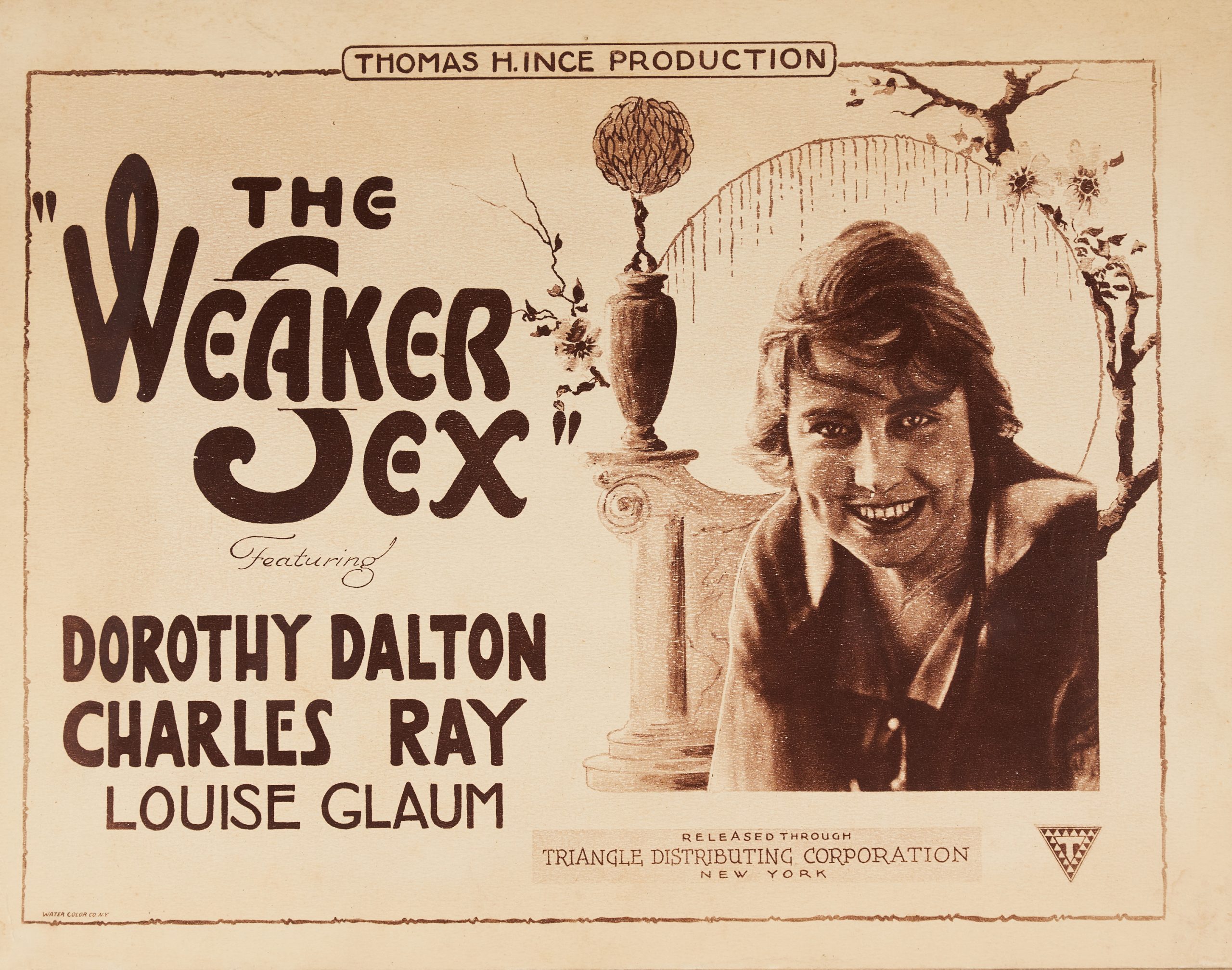
A sepia-toned lobby card featuring a smiling woman gazing at the viewer in front of a floral motif.

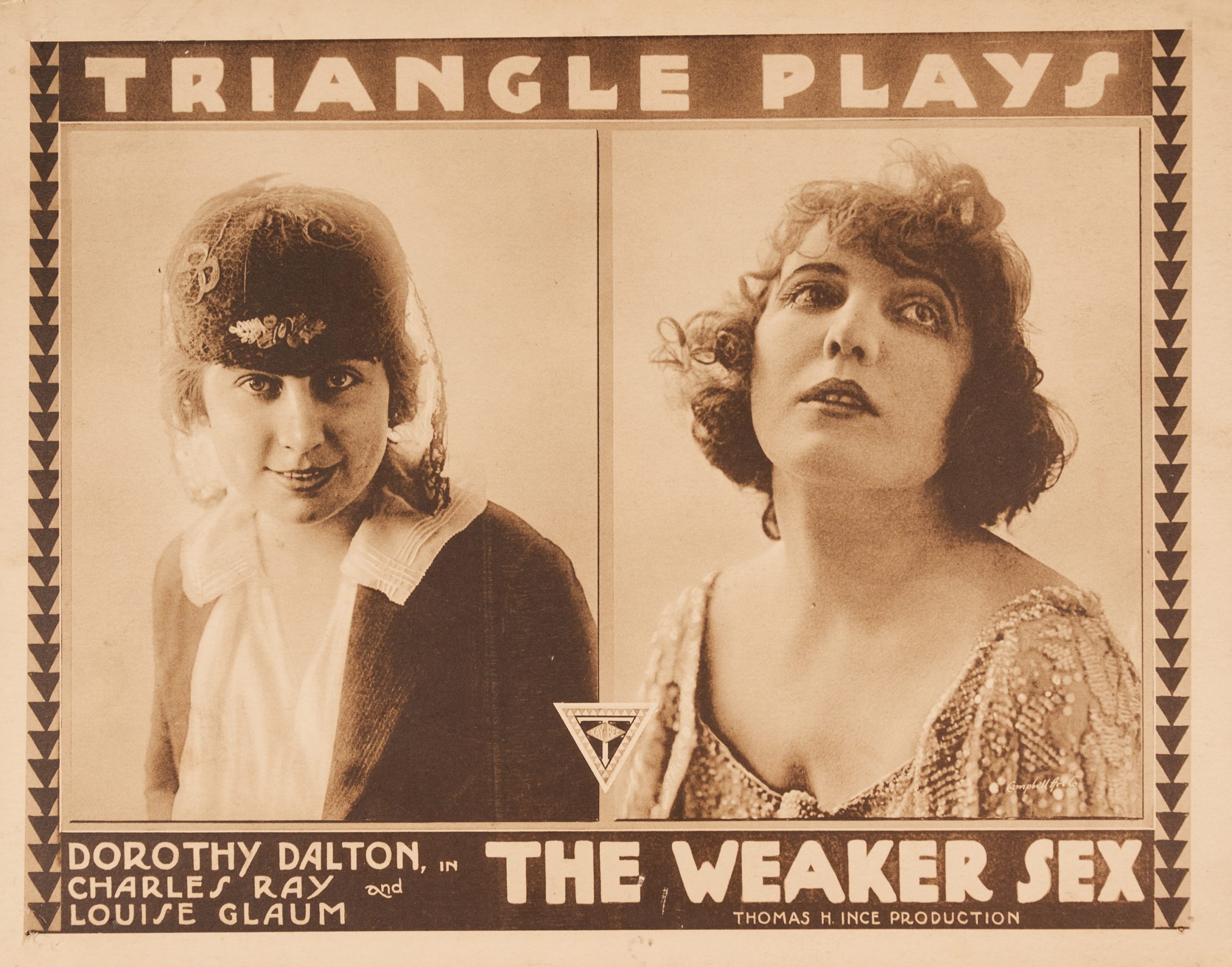
A sepia-toned lobby card with a modestly dressed woman on the left and a

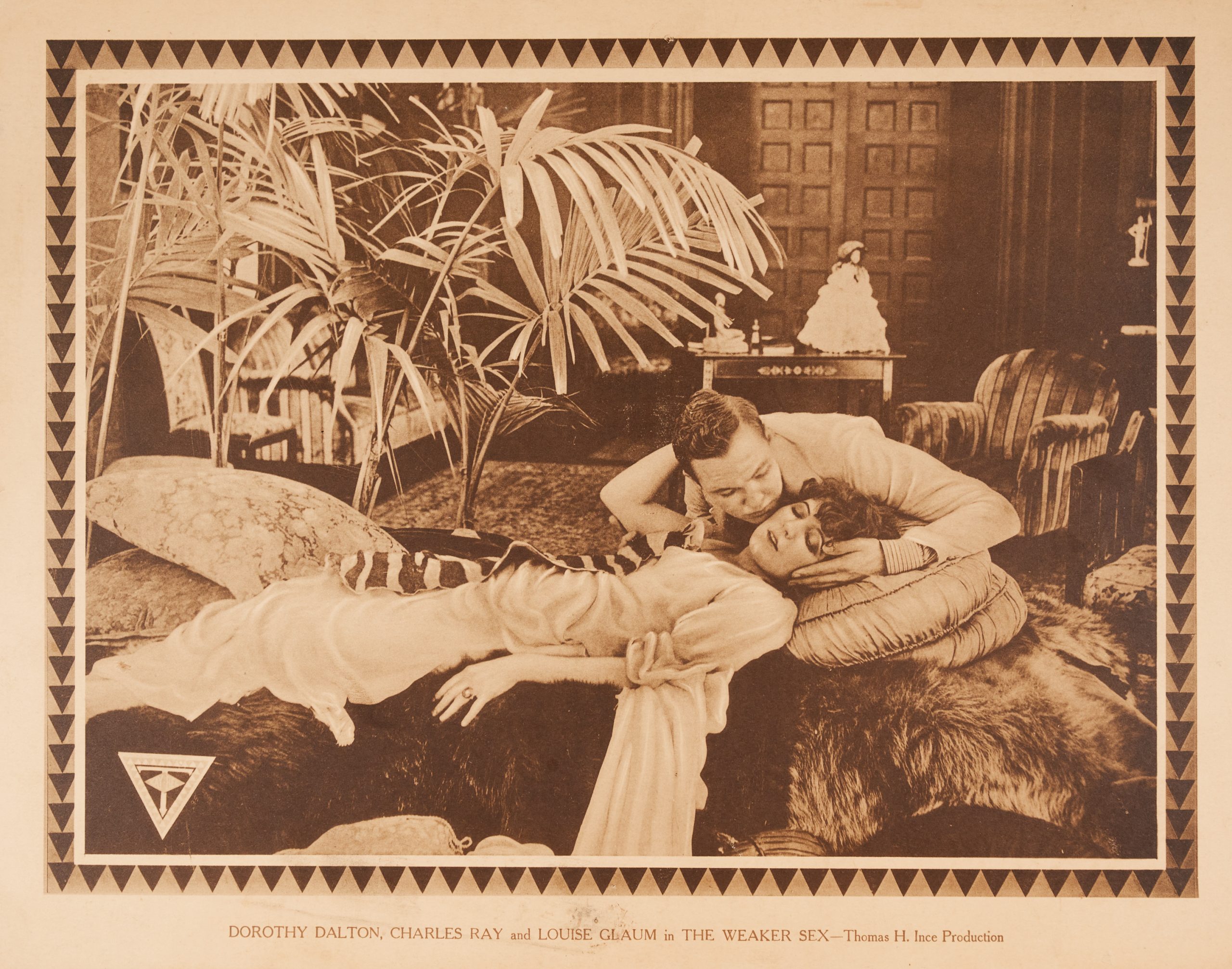
A sepia-toned lobby card with a woman lying on pillows and fur pelts while a man tries to kiss her.

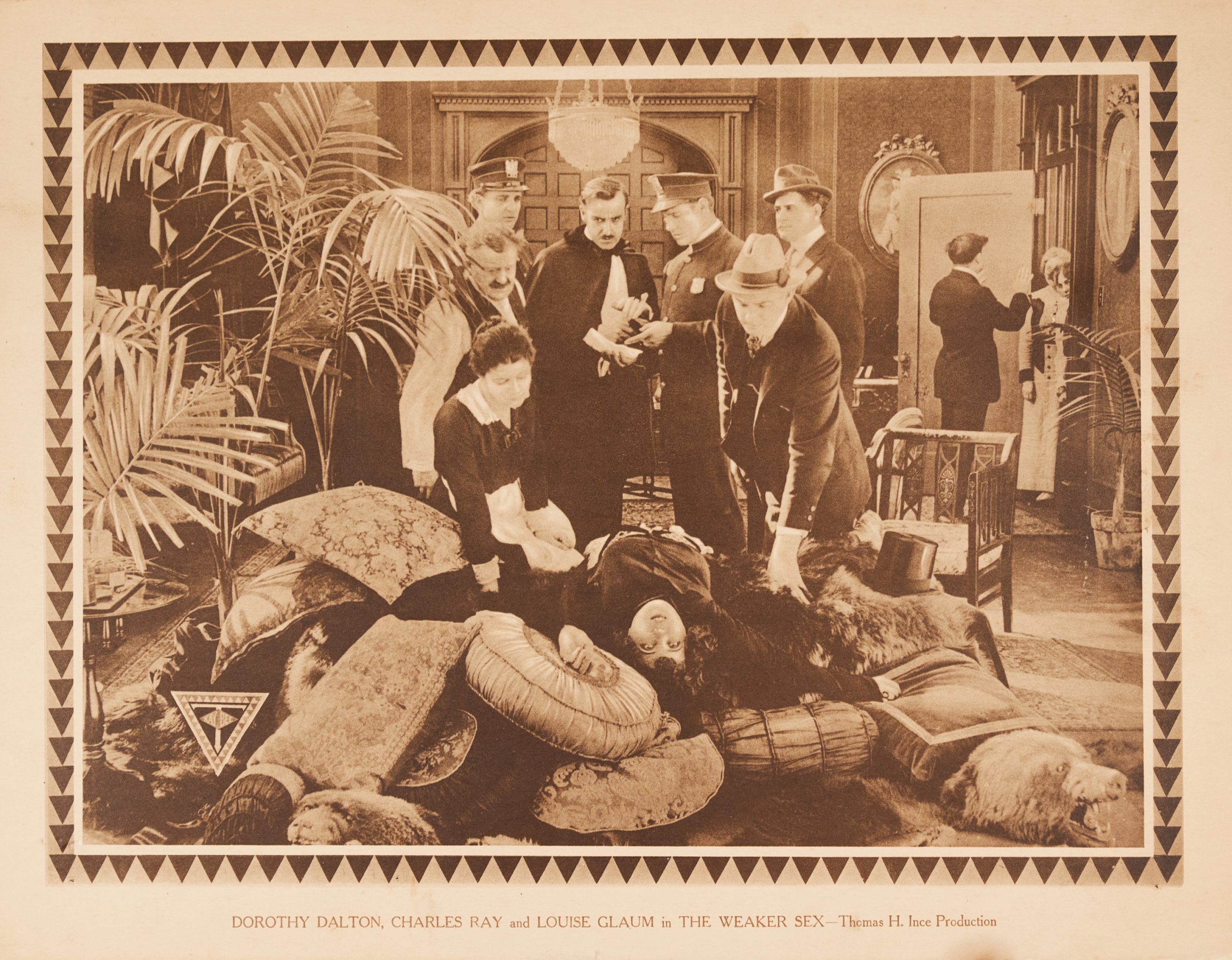
A sepia-toned lobby card with a woman lying dead on a pile of pillows as a crowd stands over her.

The Weaker Sex, 1917

Survives Complete
Director: Raymond B. West (1886–1923)
Producer: Thomas H. Ince (1880–1924)
Story: Alice C. Brown (1856–1948)
Stars: Louise Glaum (1888–1970), Dorothy Dalton (1893–1972)

  • Written by Alice Brown, The Weaker Sex tells the story of a female lawyer married to a district attorney who wants her to quit her job. However, faced with prosecuting his own son for murder, the husband acknowledges the benefits of being married to a lawyer when she takes on (and wins) his son’s case. 
  • While women had been earning law degrees in the United States since 1870, in 1917 it was still seen as shocking for a woman to be a lawyer. Nonetheless, in Brown’s screenplay this fact is presented as unremarkable.
  • Although the plot itself is progressive, the images in these lobby cards follow well-established sexist tropes: the virtuous wife stares confidently into the camera while the seductive “vamp” tilts her head back, inviting the viewer to gaze upon her decolletage. 
  • Unlike many of the other examples on display, these lobby cards are printed in a single sepia-toned color, making the entire production process cheaper. The distinctive triangle motif surrounding the photographs was the hallmark of the Triangle Motion Picture Company, a studio that employed such distinguished figures as director D.W. Griffith, but was only in business for four years.

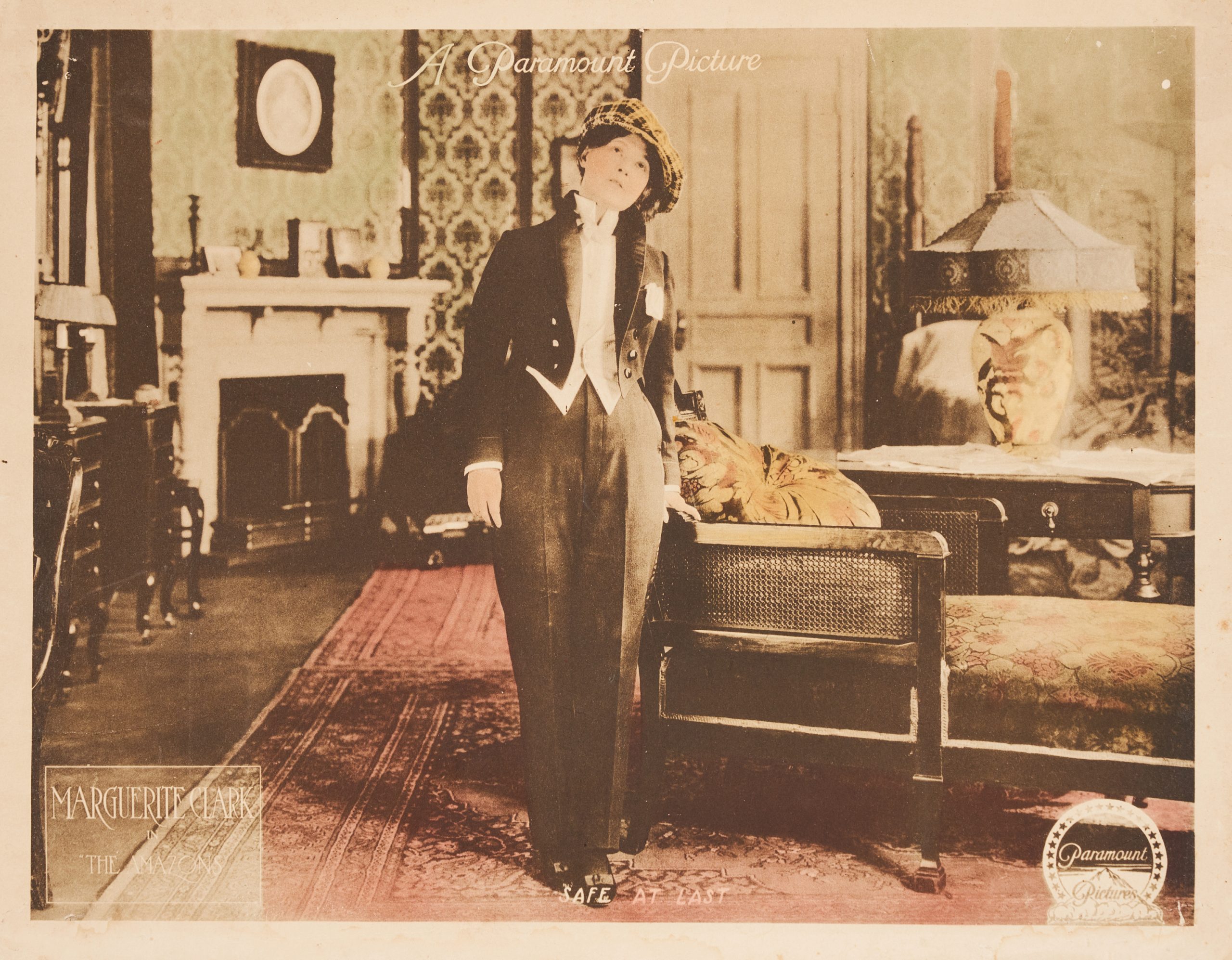
Colored-in lobby card showing a woman in pants and tailcoat standing in a well-furnished living room.

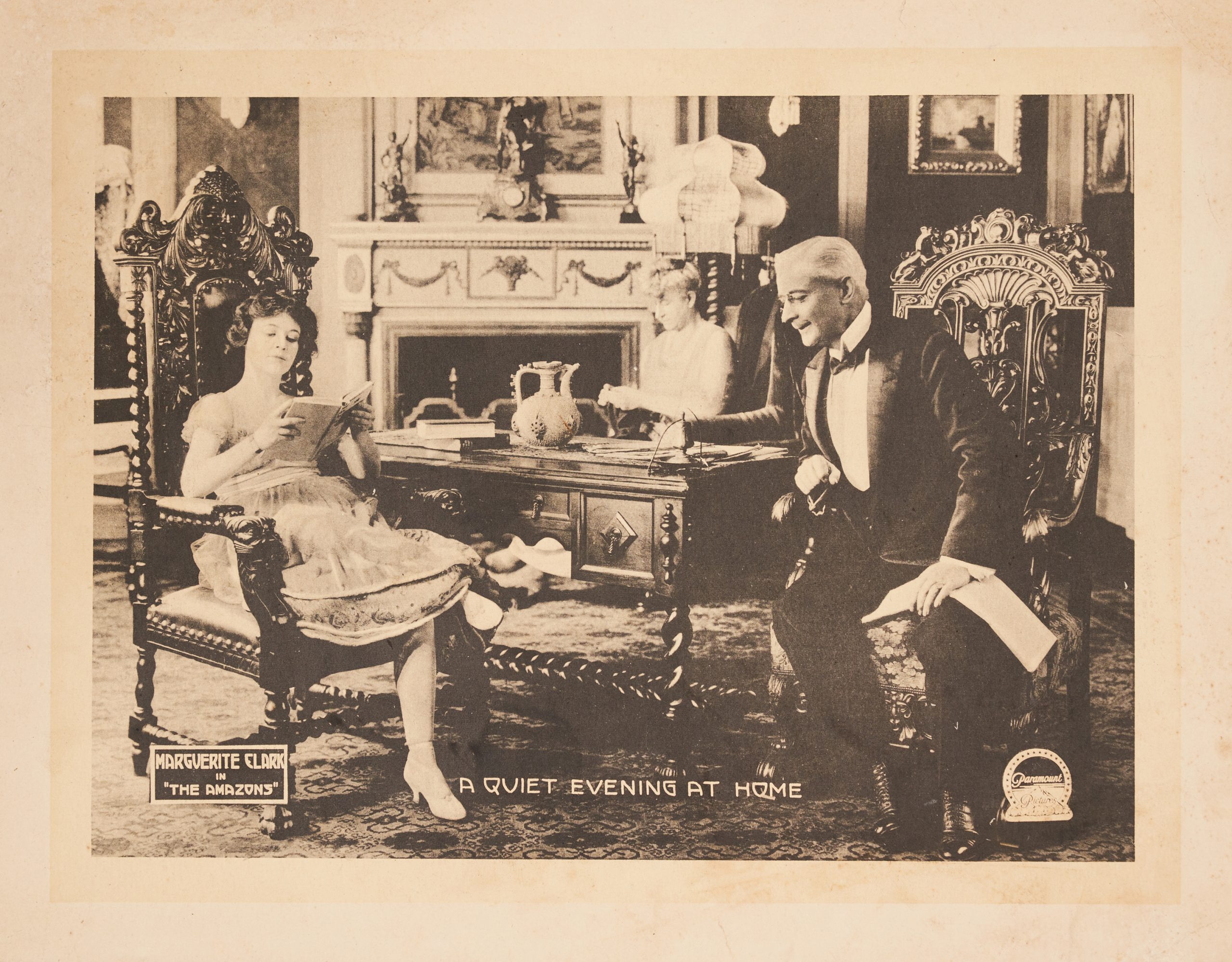
Lobby card with an older man staring at the legs of a younger woman who has them crossed at the knee.

The Amazons, 1917

Lost Film
Director: Joseph Kaufman (1882–1918)
Writer: Frances Marion (1888–1973)
Star: Marguerite Clark (1883–1940)

  • The Amazons is one of more than 300 scripts by Frances Marion. In 1930, she became the first woman to win the Academy Award for screenwriting with The Big House. In 1937, she published How to Write and Sell Film Stories, a groundbreaking text that was quickly adopted by many universities.
  • This film involves three sisters raised as boys who, unsurprisingly, find it difficult to fit into male-dominated society. While the plot may sound unusual, narratives featuring women masquerading as men were quite popular in the 1910s; they reflected the frustration of many women with prevailing conventions of gender as well as the associated rise of the concept of the New Woman. 
  • The lobby card on the left features hand-stenciled color. Full-color printing for lobby cards was often too expensive, so an almost translucent color was hand applied to the paper instead in a process similar to silk screening in which stencils are used.

Lobby card featuring photos of the lead actors and details of the film, including its writers and producers.

A lobby card featuring a dining couple and another vignette with the lead actors on a walk.

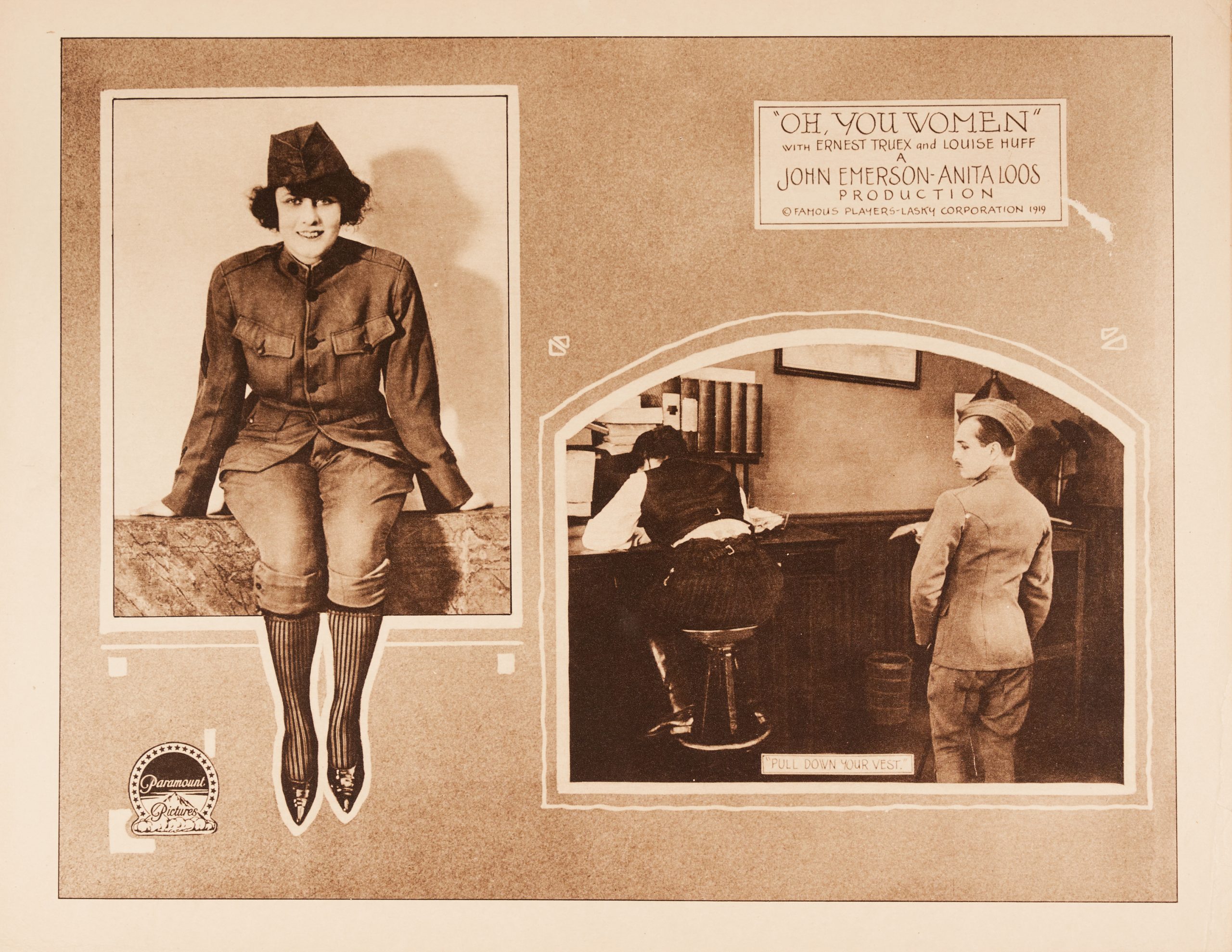
A lobby card featuring two vignettes of the female characters wearing men's clothes.

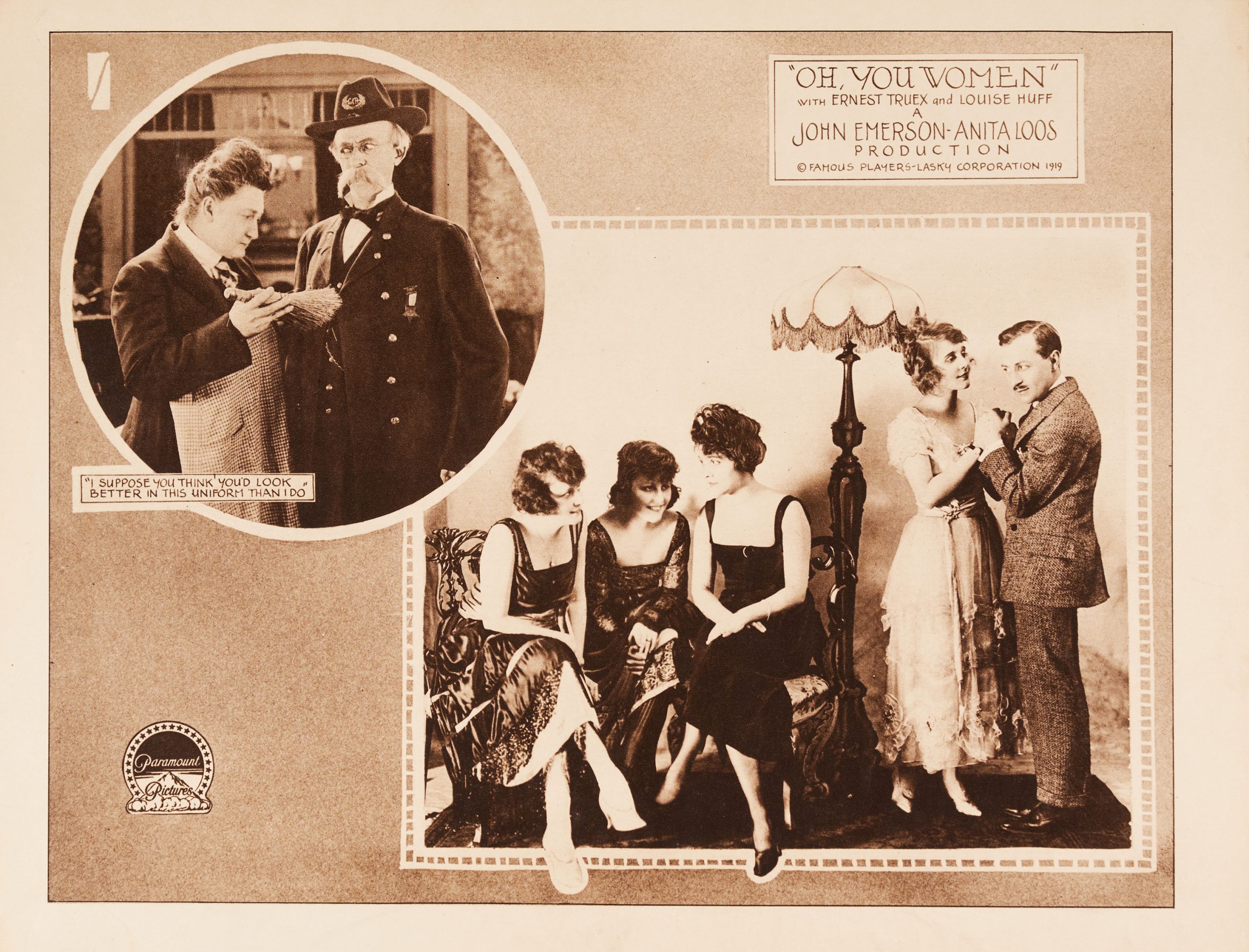
A lobby card featuring two vignettes of male characters looking suspiciously at the female characters.

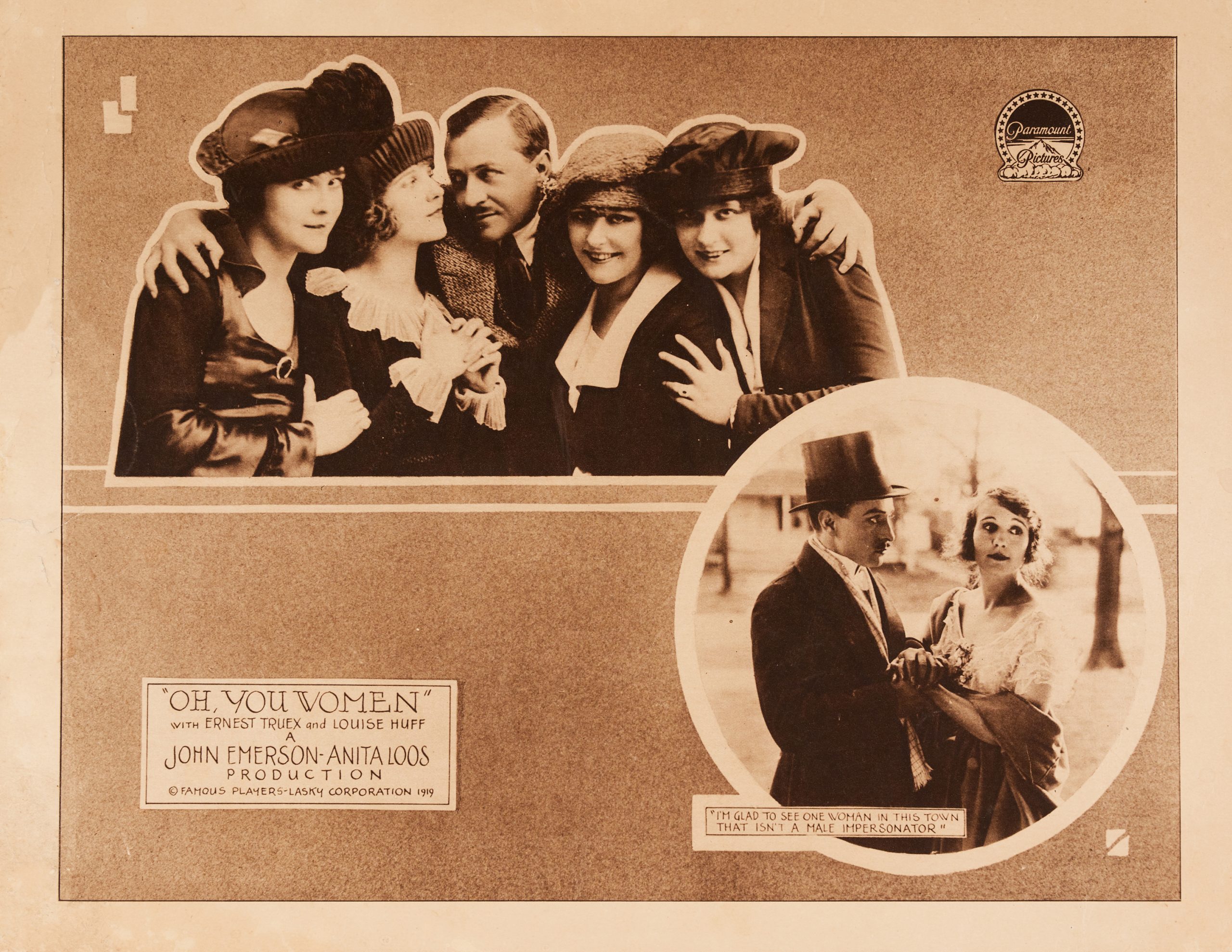
A lobby card of a man with his arms wrapped around 4 women's shoulders. A couple hold hands in an inset.

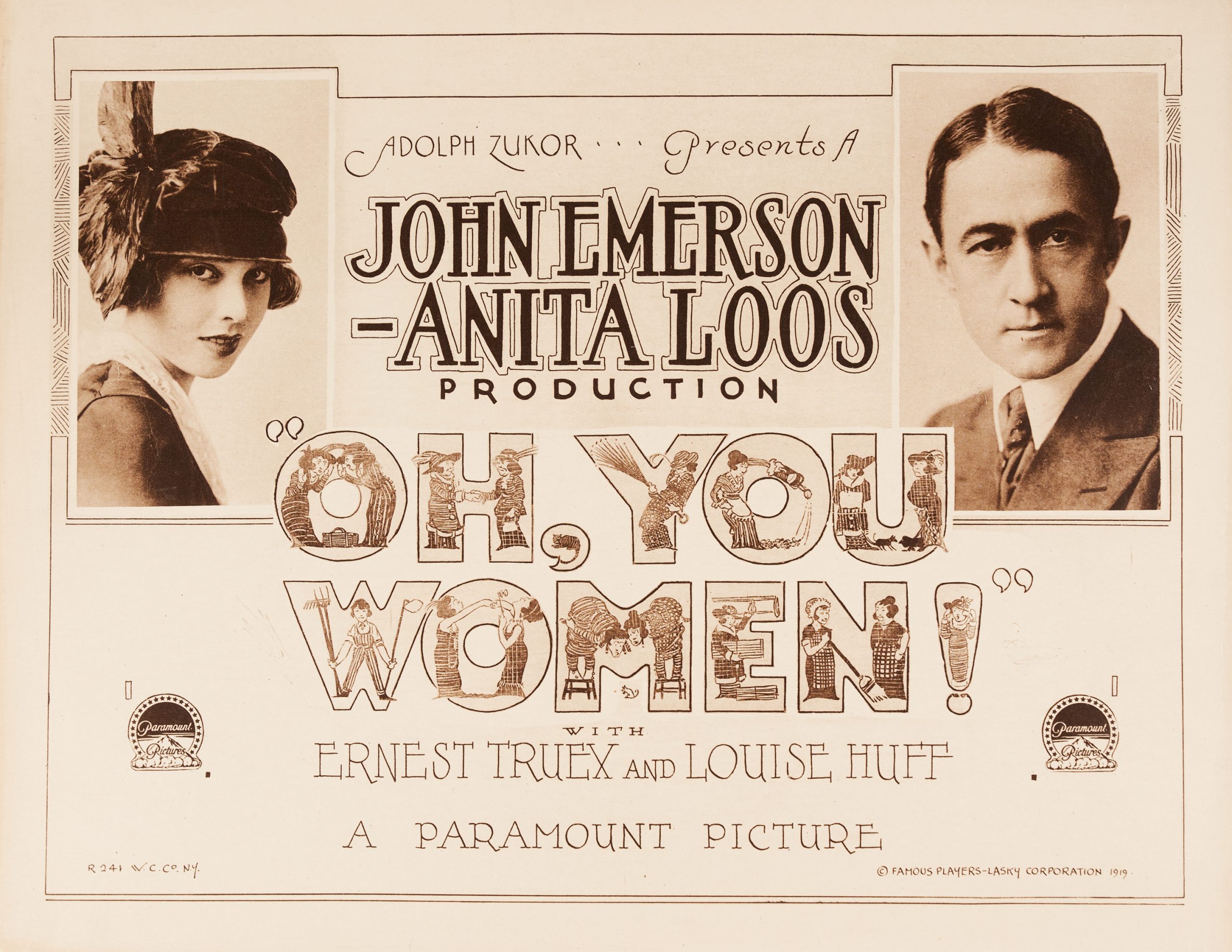
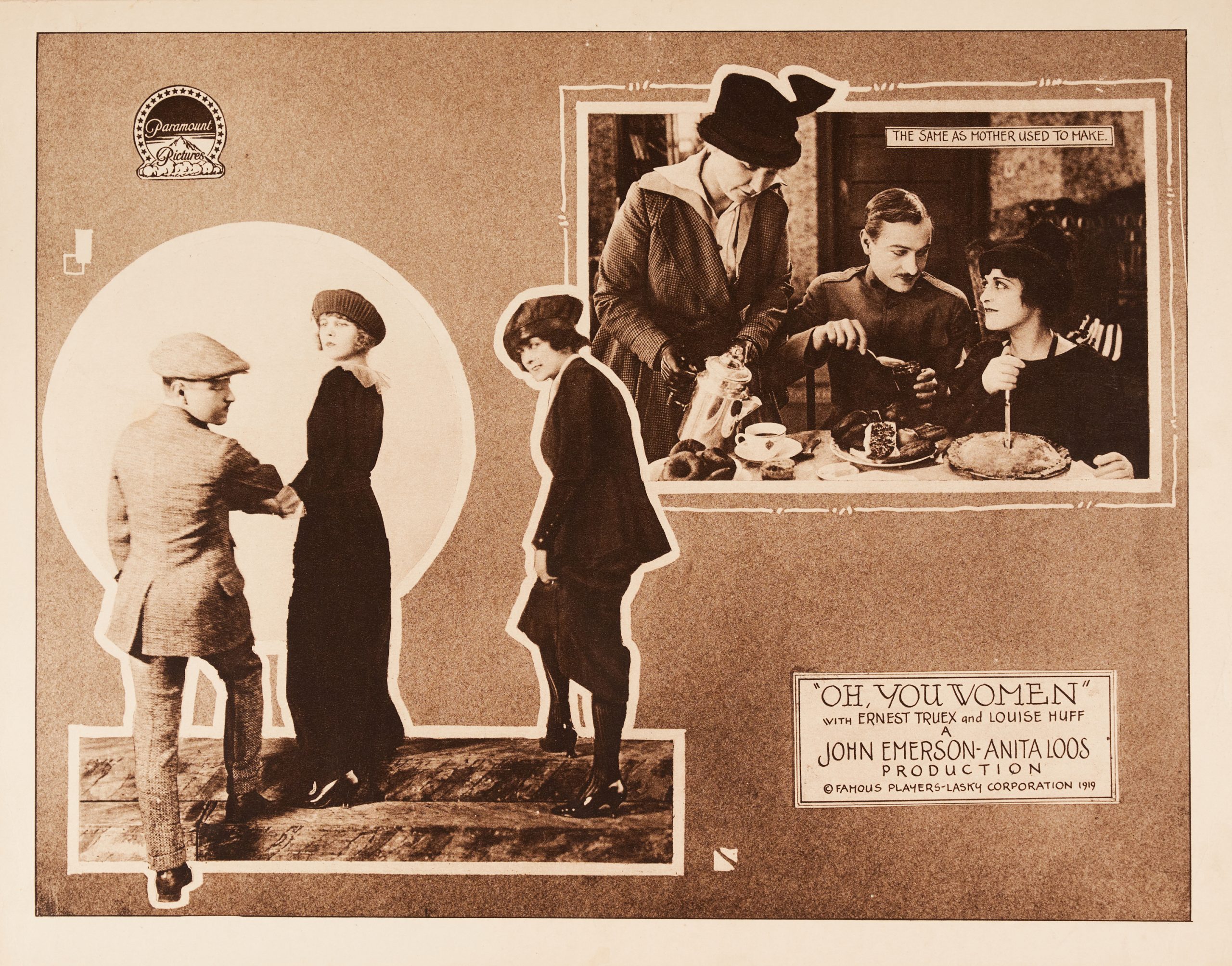
Oh, You Women!, 1919

Lost Film
Director: John Emerson (1874–1956), Anita Loos (1888–1981)
Story/Scenario: Anita Loos (1888–1981)
Star: Louise Huff (1895–1973)

  • In 1912, Anita Loos was hired by D.W. Griffith at the Triangle Motion Picture Company as Hollywood’s first female screenwriter. Loos is best known for her novel Gentlemen Prefer Blondes (1925), adapted for a silent film in 1928, a stage musical in 1949, and a movie musical starring Marilyn Monroe and Jane Russell in 1953. Even in 1919, however, her name was well known enough to be the largest (along with that of her husband, John Emerson) on the title card. 
  • While Loos is sometimes credited with co-directing this film with Emerson, she more likely acted as producer—a role that was rather amorphous at the time. During this early period, a producer might handle budgets, select stories, design the production, or even help direct the actors. 
  • Loos’s greatest contribution to cinema was her unique approach to crafting intertitle cards—text cards inserted between scenes in a film to describe the narrative or dialogue. She was a skilled wordsmith, known for clever turns of phrase and the ability to express a point succinctly. 
  • Oh, You Women! follows a soldier who returns home after World War I to find his town taken over by “women’s rights” advocates. Gender roles have been reversed–men mind the babies and do the dishes while women walk around in pants (associating them with the Suffrage movement).

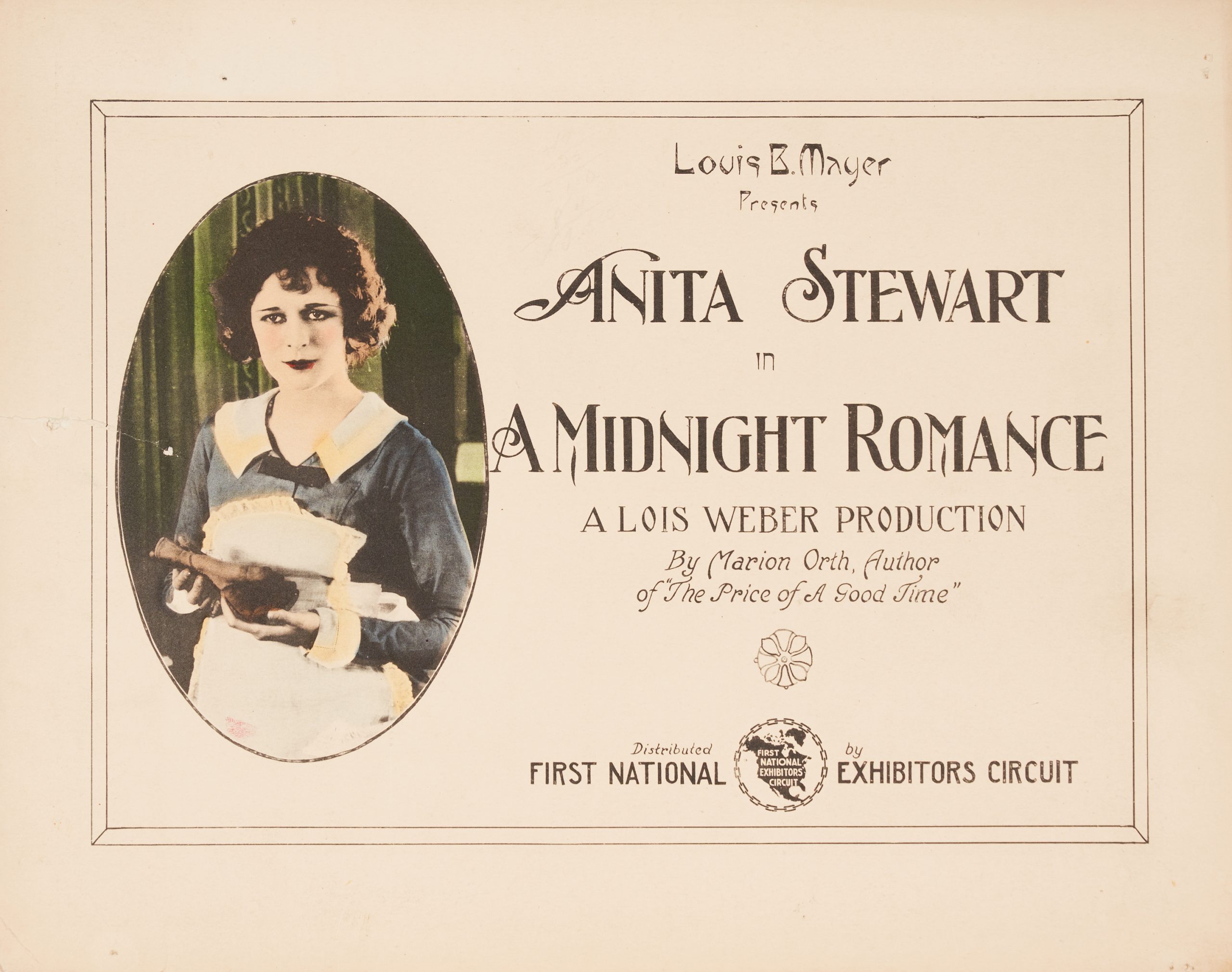
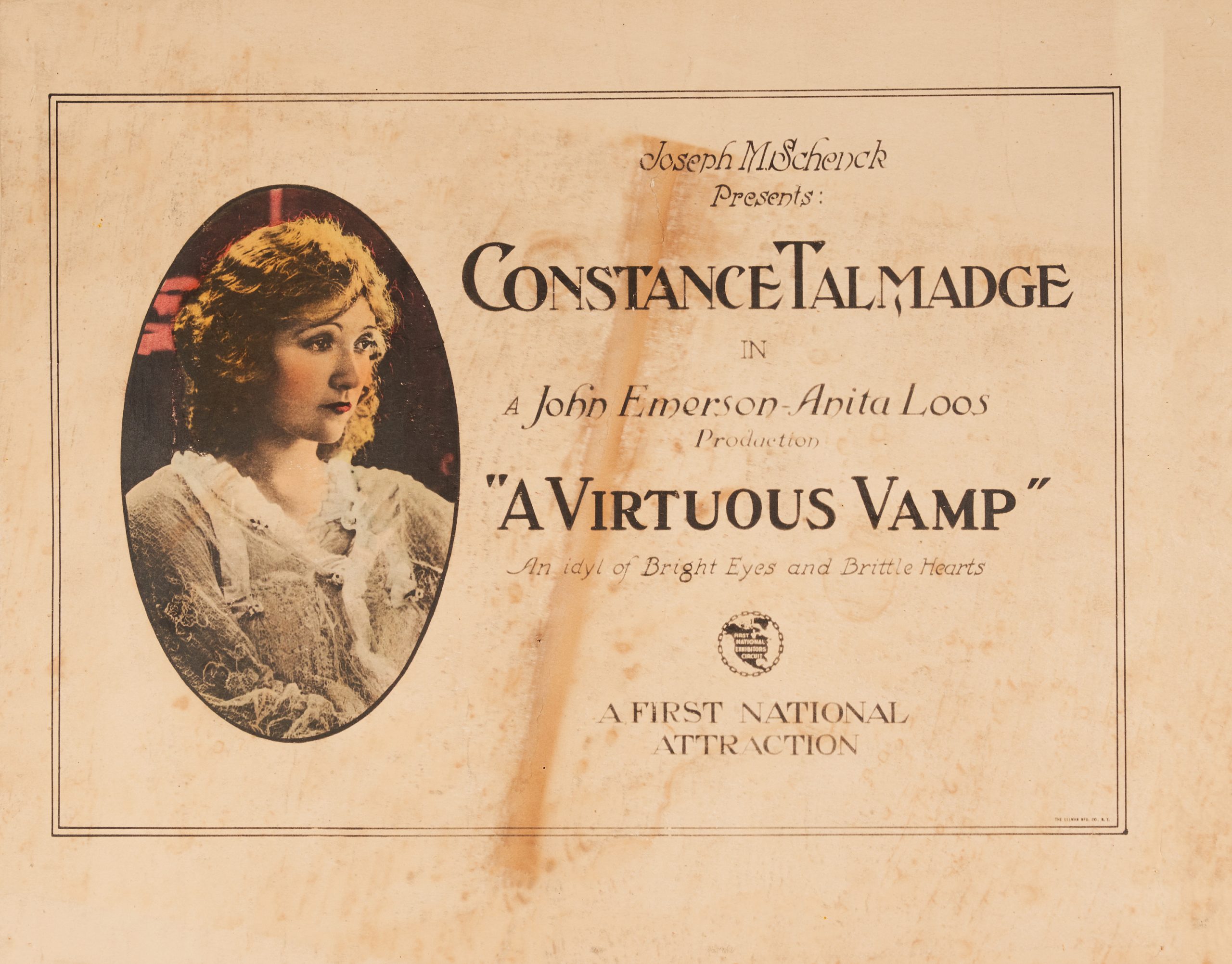
A lobby card featuring a colored-in oval portrait of the lead actress and details of the film.

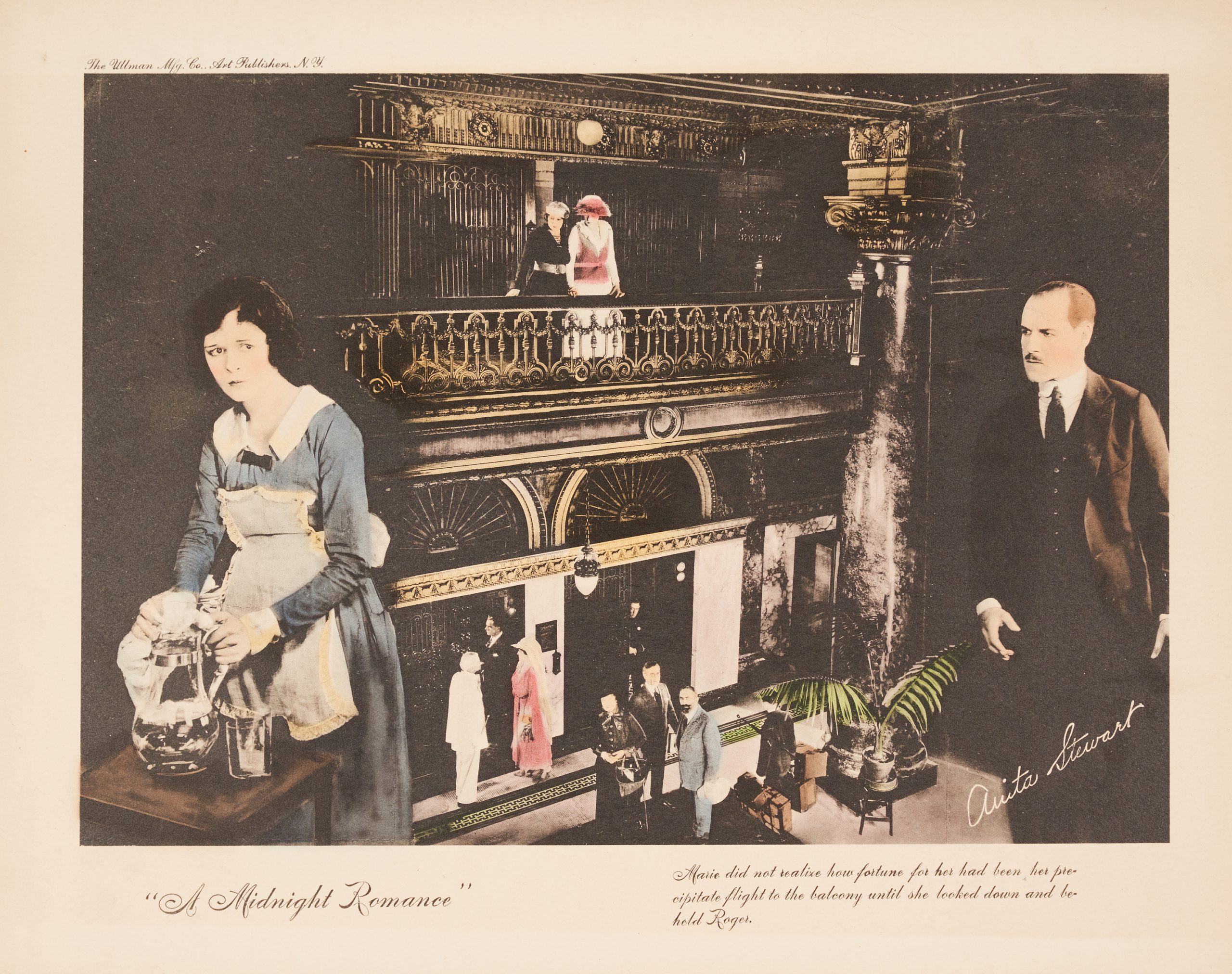
A lobby card with a maid looking worried as a man approaches her in a hotel.

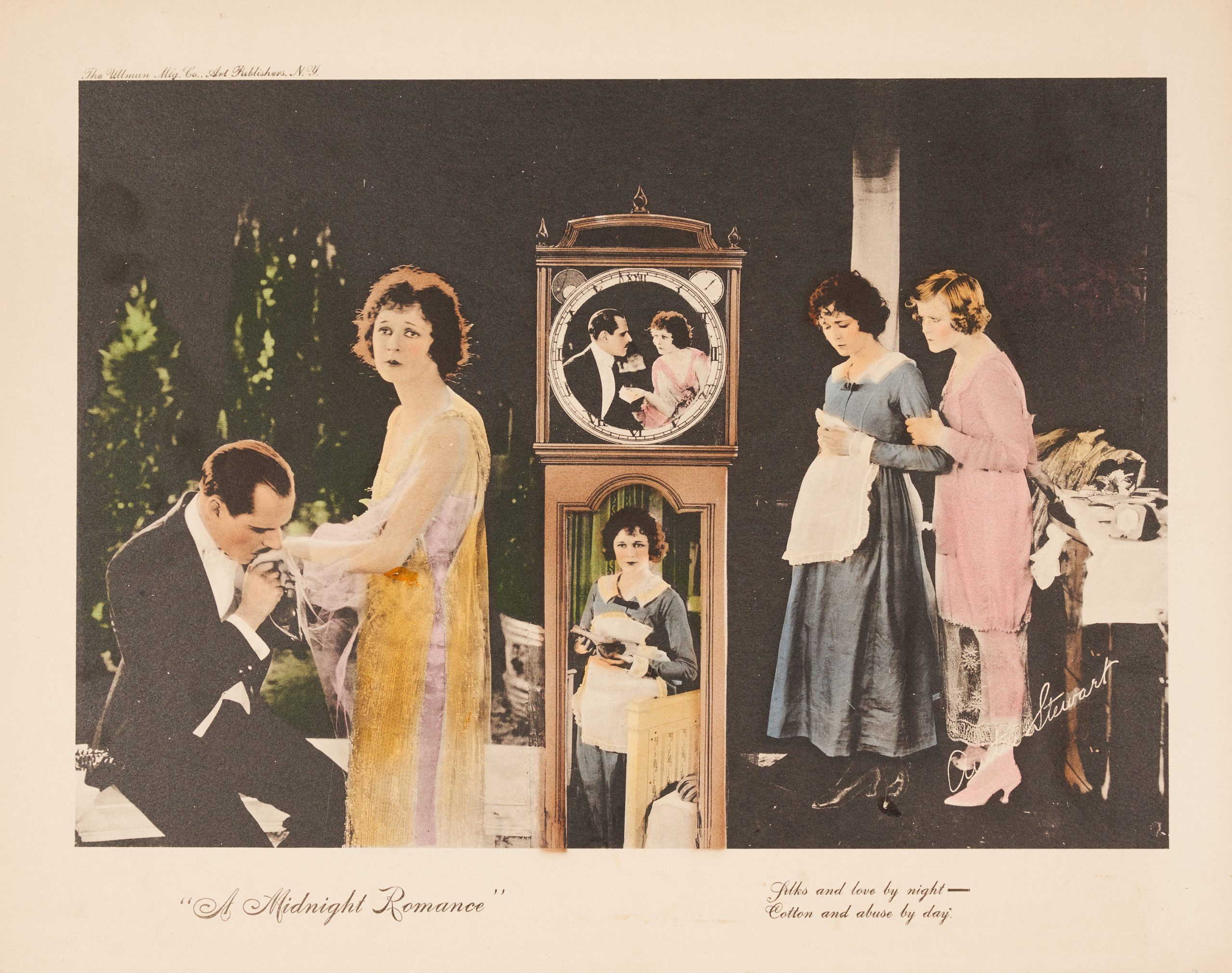
A colored-in lobby card featuring scenes from the film with a grandfather clock in the center.

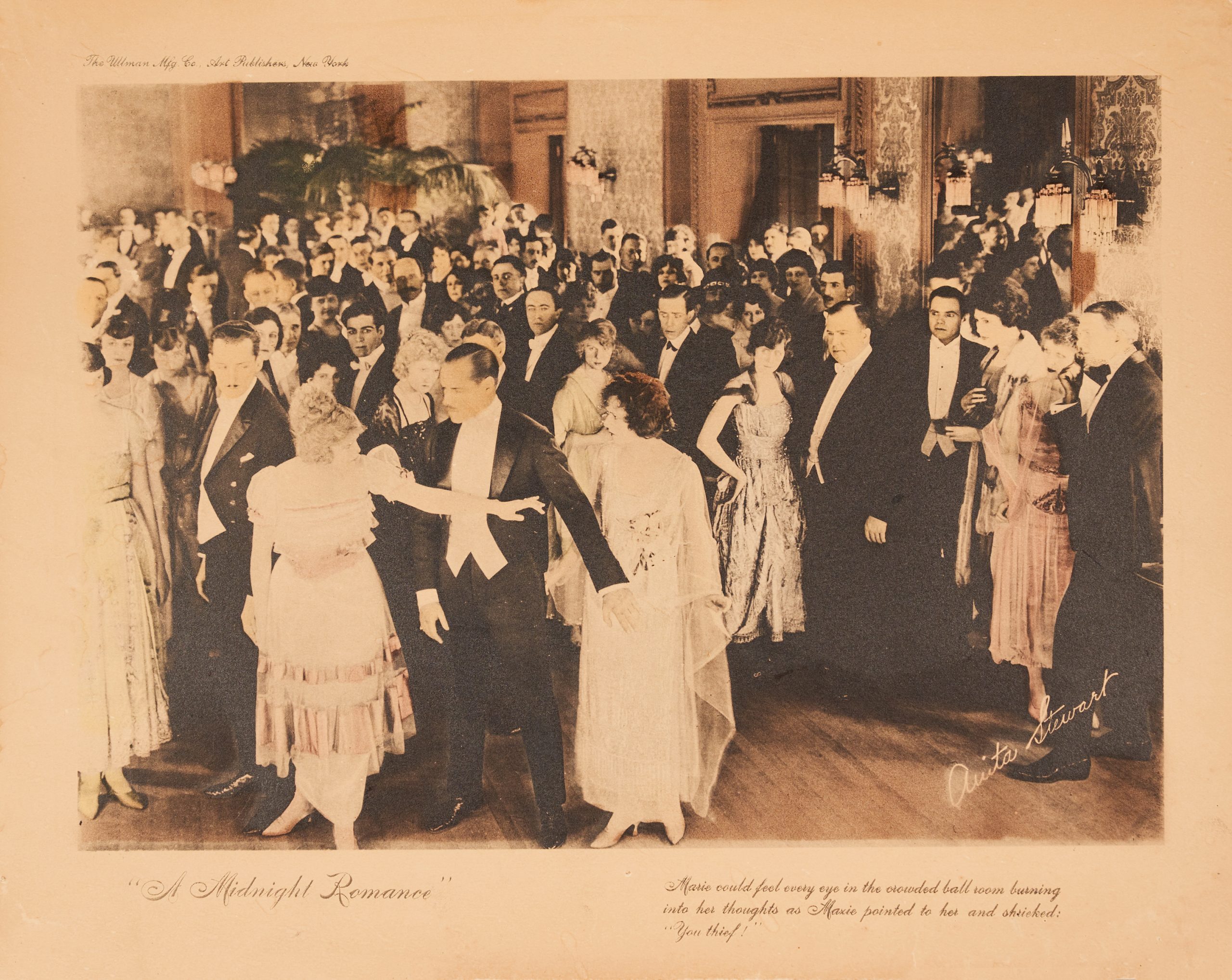
A lobby card featuring a crowded party scene with a man flanked by two women at the center.

A Midnight Romance, 1919

Survives Incomplete
Writer/Director: Lois Weber (1879–1939)
Star/Executive Producer: Anita Stewart (1895–1961)
Story: Marion Orth (1900–1984)

  • In addition to being a writer and producer, Lois Weber is considered the first American female director, with a prolific and often progressive output. In 1914, she was the highest paid person in her field, making $50,000 a year (equivalent to about $1.4 million today).
  • Weber frequently chose to write and direct stories that were ripped from the headlines, aimed at educating the public and encouraging social reform. Such sensational films include Where Are My Children? (1916), a drama about eugenics and abortion based on Margaret Sanger’s struggle to provide information about contraception, and Shoes (1916), the story of a woman’s choice between her virtue and a new pair of desperately needed shoes that was based on a study of the role of prostitution in the lives of the working poor. 
  • In A Midnight Romance, Weber worked with actor/producer Anita Stewart, whose production company employed her briefly, and writer Marion Orth, with whom she regularly collaborated. 

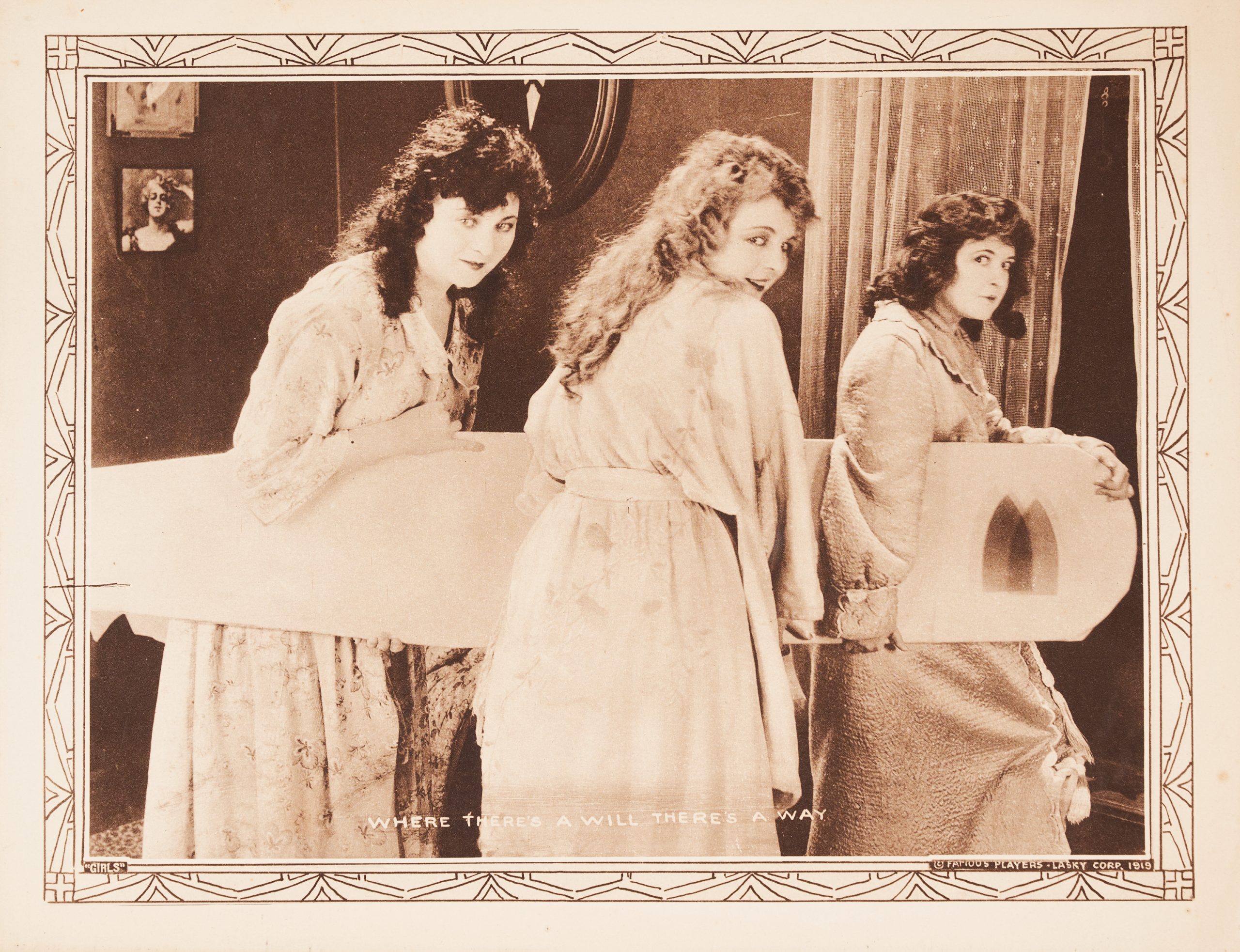
A lobby card showing three women carrying an iron board and looking at the viewer conspiratorially.

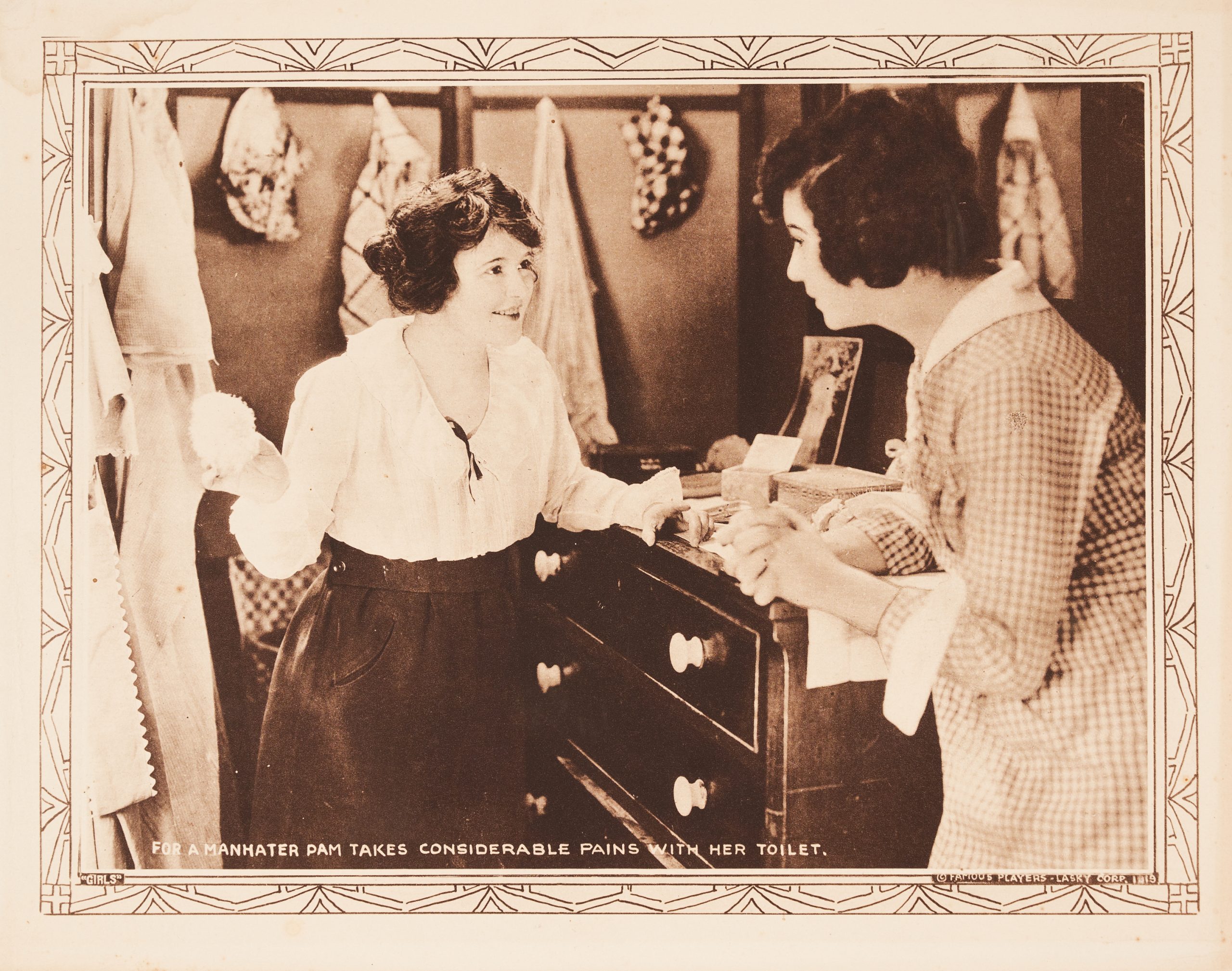
A lobby card showing two women having a conversation in a boudoir.

Girls, 1919

Lost Film
Director: Walter Edwards (1870–1920)
Writers: Clara Beranger (1886–1956), Alice Eyton (1874–1929)

  • Written by Clara Beranger and Alice Eyton, Girls is about a group of friends who have sworn off the opposite sex and declare themselves “manhaters.” While this concept may seem progressive, all the characters eventually fall prey to love and marriage, unable to resist romance. 
  • Beranger was married to William C. de Mille, older brother of the famous director, Cecil B. DeMille, but she had an impressive career before the marriage, and would go on to assist William as his career began to decline in the 1930s. In 1929, she became one of the founding members of the University of Southern California’s Cinematic Arts Department.

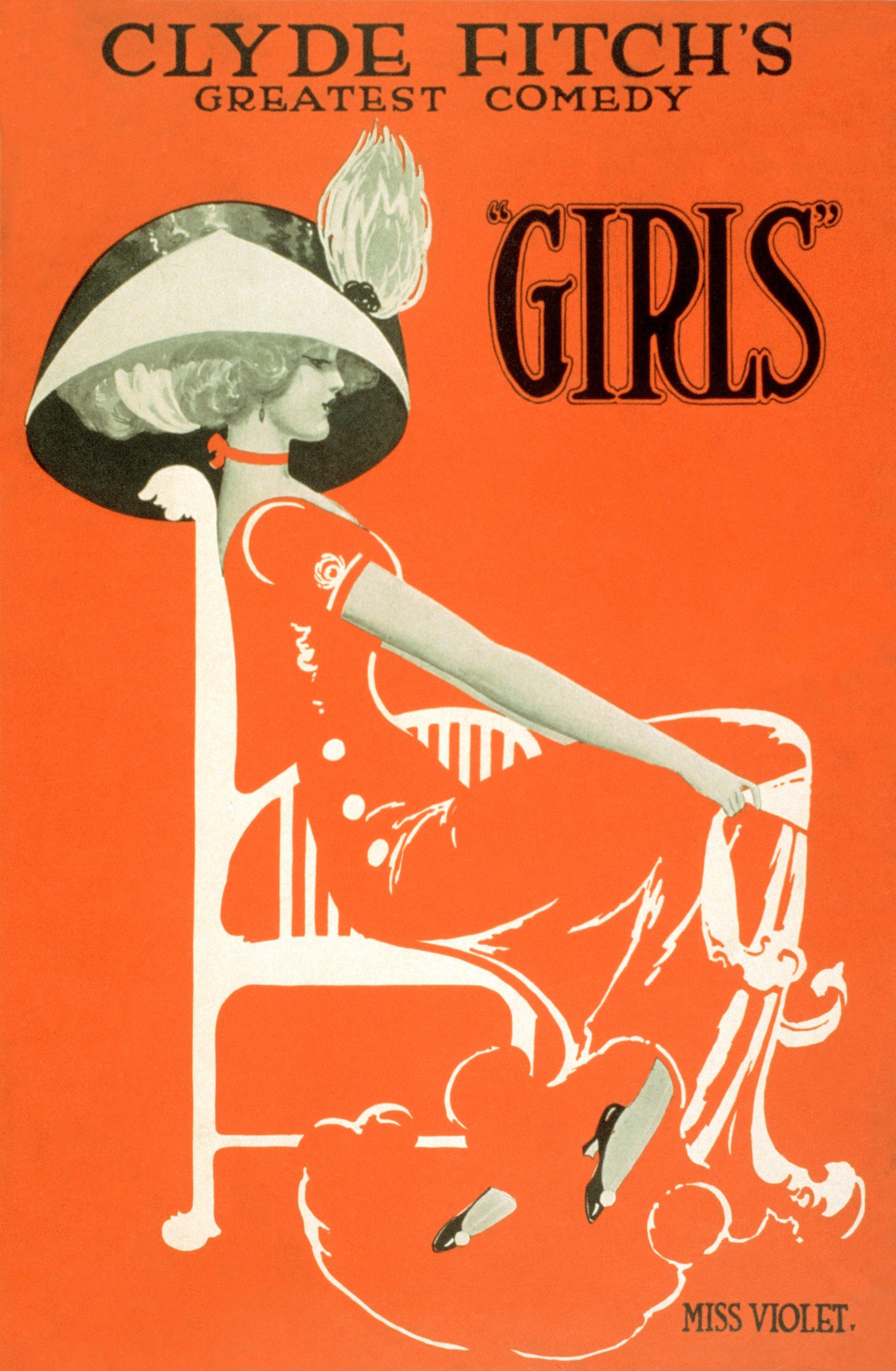
A red, white, and black theatrical poster featuring an illustration of a stylish woman in a chair.

Girls, 1910

**This image is for reference only and does not appear in the exhibition

“I am a feminist, by that I do not mean that women should try to do the work of men. They should merely learn to do their own work, live their own lives, be themselves”Olga Petrova, actress & producer 

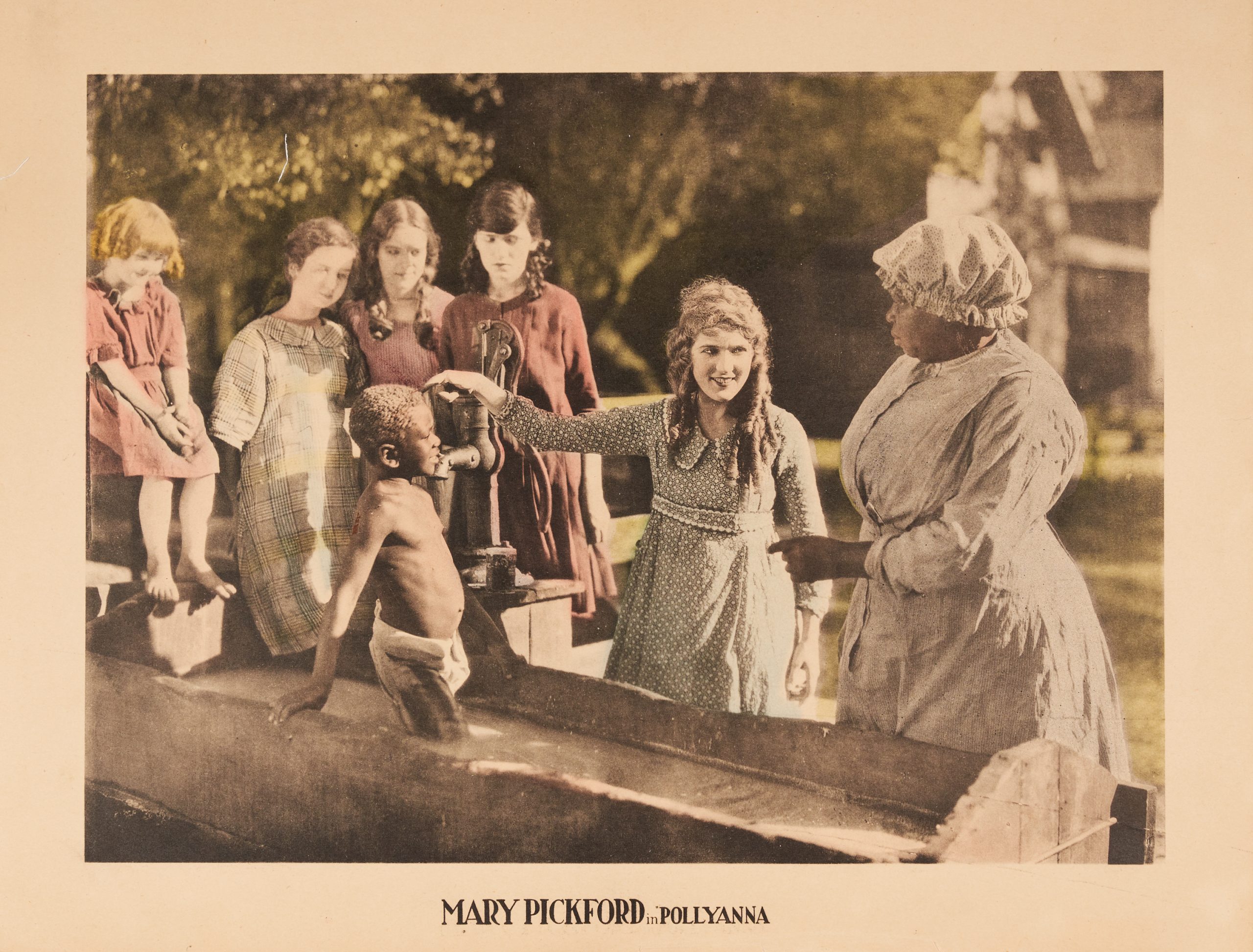
A colored-in lobby card featuring a group of girls and a woman bathing a young boy outside.

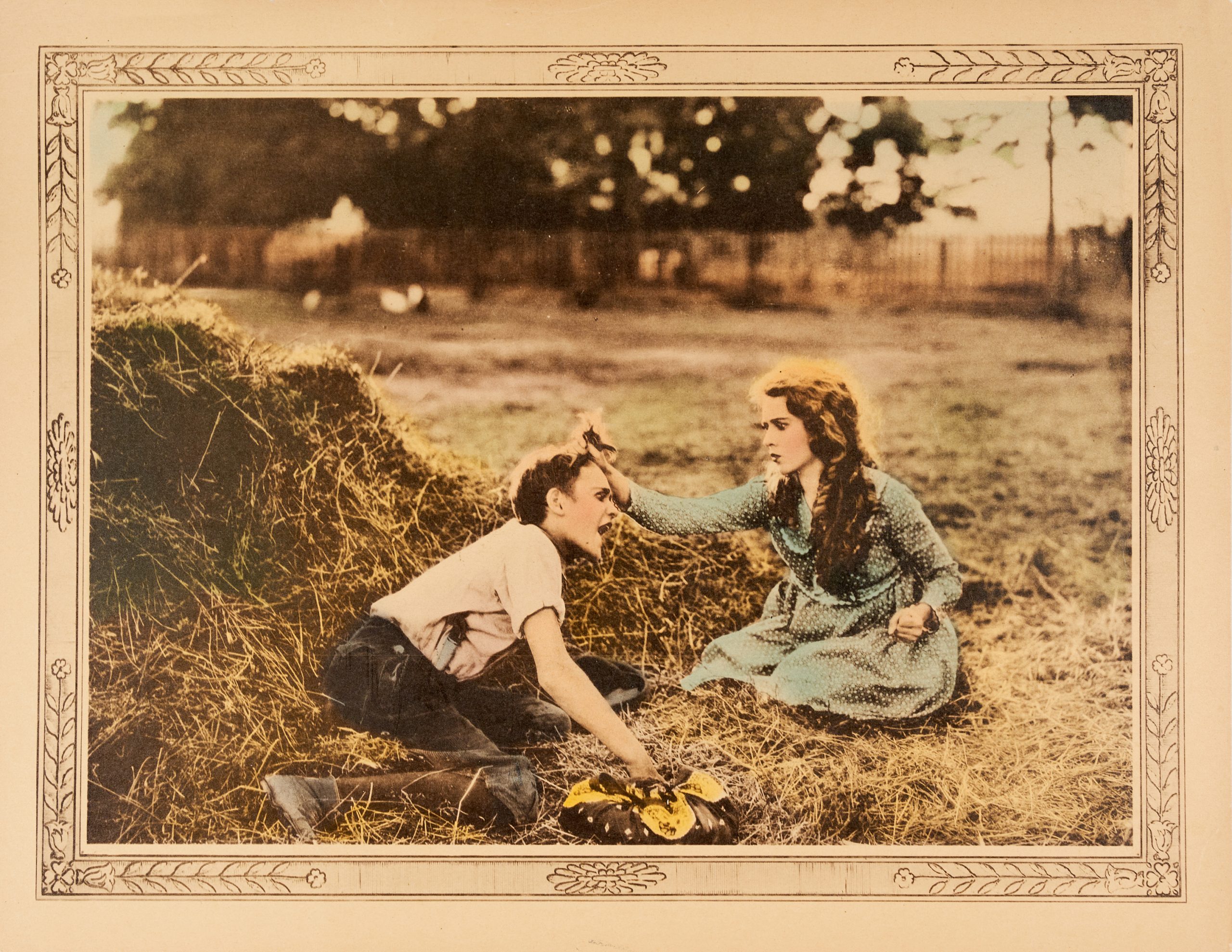
A colored-in lobby card with Mary Pickford as Pollyanna pulling a young boy's hair by a haystack.

Pollyanna, 1920

Survives Complete
Director: Paul Powell (1881–1944)
Star/Producer: Mary Pickford (1892–1979)
Adaptation: Frances Marion (1888–1973)
Book: Eleanor H. Porter (1868–1920)

  • Originally published as a novel by Eleanor H. Porter (which later inspired a play by Catherine Chisholm Cushing), Pollyanna was adapted for the screen by Frances Marion, the most prolific female screenwriter in Hollywood who also had a career as a director.
  • Actress Mary Pickford was 27 when she portrayed the twelve-year-old Pollyanna—the sort of role she was frequently hired for well into adulthood. Pickford was one of Hollywood’s most profitable stars at the time, and was the first person to be nicknamed “America’s Sweetheart.” She was also one of the shrewdest business women in the industry, teaming up with actors Douglas Fairbanks (whom she later married) and Charlie Chaplin, as well as D.W. Griffith, to create the United Artists production company.
  • Frances Marion was also the ghostwriter for “Daily Talks by Mary Pickford,” the star’s syndicated newspaper column, covering beauty tips and general advice.
  • These two surviving scene cards clearly do not derive from the same original set, since they feature different borders and typography, and are also printed on different paper stock. However, they are both tinted with the use of stencils.

Working Girls

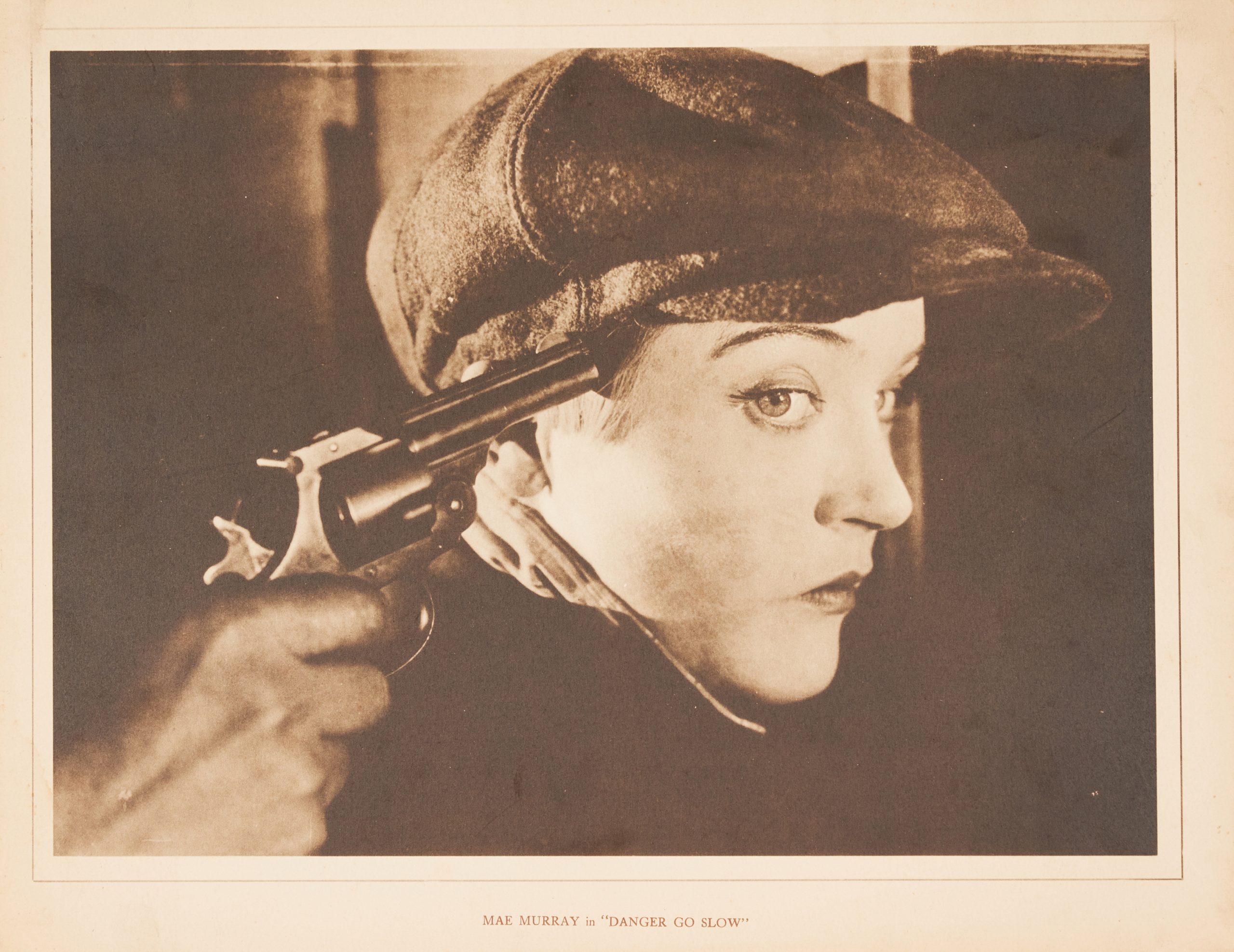
A sepia-toned lobby card showing a close-up of a woman in a cap with a gun being held to her head.

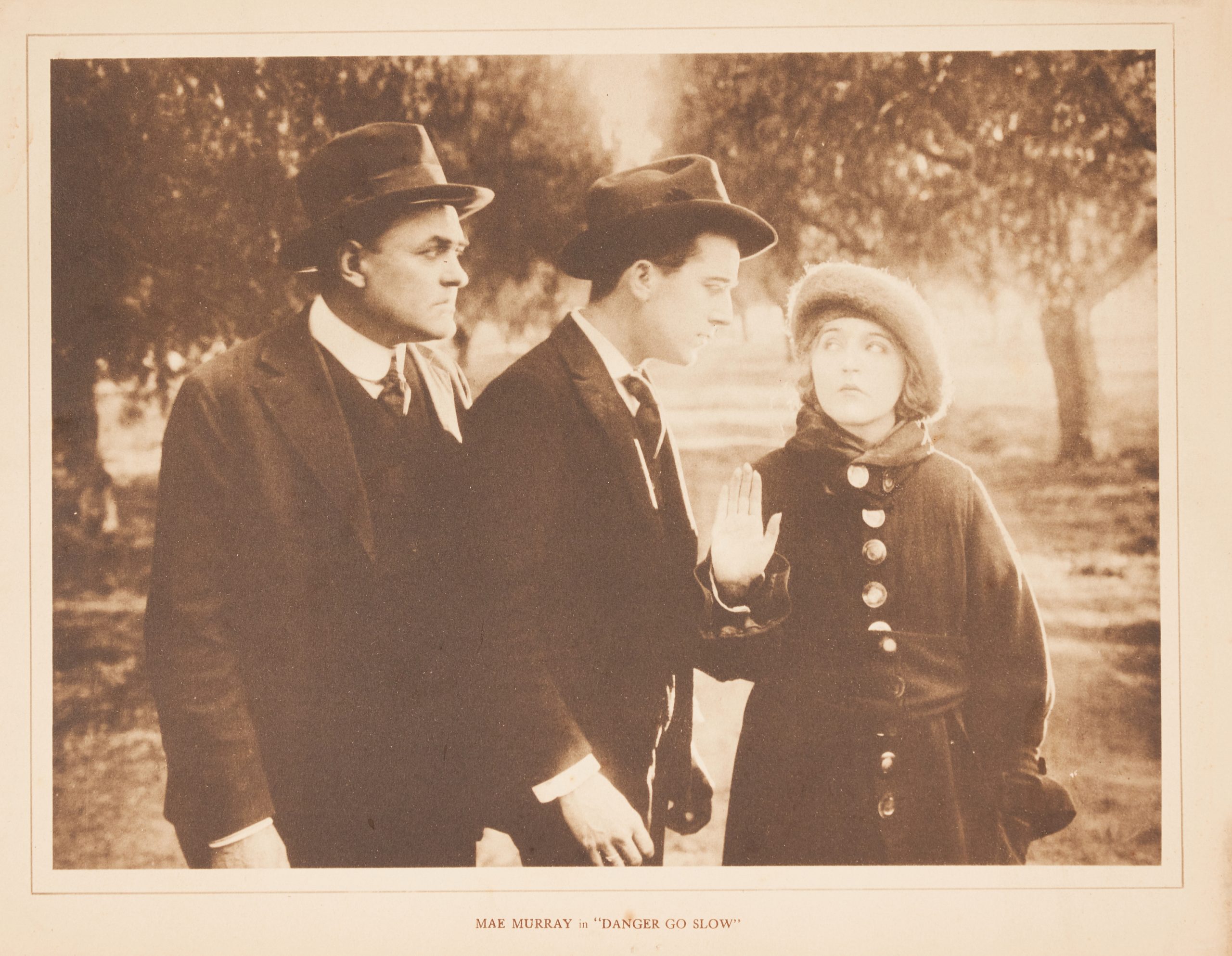
A sepia-toned lobby card with two men facing a woman with her hand up in an outdoor scene.

Danger, Go Slow, 1918

Lost Film
Writer/Director: Robert Z. Leonard (1889–1968)
Writer/Star: Mae Murray (1885–1965)

  • Danger, Go Slow was co-written by husband-and-wife team Mae Murray and Robert Z. Leonard. Leonard also directed Murray as the lead in the movie. 
  • In the film, Murray’s character dresses as a young boy as part of her role in a criminal gang. Female-to-male cross-dressing was common in cinema of this period and allowed women to behave on camera in ways that would have been difficult or unlikely in the real world, while briefly inhabiting male-dominated spaces.

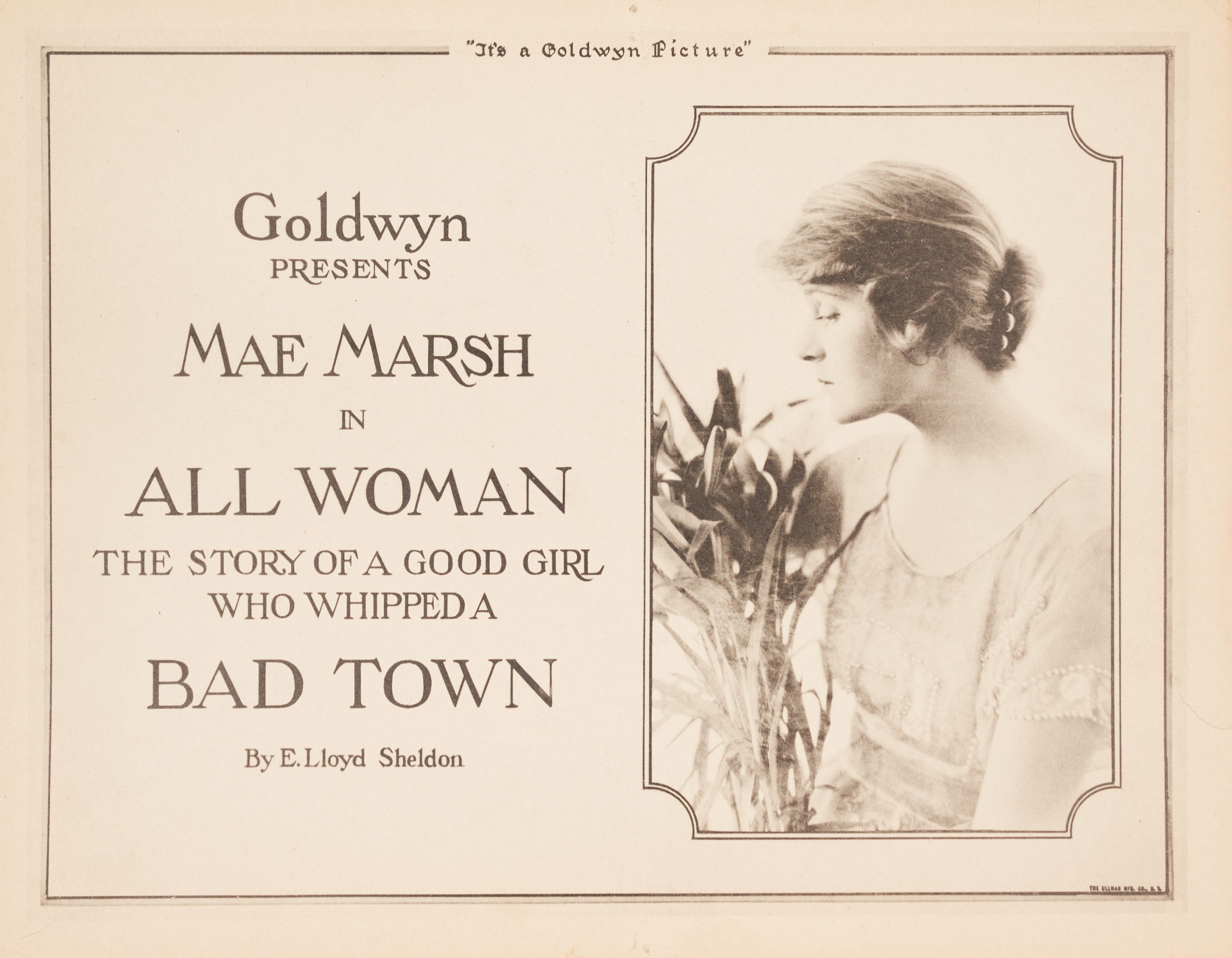
A lobby card with details of the film and a portrait of the lead actress holding flowers.

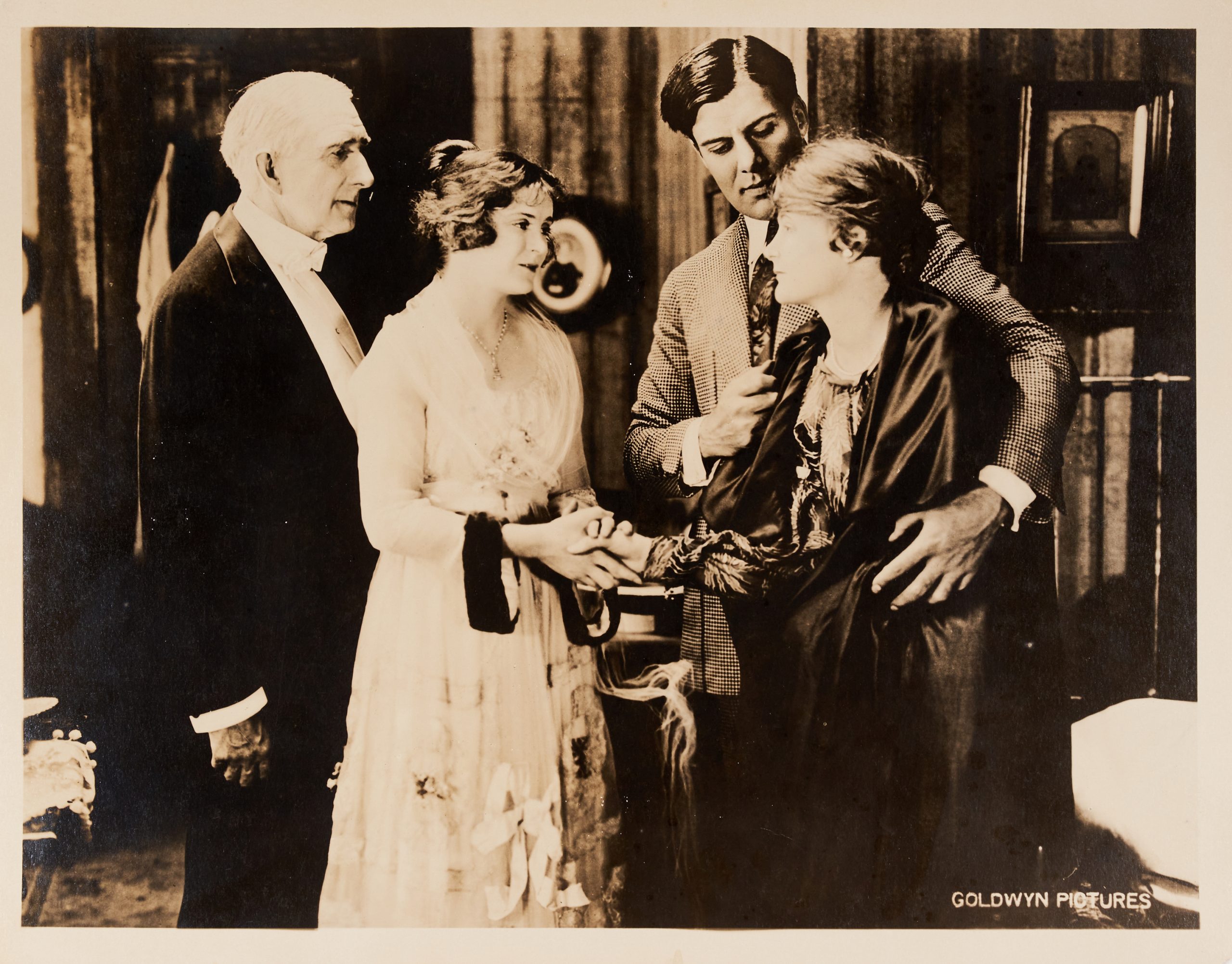
A lobby card showing a man and a couple comforting an older woman.

All Woman, 1918

Lost Film
Director: Hobart Henley (1887–1964)
Book: Edith Barnard Delano (1874–1946)
Star: Mae Marsh (1894–1968)

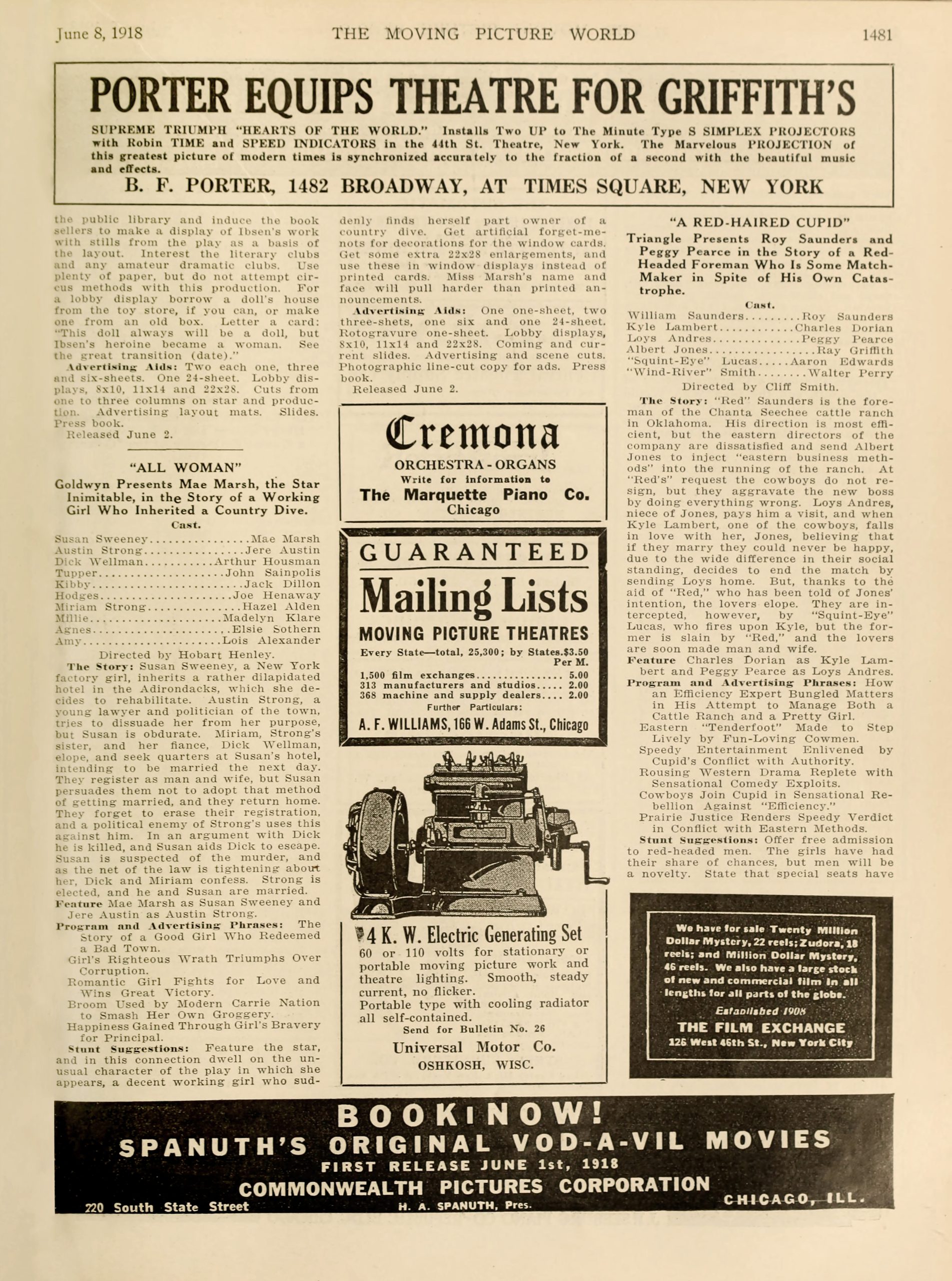
  • Based on the novel by Edith Barnard Delano, All Woman follows Susan Sweeney as she heads to the Adirondacks to claim her inheritance: a hotel. When this turns out to be a ramshackle inn with an attached saloon occupied by drunks and people down on their luck, she forges ahead, turning the den of vice into a respectable business and shutting down the bar. 
  • While Prohibition was not yet in effect, the temperance movement was growing in popularity, particularly among women. The scourge of drunkenness was popularly labeled a “female concern,” with women’s organizations at the forefront of tackling alcoholism as a public health issue.

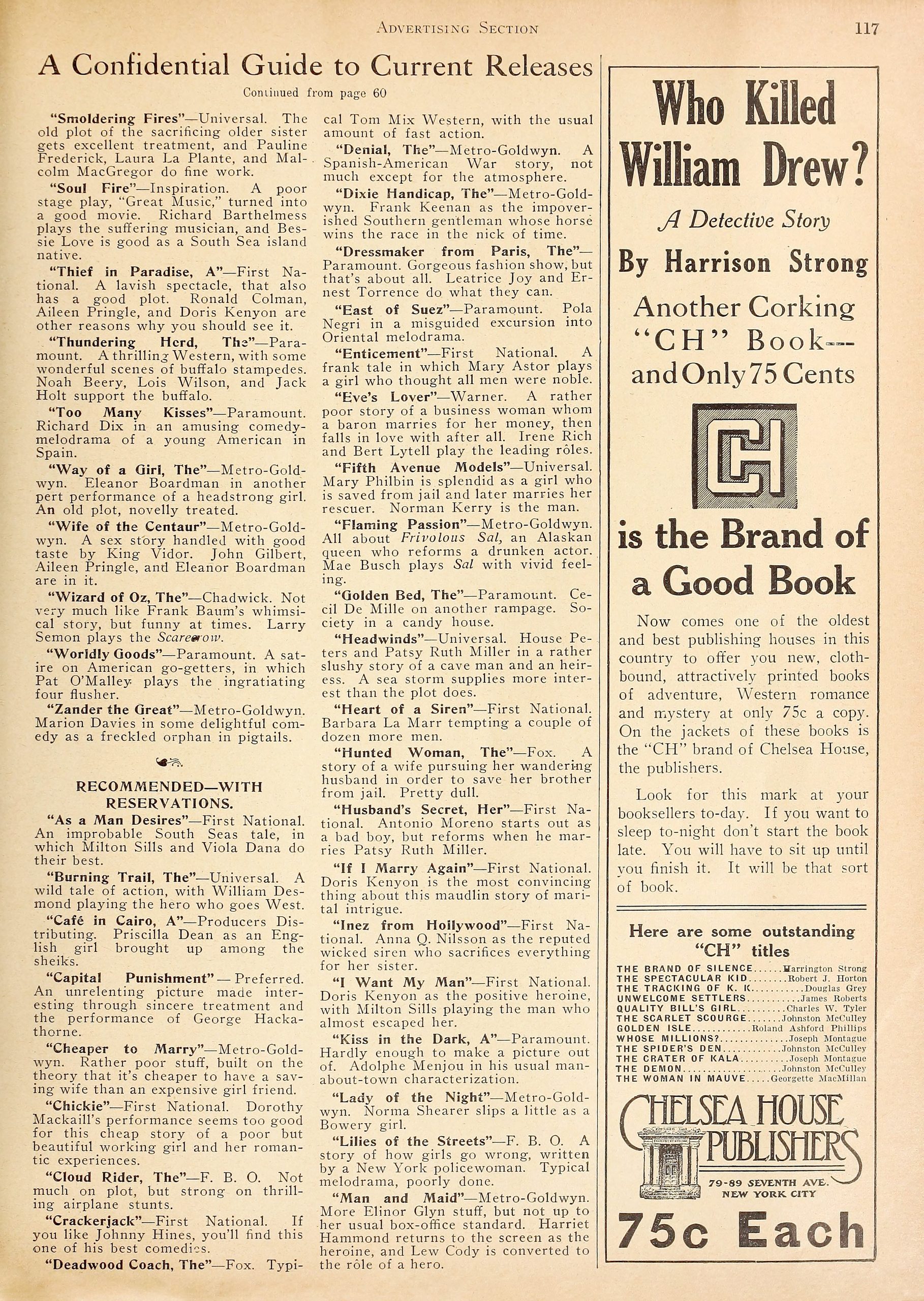
A page of text from The Moving Picture World newspaper.

The Moving Picture World, 1918

**This image is for reference only and does not appear in the exhibition

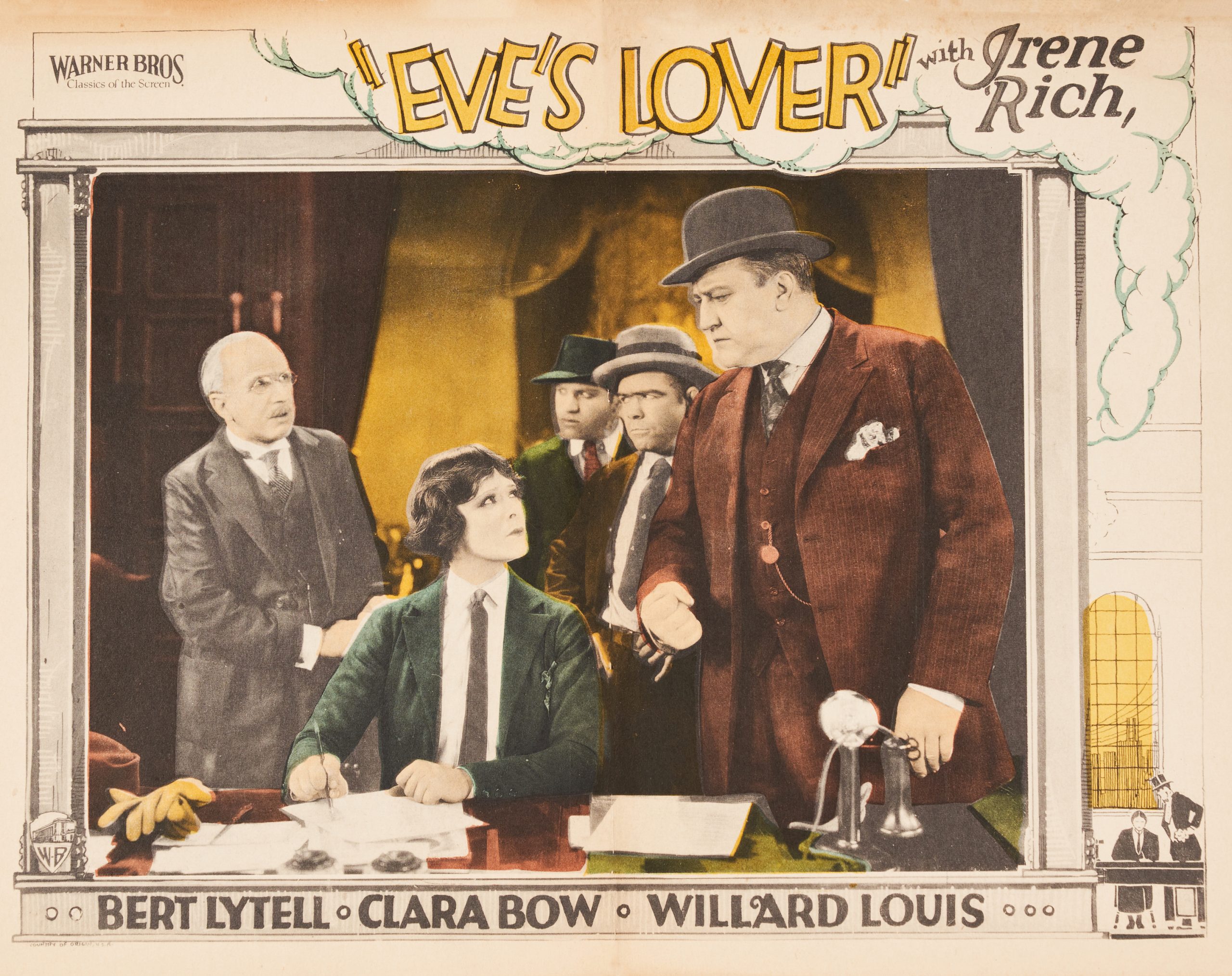
Colored-in lobby card showing a woman at a desk surrounded by four men asking her to sign paperwork.

Eve’s Lover, 1925

Lost Film
Director: Roy Del Ruth (1893–1961)
Stars: Clara Bow (1905–65), Irene Rich (1891–1988)
Story: Lucy Lane Clifford (1846–1929)

  • Lucy Lane Clifford was a well-known British novelist and playwright who frequently adapted her works, like Eve’s Lover, for cinema. Female authors who found success outside of the Hollywood system were often brought in to translate their writing to the screen.
  • Despite the fact that Clifford was the lead writer, and it featured Clara Bow, the original “It Girl,” the popular fan journal Picture Play noted that the film was “a rather poor story of a business woman whom a baron marries for her money, then falls in love with afterall [sic].” 
  • The single surviving lobby card does not feature the stars of the production, but does demonstrate the sophisticated design potential of the medium. The central image is vibrantly hand colored, while the border features elegant illustrations and typography.

A page of text from Picture Play Magazine.

Picture Play Magazine, 1910

**This image is for reference only and does not appear in the exhibition

A lobby card featuring a colored-in portrait of the lead actress and details of the film.

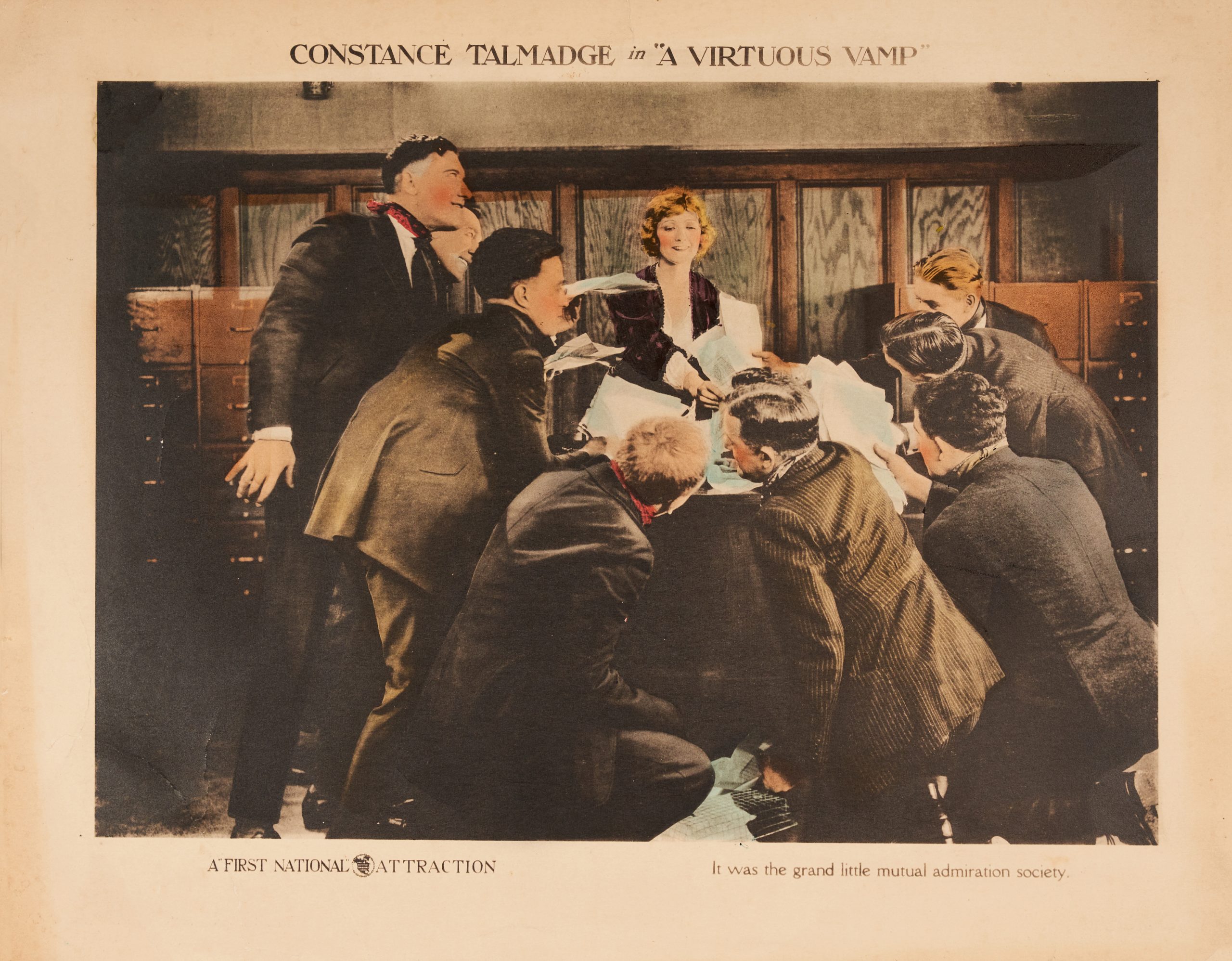
A colored-in lobby card showing a young woman in an office surrounded by men eager to give her paperwork.

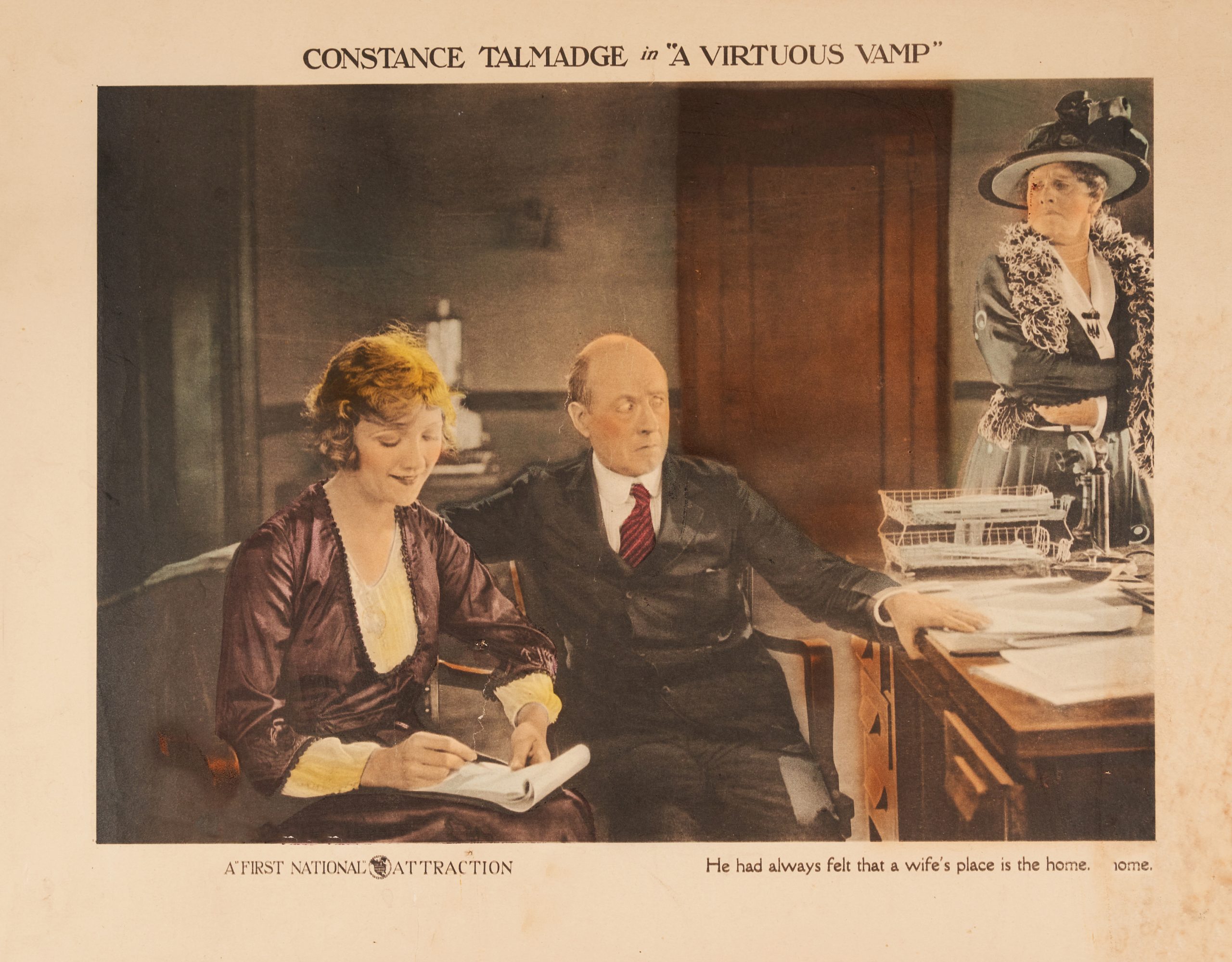
A colored-in lobby card showing a younger woman and her nervous boss whose wife looks on disapprovingly.

A colored-in lobby card showing a man comforting a woman. An office boy catches them touching in a way in a familiar way.

A colored-in lobby card showing a conversation in an office between two men and a defiant woman.

A colored-in lobby card showing two men in an office arguing over the woman standing in the doorway.

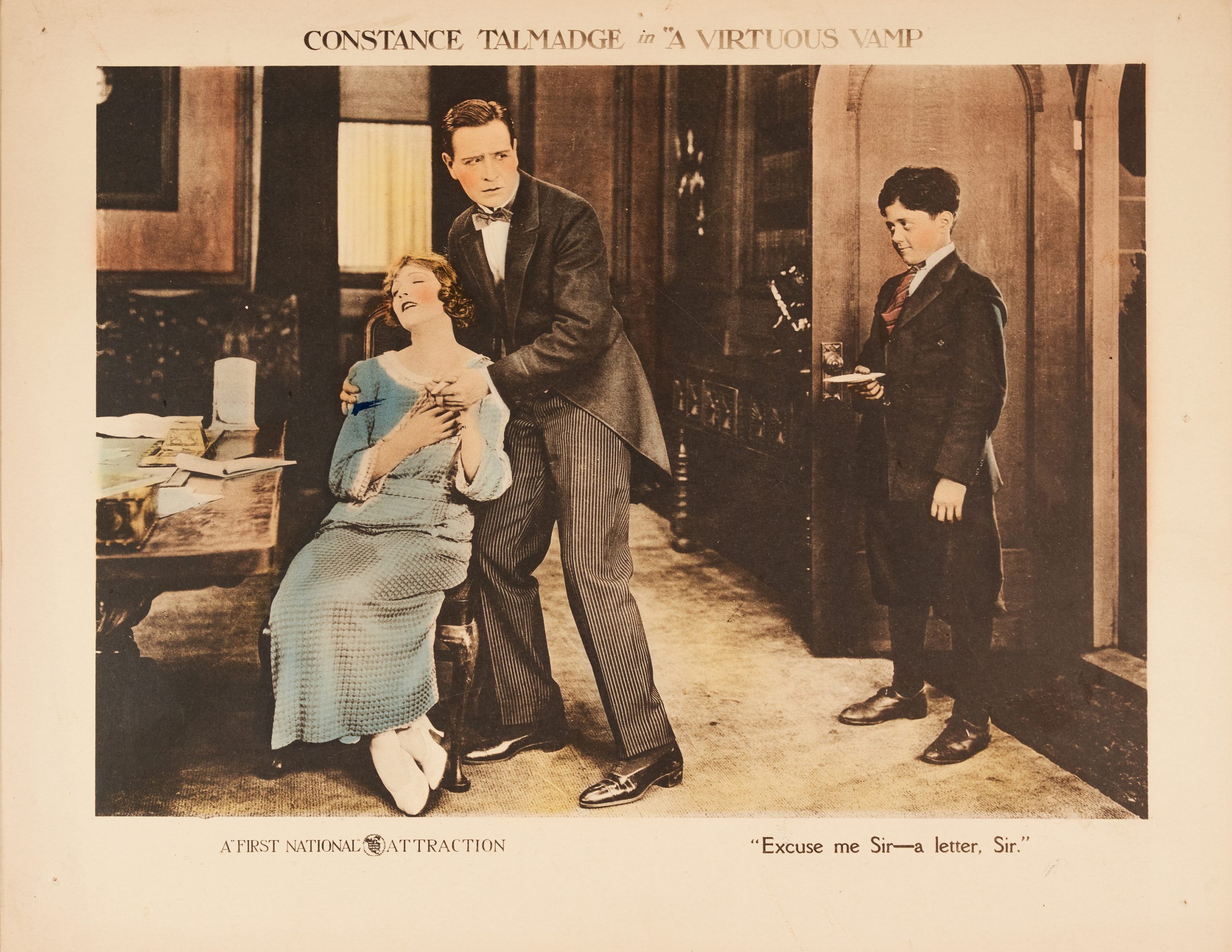
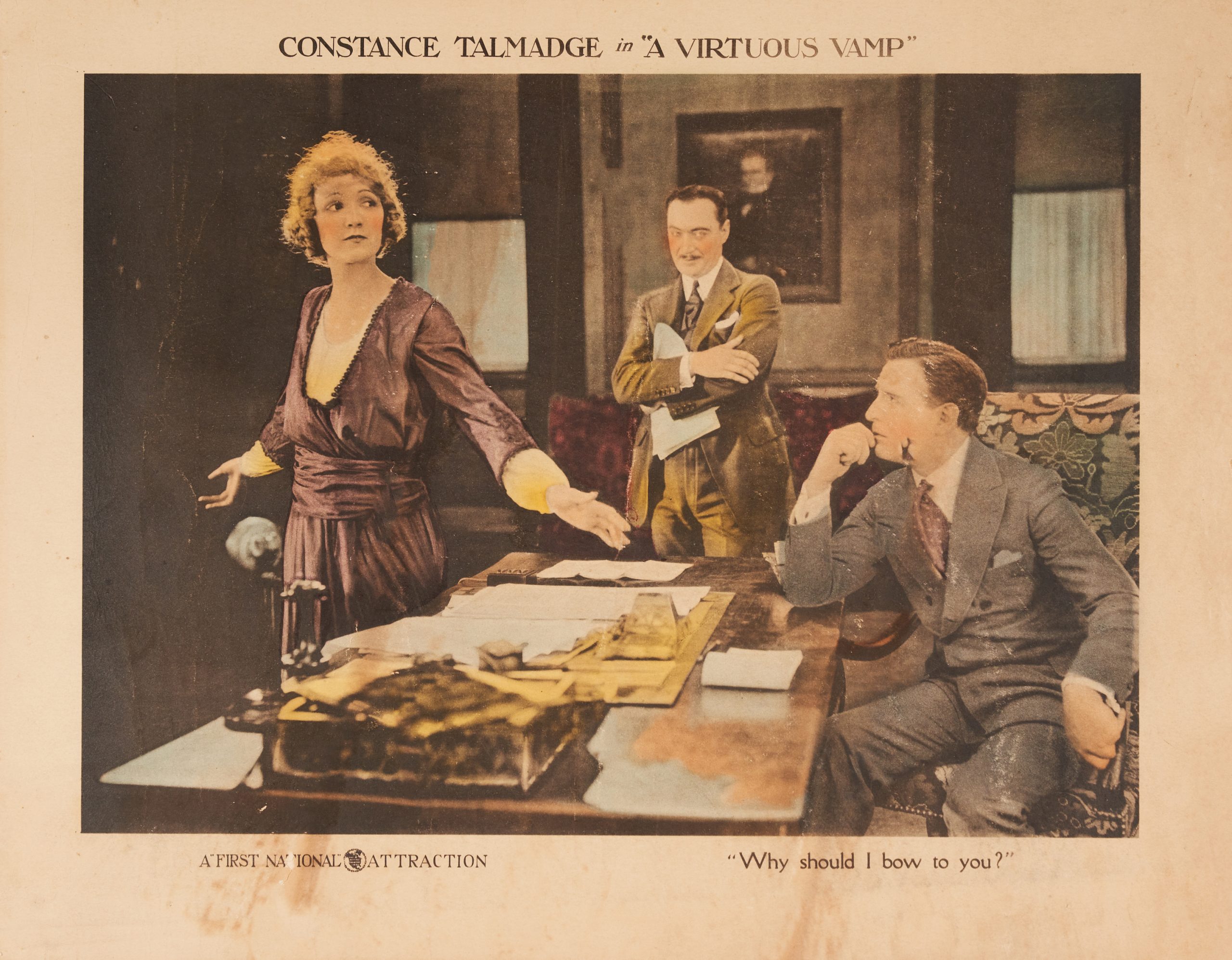
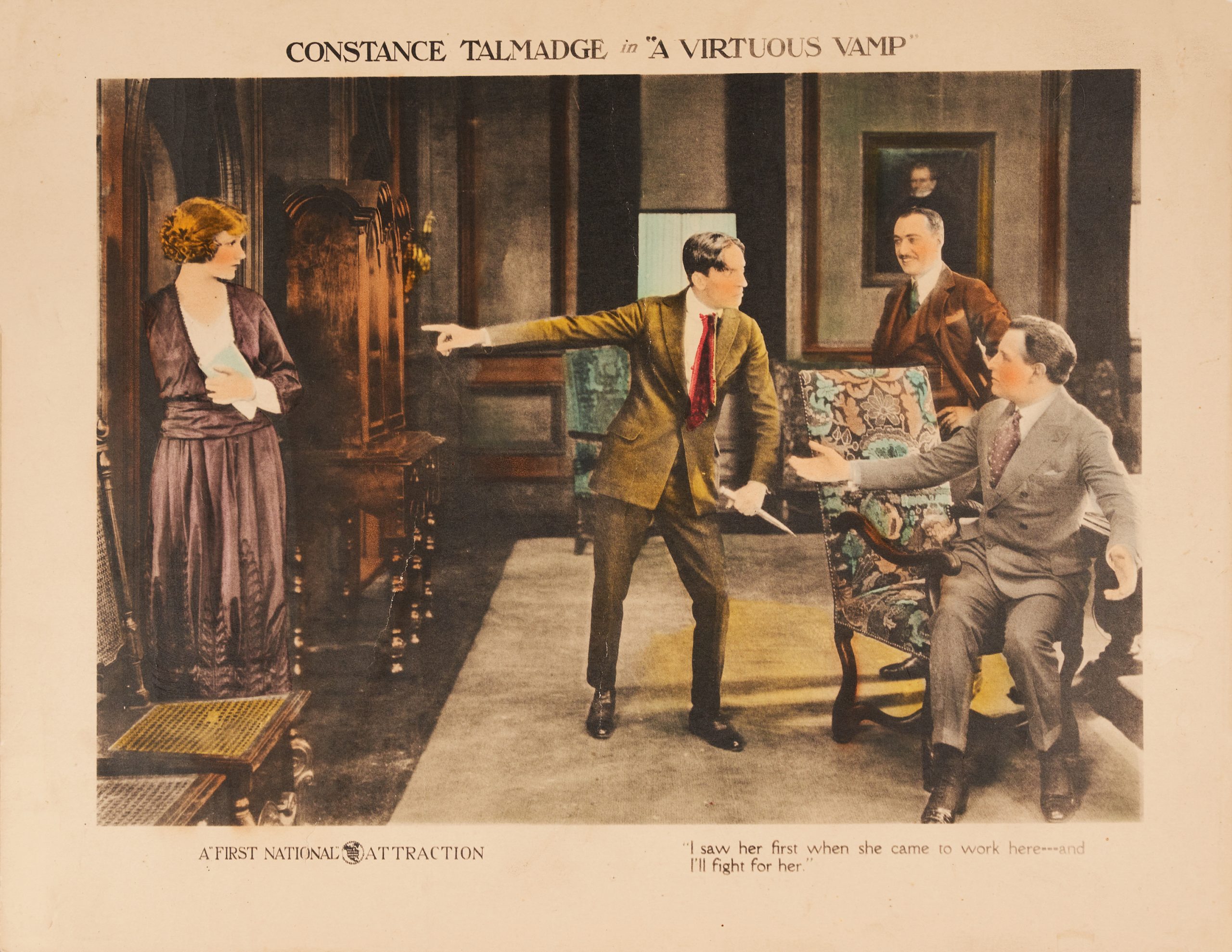
A Virtuous Vamp, 1919

Survives Incomplete
Director: David Kirkland (1878–1964)
Producer/Scenario: Anita Loos (1888–1981)
Writer: John Emerson (1874–1956)
Star: Constance Talmadge (1898–1973)

  • Although best known as Hollywood’s first female screenwriter, Anita Loos also acted as producer on this movie, demonstrating the permeable nature of jobs on set during these early days in the industry. Her husband, John Emerson, also helped write the script.
  • A Virtuous Vamp stars Loos’s friend, the actress and producer Constance Talmadge, for whom she wrote numerous screenplays. Talmadge was so reliably popular that she appears in each of these six lobby cards. Some sources claim that she also acted as co-producer on this film with Loos.
  • The plot of the film revolves around Talmadge’s character, who takes an office job and distracts all her male coworkers with her beauty. Each of the lobby cards demonstrates the “dangers” of allowing an attractive woman into the workplace.

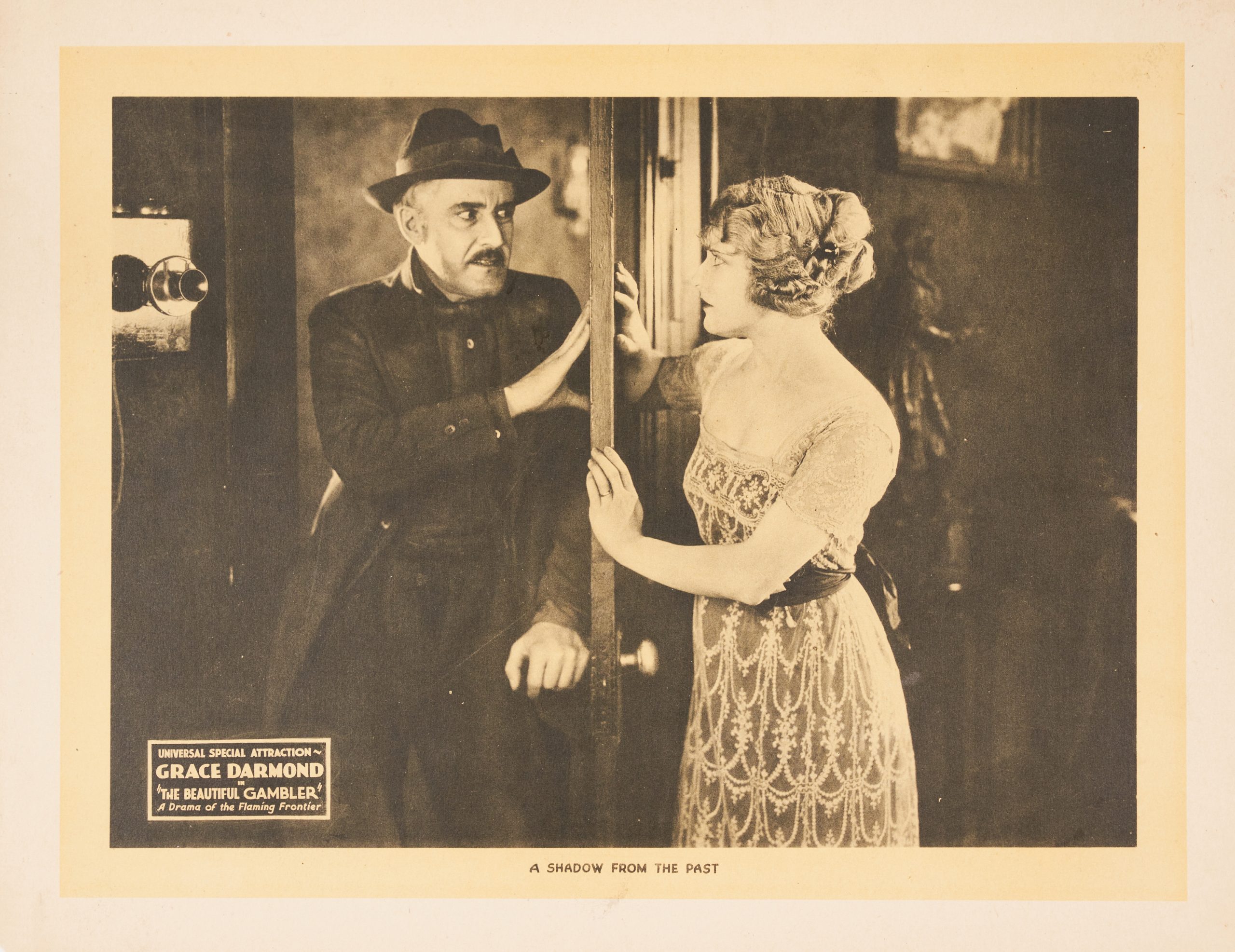
A black-and-white lobby card showing a man and woman on opposite sides of a half open door.

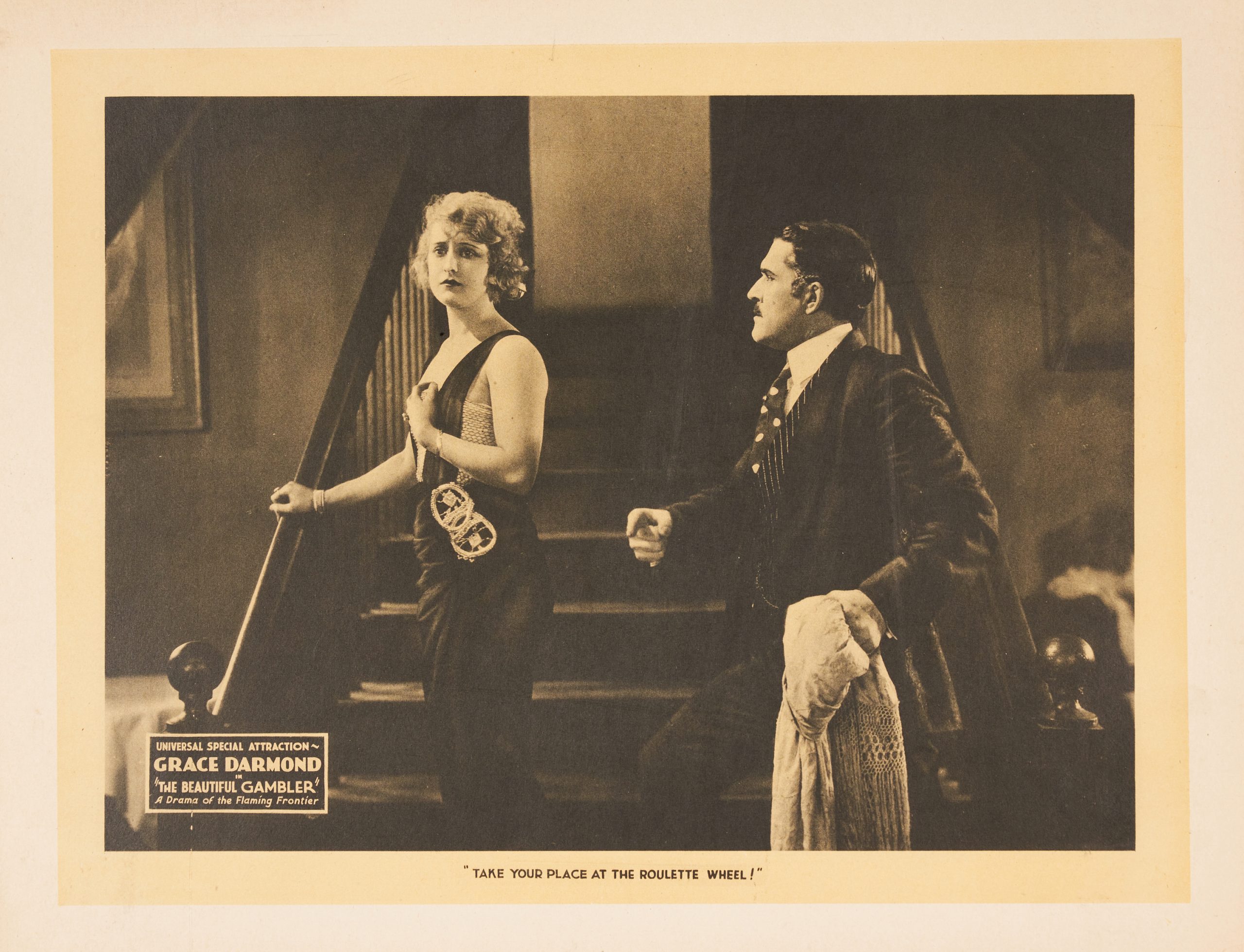
A black-and-white lobby card featuring an elegantly dressed woman approached by a man on a staircase.

The Beautiful Gambler, 1921

Lost Film
Director: William Worthington (1872–1941)
Writer: Hope Loring (1894–1959)
Star: Grace Darmond (1893–1963)

  • Written by Hope Loring, The Beautiful Gambler is a Western about a young woman forced to marry the proprietor of a casino in order to pay off her father’s gambling debts. 
  • While gambling was largely illegal in the United States at this time, and was therefore not generally allowed to be depicted in movies, the Western genre was seen as an exception to this rule. Censorship of motion pictures was also handled regionally, meaning each state could decide if a film was wholesome enough to be screened. Text cards were often displayed before or after a film indicating that “no offensive pictures are ever shown here.”

“In any service where a couple hold down jobs as a team, the male generally takes his ease while the wife labors at his job as well as her own.”Anita Loos, screenwriter 


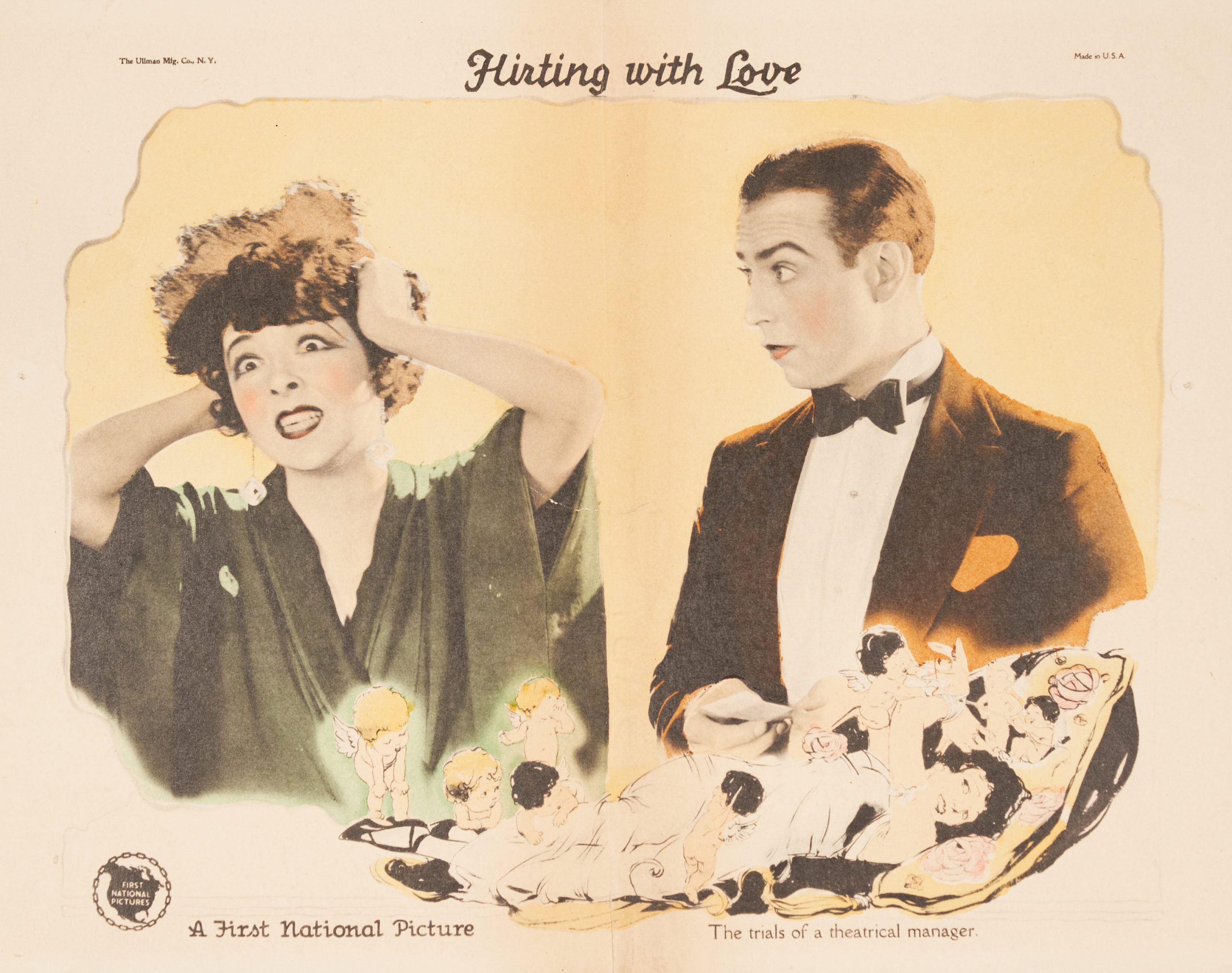
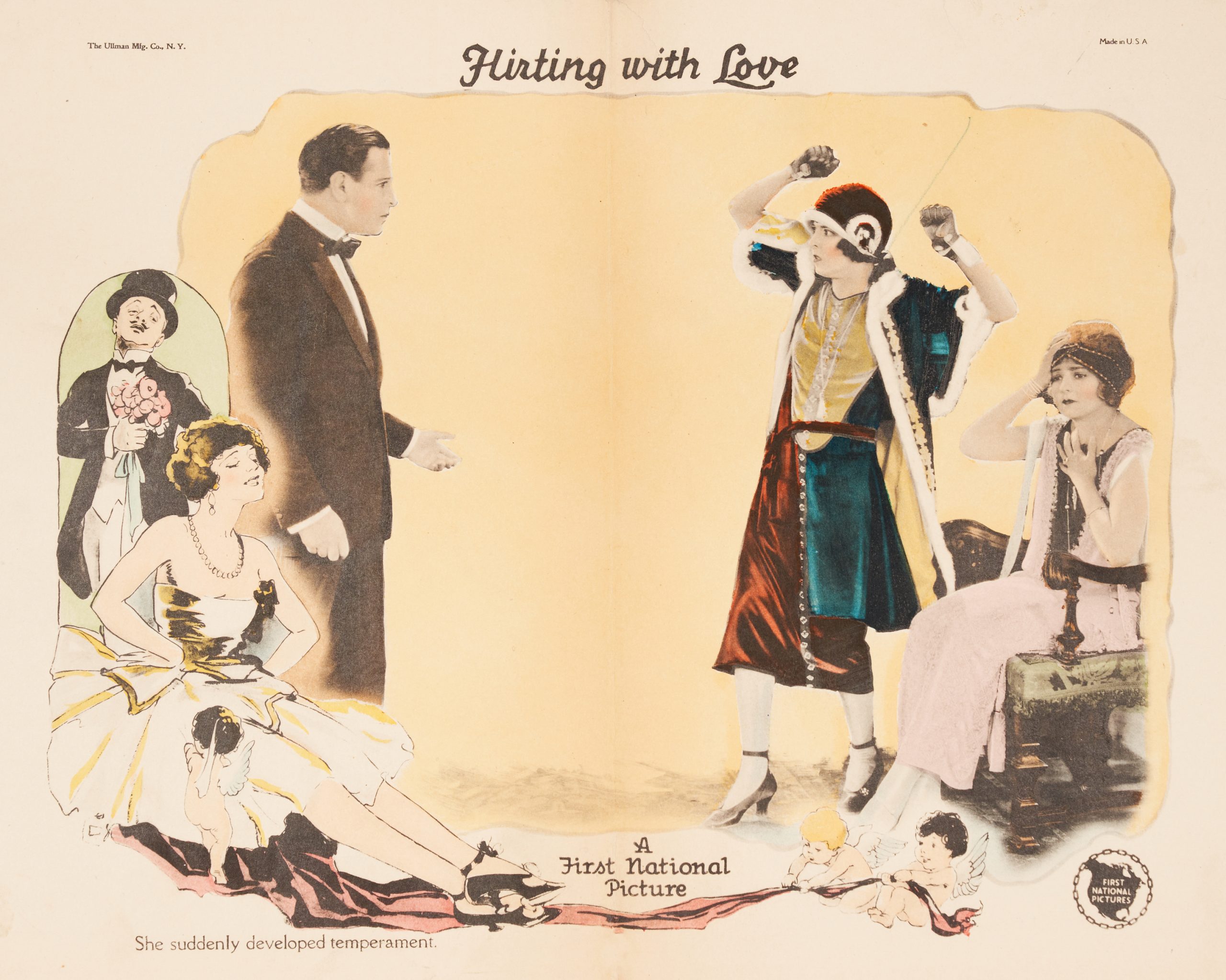
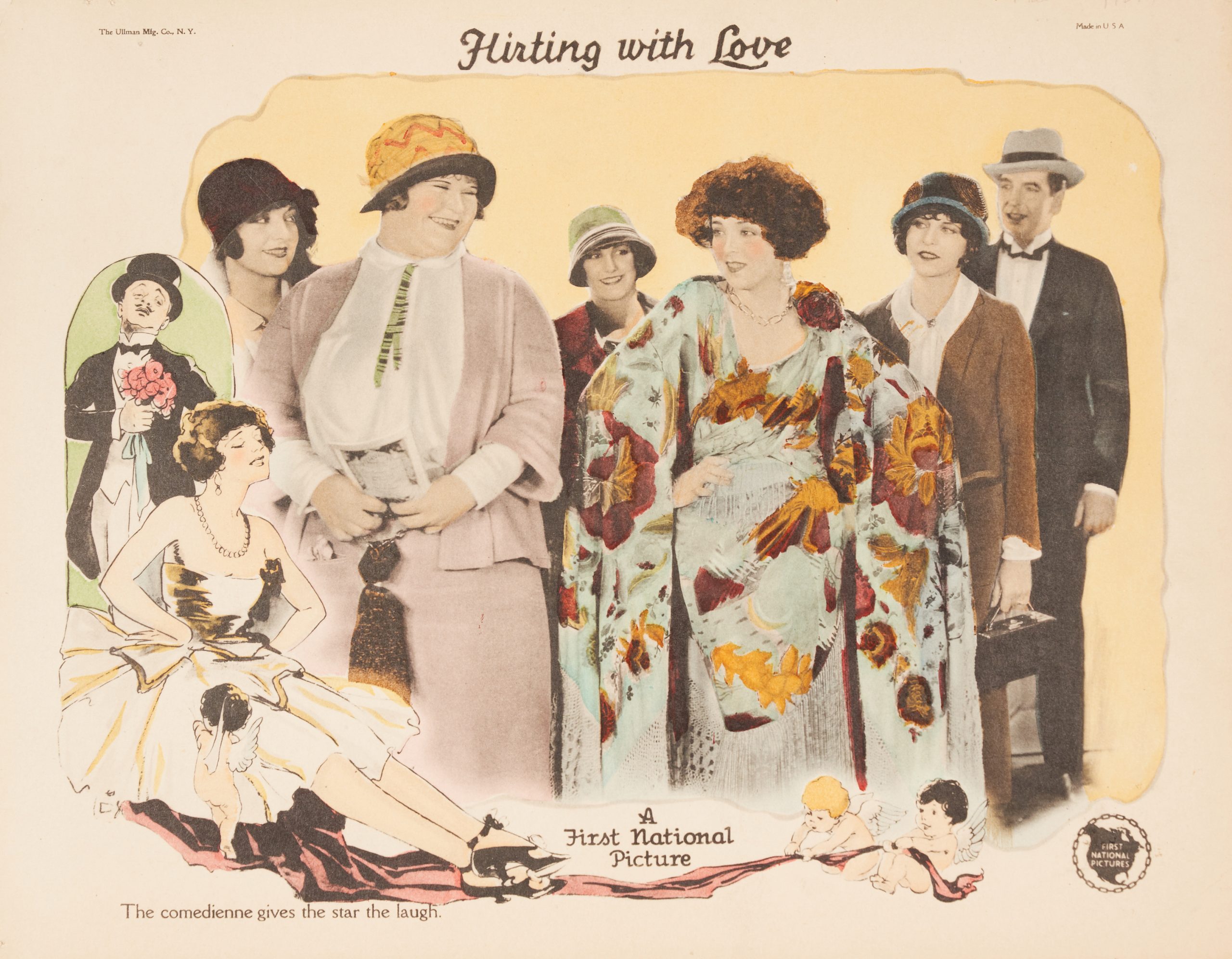
A colored-in lobby card featuring the female lead in an elegant dress surrounded by a group of people.

A colored-in lobby card featuring a man and woman smiling and looking at each other endearingly.

A colored-in lobby card showing a perplexed man and an exasperted woman with her hands in her hair.

A colored-in lobby card of an acting scene featuring a man and woman arguing.

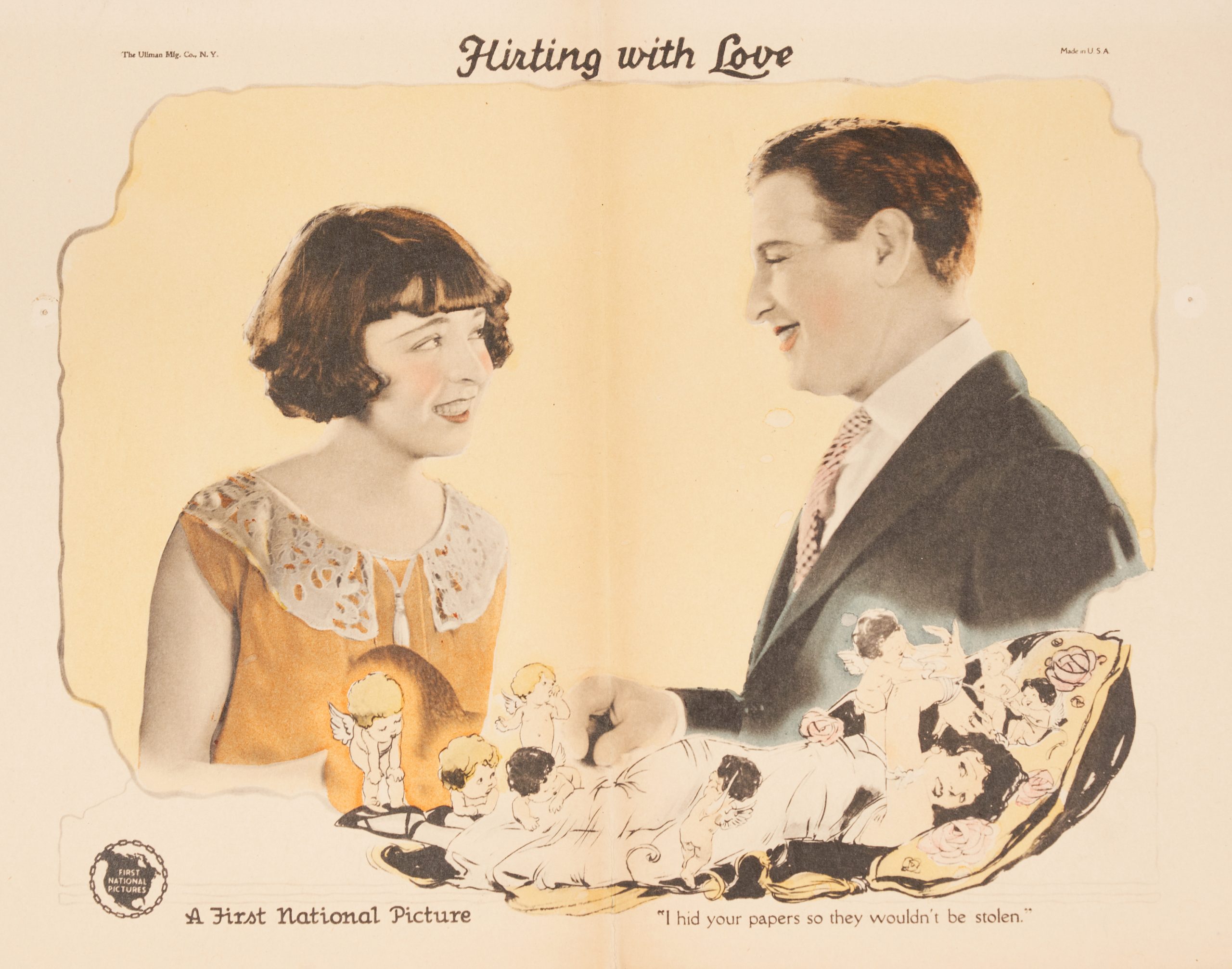
Flirting with Love, 1924

Lost Film
Director: John Francis Dillon (1884–1934)
Editorial Director: Marion Fairfax (1875–1970)
Costume Design: Clare West (1889–1980)
Star: Colleen Moore (1899–1988)

  • By the early 1920s, Marion Fairfax, the editorial director on this film, was an established screenwriter and playwright with her own production company. In 1923, she joined the writing staff of First National, bringing reliable talent to the studio. 
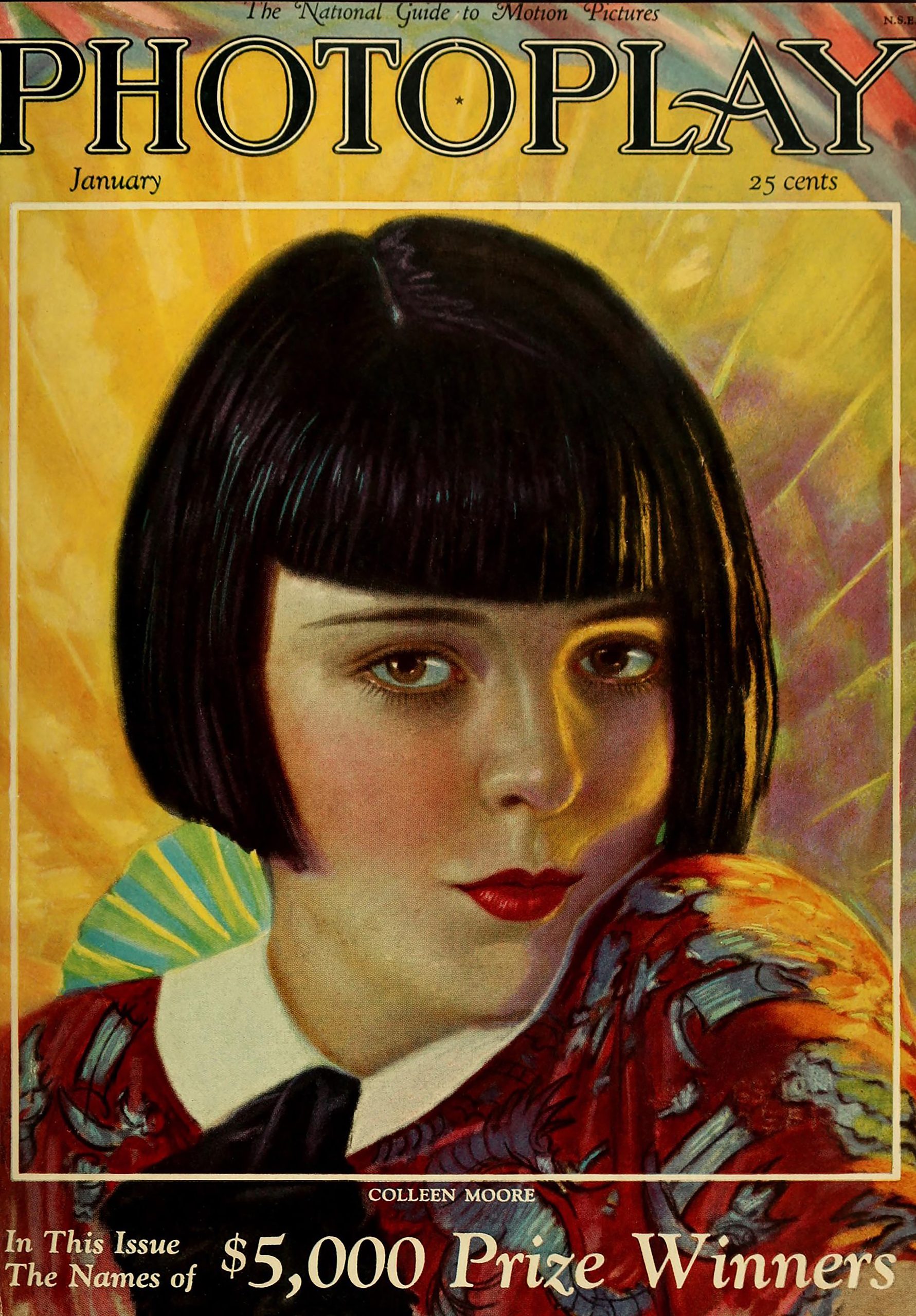
  • Actress Colleen Moore, who is shown in all four of these lobby cards, is credited with popularizing the bob, a short hairstyle popular during the Roaring Twenties that marked a woman as young, fun, and modern. 
  • Clare West was the first official costume designer for Hollywood films, creating the contemporary looks on display in this and many other movies that would come to define modern American style. Her most successful collaborations were the ten films she worked on for Cecil B. DeMille, as well as her tenure as “studio designer” at the Triangle Motion Picture Company.

An illustrated cover of Photoplay Magazine featuring a young actress with dark bobbed hair and red pursed lips.

Photoplay, 1926

**This image is for reference only and does not appear in the exhibition

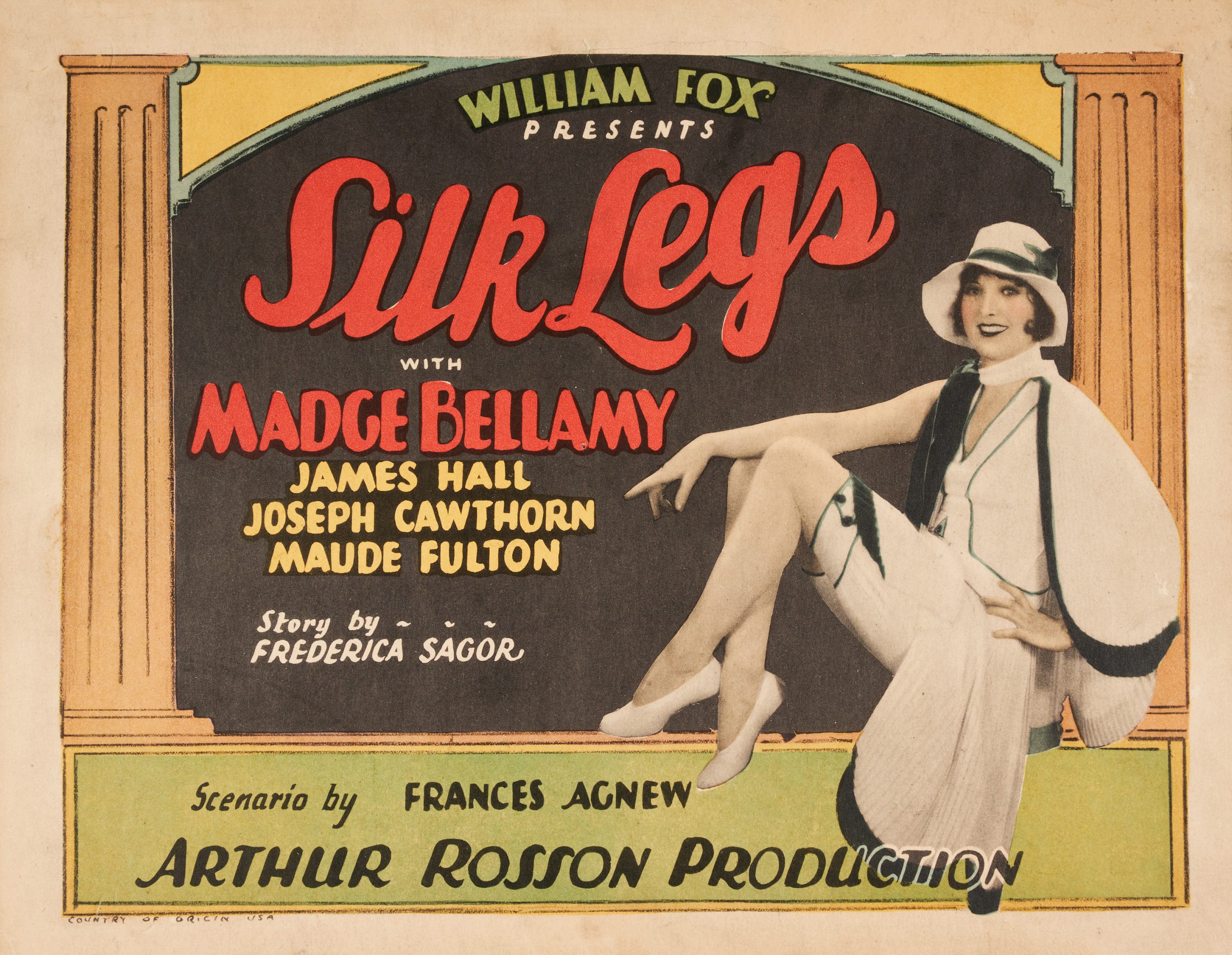
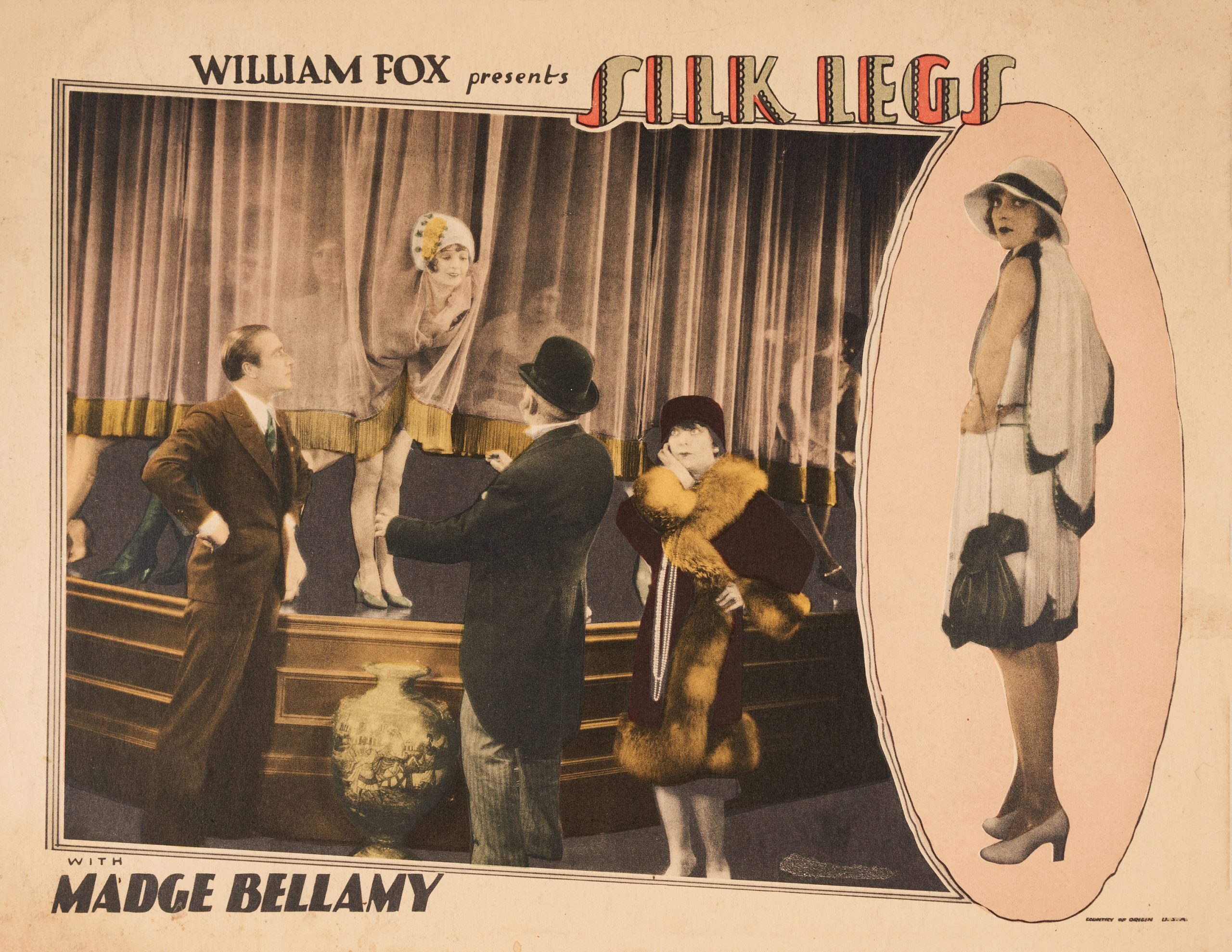
A lobby card with a stylish woman showing off her legs amid illustrations and large red typography.

A lobby card showing a film scene next to a woman modeling her fashions inside a pink oval.

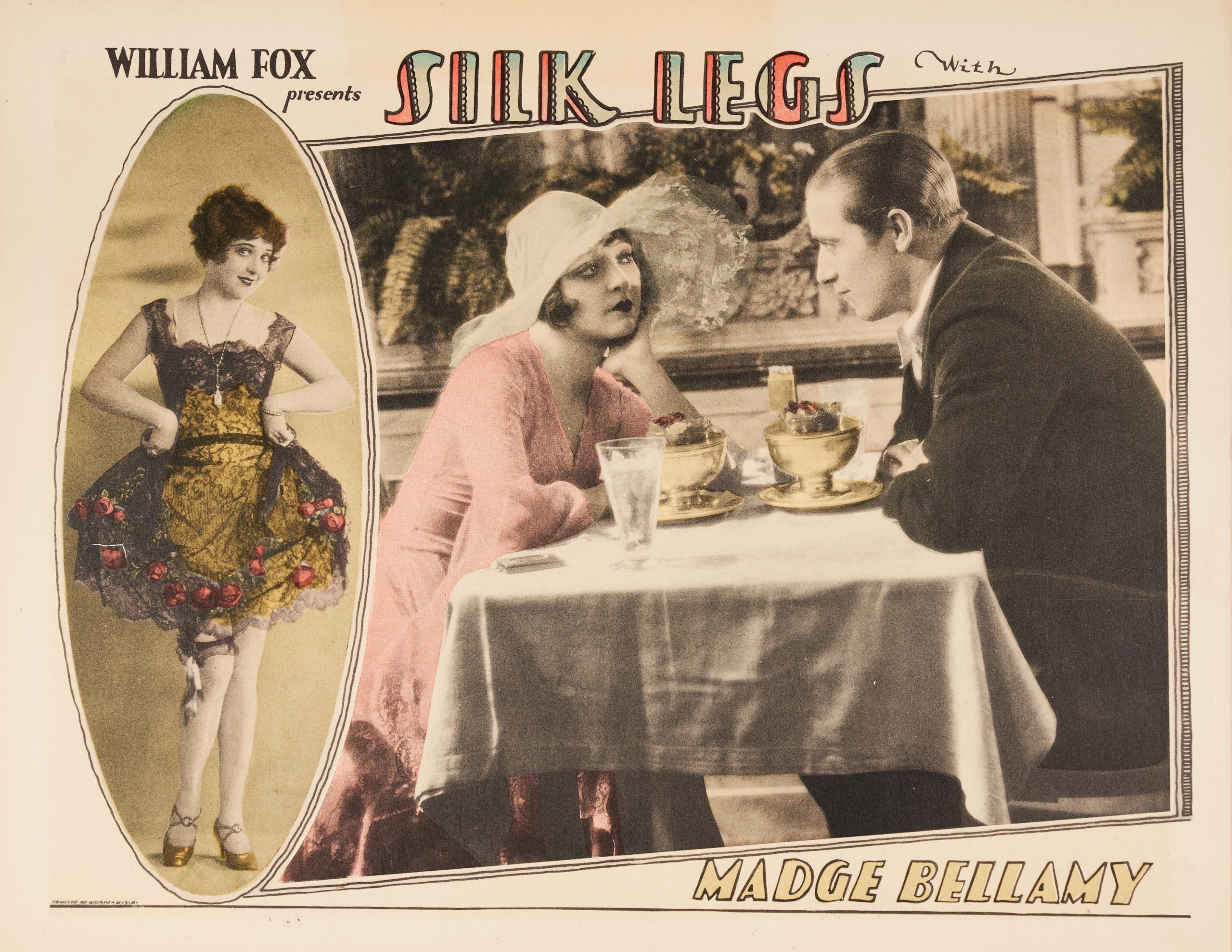
A lobby card with a man and woman sitting across one another and an oval fashion photo on the left.

Silk Legs, 1927

Lost Film
Director: Arthur Rosson (1886–1960)
Story: Frederica Sagor Maas (1900–2012)
Writer: Frances Agnew (1891–1967)
Star: Madge Bellamy (1899–1990)

  • Silk Legs is the story of a pair of rival stocking salespeople—a man whose slick pitch often seals the deal and a woman who exploits her sexuality by modeling the product for clients. 
  • At the time the film was released, the notion that a woman must choose between a career and a respectable family was being challenged. Movies like this one that highlighted female success in the workplace began to gain in popularity, even if the endings often show the main character finding love and marriage. 
  • Both the writers on this production, Frances Agnew and Frederica Sagor Maas, were rarely given credit on productions. Crediting, like much of the film industry in Hollywood, was in its infancy, and women were commonly overlooked. Both Agnew and Mass also wrote about Hollywood for newspapers like the Los Angeles Times and the Hollywood Reporter, and Maas even published a salacious novel about the film industry.

Good Wives, Bad Wives, & Divorce

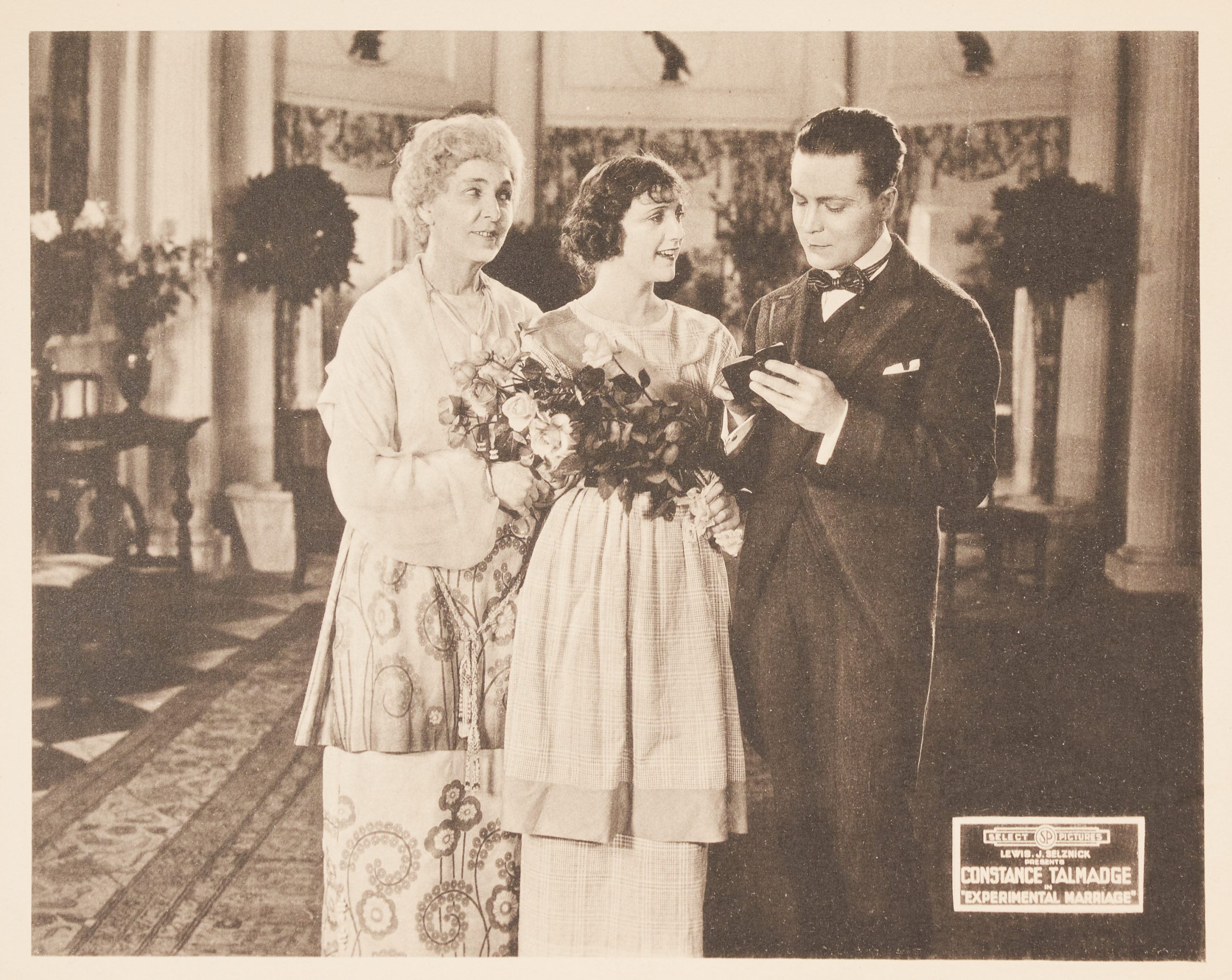
A lobby card featuring a man and two women standing in a parlor room. One woman holds a bouquet.

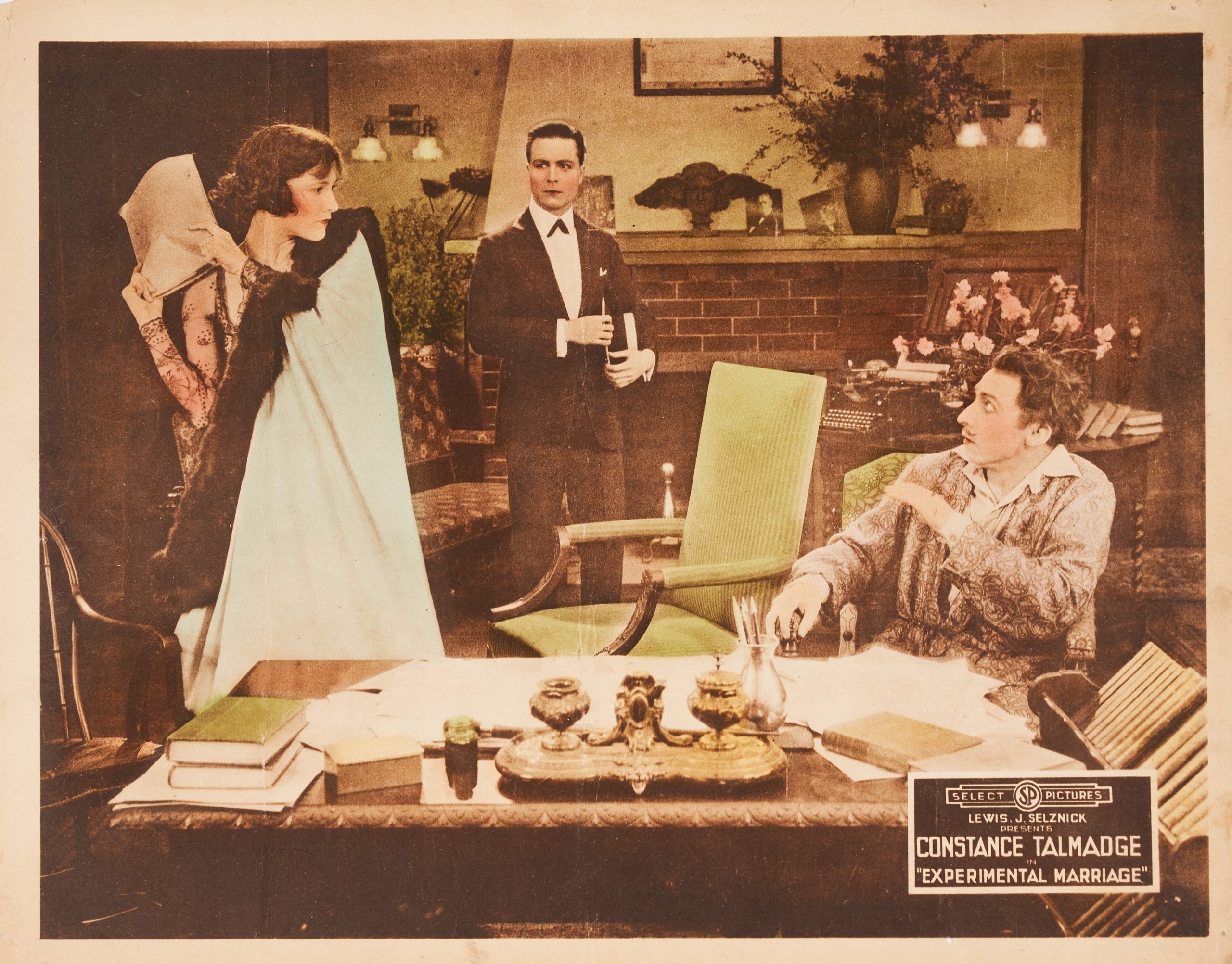
A colored-in lobby card of two men looking anxiously at a woman. She holds papers in her hand as if to strike.

Experimental Marriage, 1919

Lost Film
Director: Robert G. Vignola (1882–1953)
Writer: Alice Eyton (1874–1929)
Star: Constance Talmadge (1898–1973)

  • Written by novelist Alice Eyton (who was hired as a staff writer for Paramount Pictures the following year), Experimental Marriage covers an unconventional arrangement: the bride, a staunch feminist, proposes that the couple only lives together Saturday through Monday, leaving each free to pursue other pleasures the rest of the week. 
  • The film’s star, Constance Talmadge, was close friends with the screenwriter Anita Loos, whose own marriage mimicked the one in the plot in many ways. However, Loos had not initiated the situation, and she maintained a business relationship with her screenwriter husband, John Emerson, until his death. 
  • While the plot offers Talmadge’s character both agency and freedom, it also reinforces traditional values; at the end of the film, the woman calls off the arrangement in favor of monogamy. Most films that hinted at more feminist storylines were reigned in by these types of resolutions. 


“I spent my life searching for a man to look up to without lying down”Frances Marion, director & screenwriter

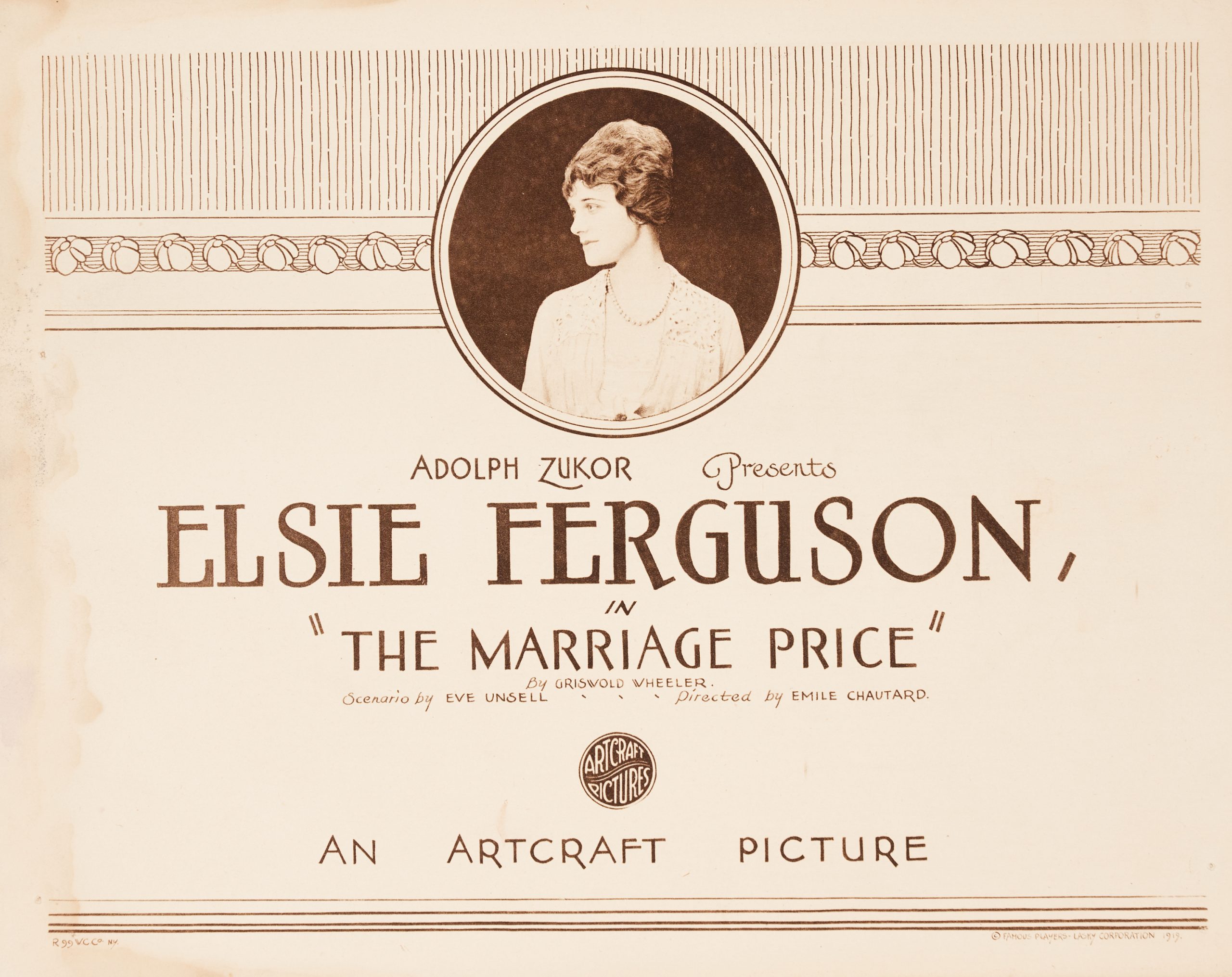
A sepia-toned lobby title card with a circular portrait of the lead actress and details of the film.

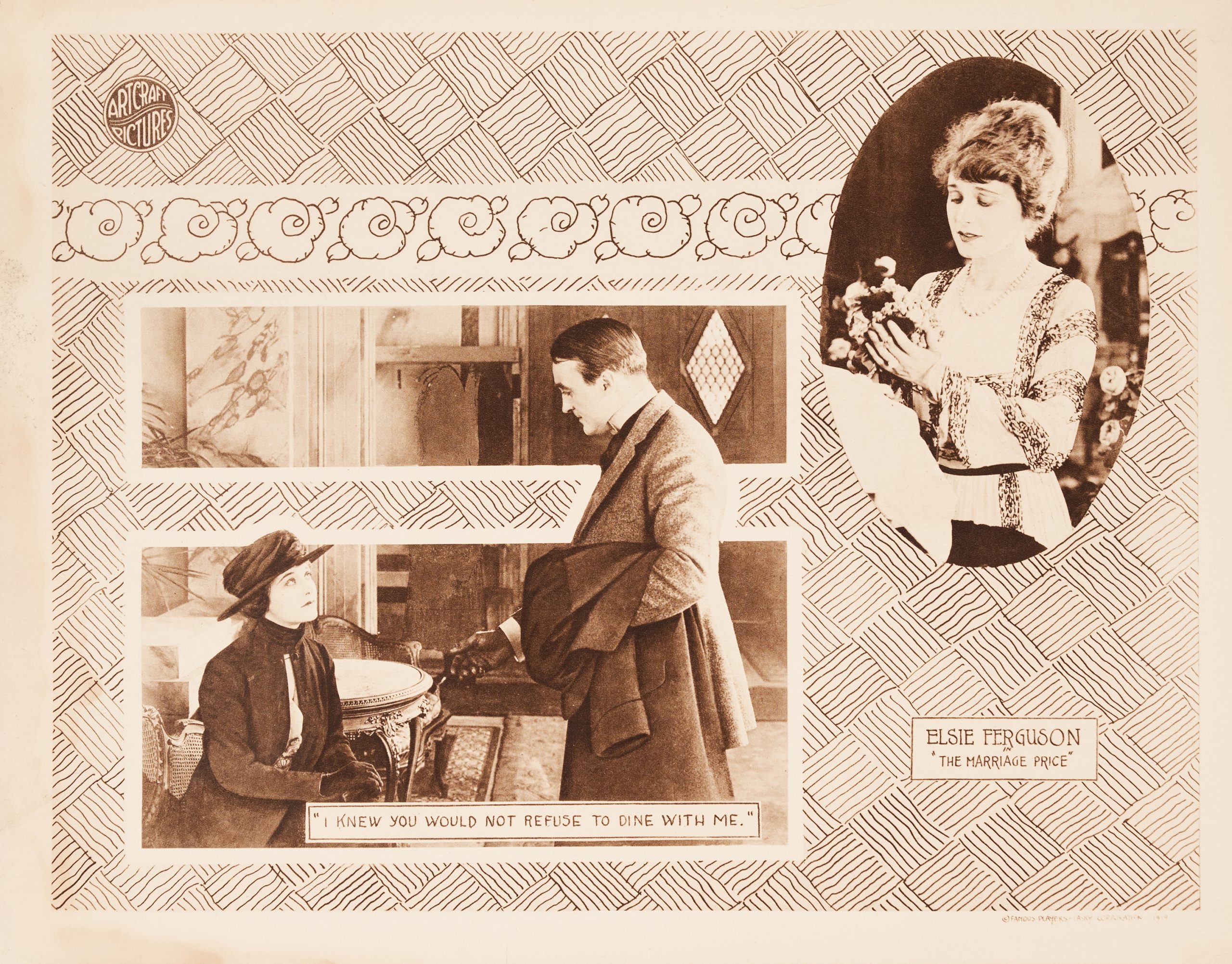
A sepia-toned lobby card featuring two film scenes amid decorative cross hatch and floral motifs.

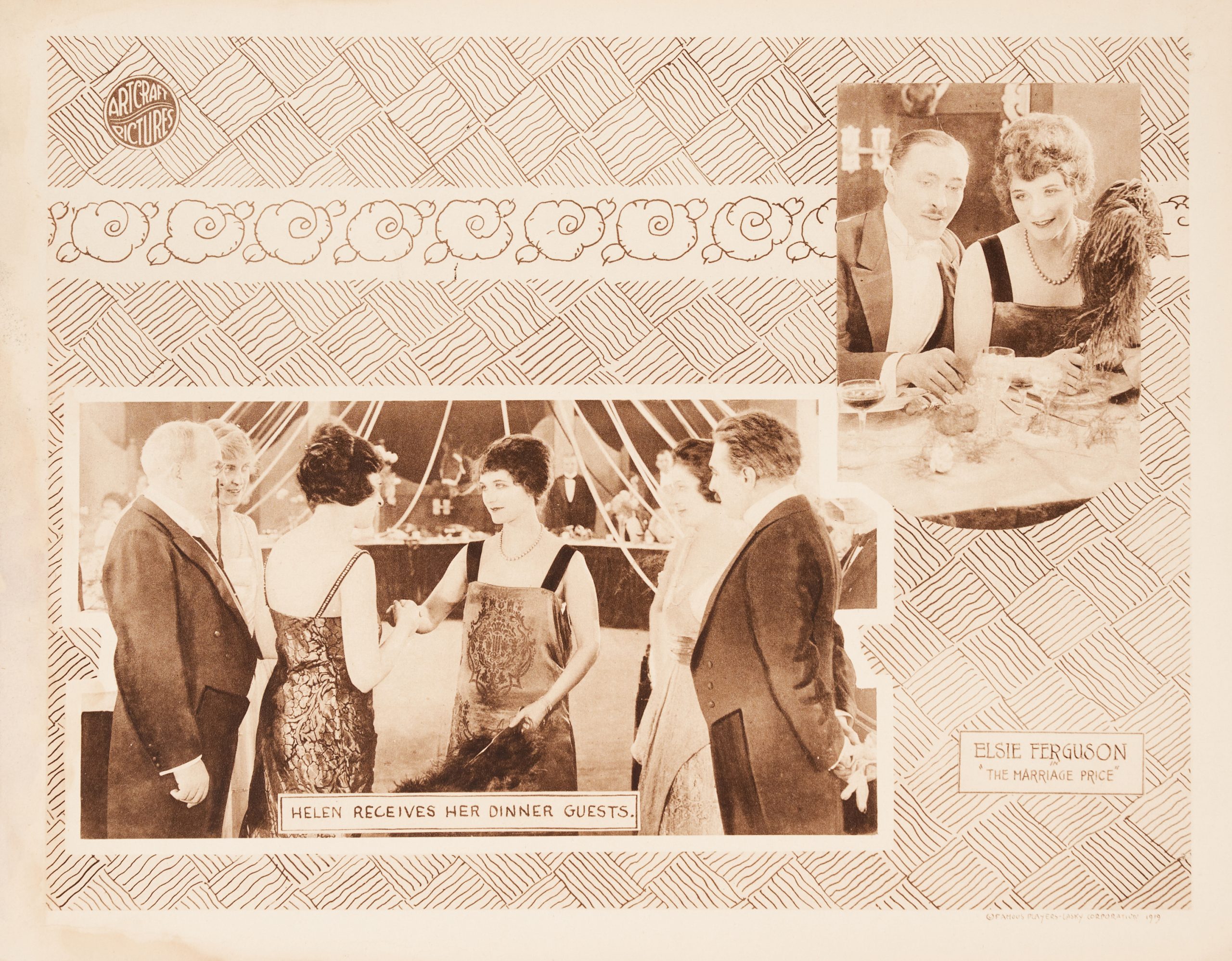
A sepia-toned lobby card featuring film scenes amid illustrational, decorative motifs.

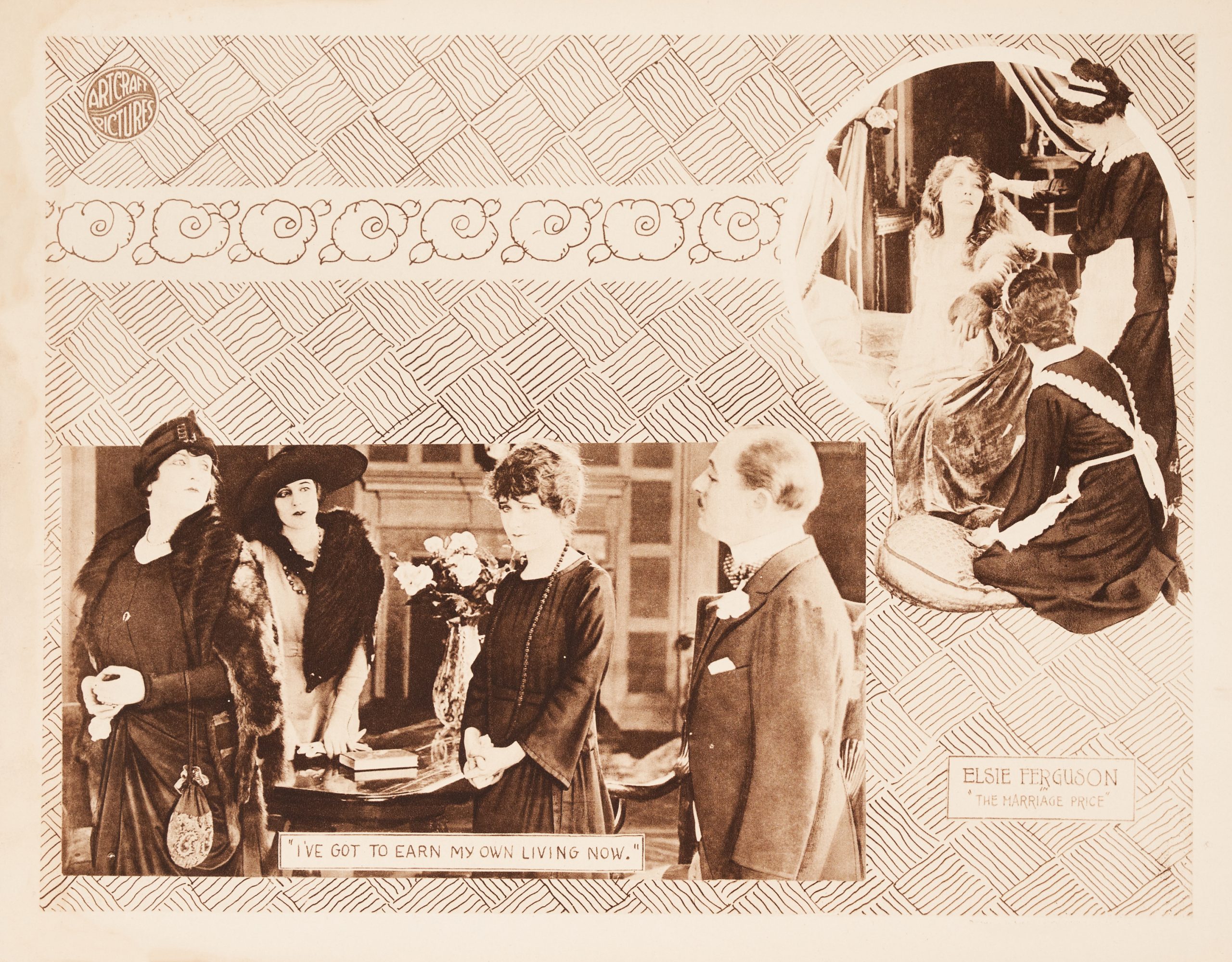
A sepia-toned lobby card featuring film scenes amid illustrational, decorative motifs.

A sepia-toned lobby card featuring film scenes amid illustrational, decorative motifs.

A sepia-toned lobby card featuring film scenes amid illustrational, decorative motifs.

A sepia-toned lobby card featuring film scenes amid illustrational, decorative motifs.

A sepia-toned lobby card featuring film scenes amid illustrational, decorative motifs.

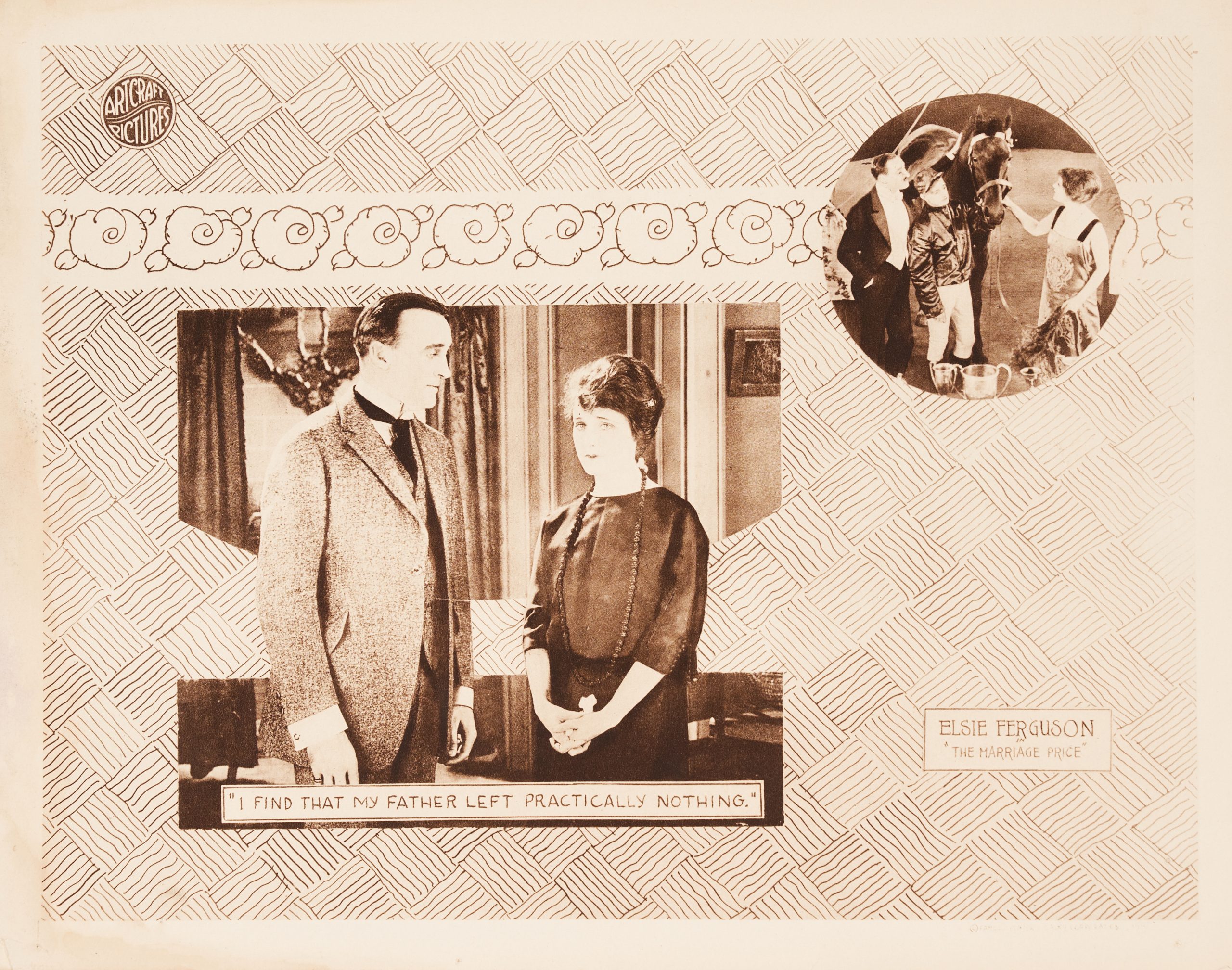
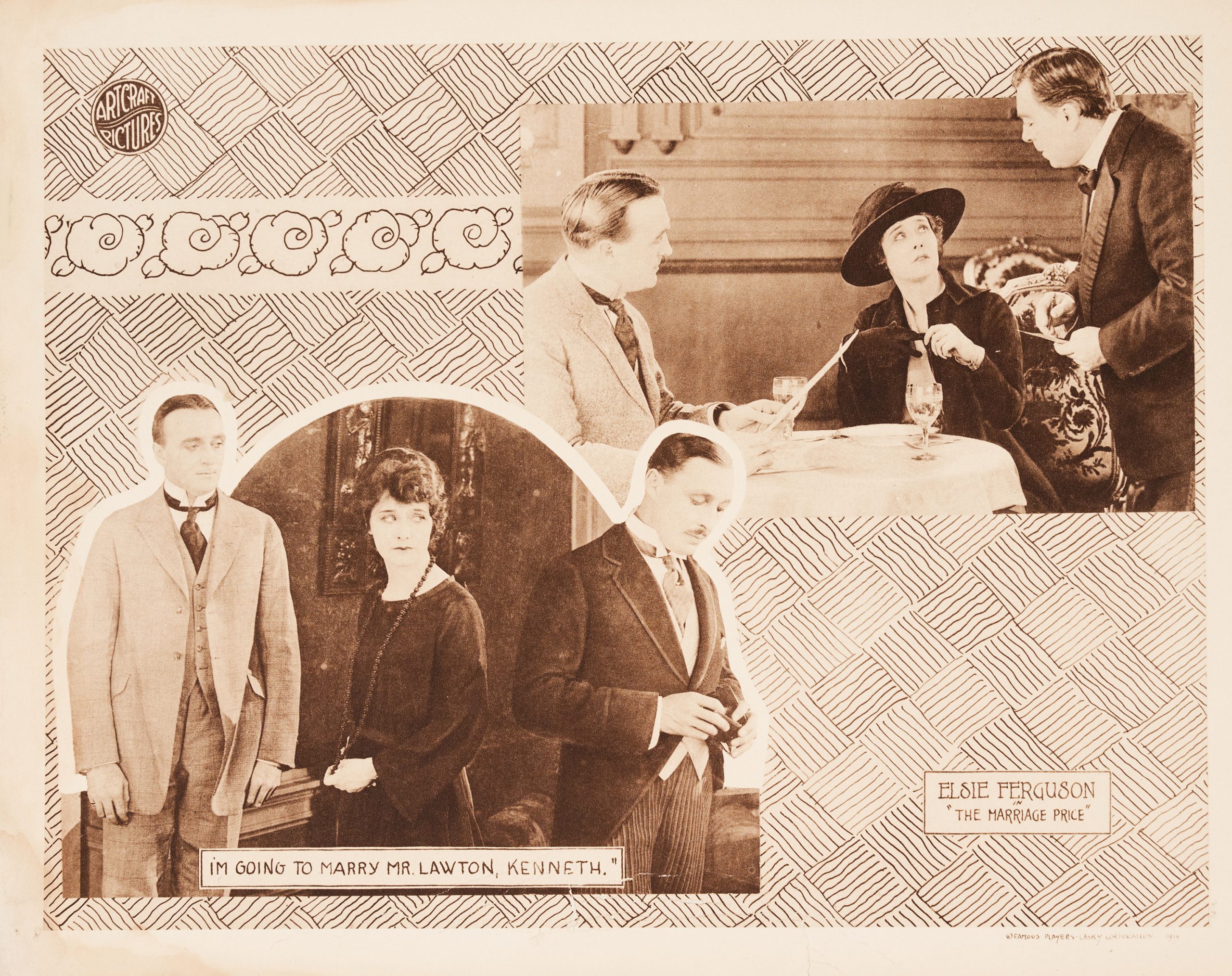
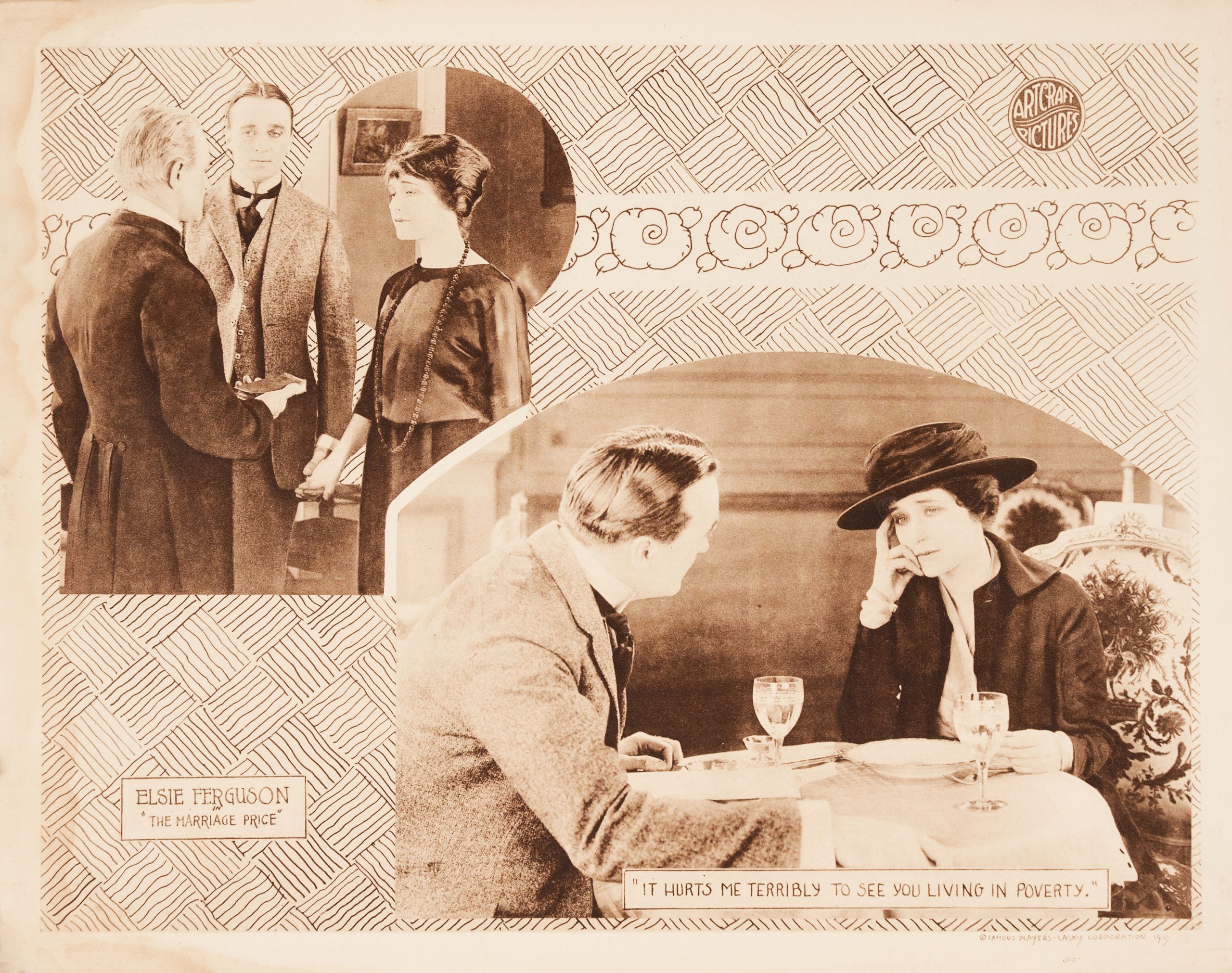
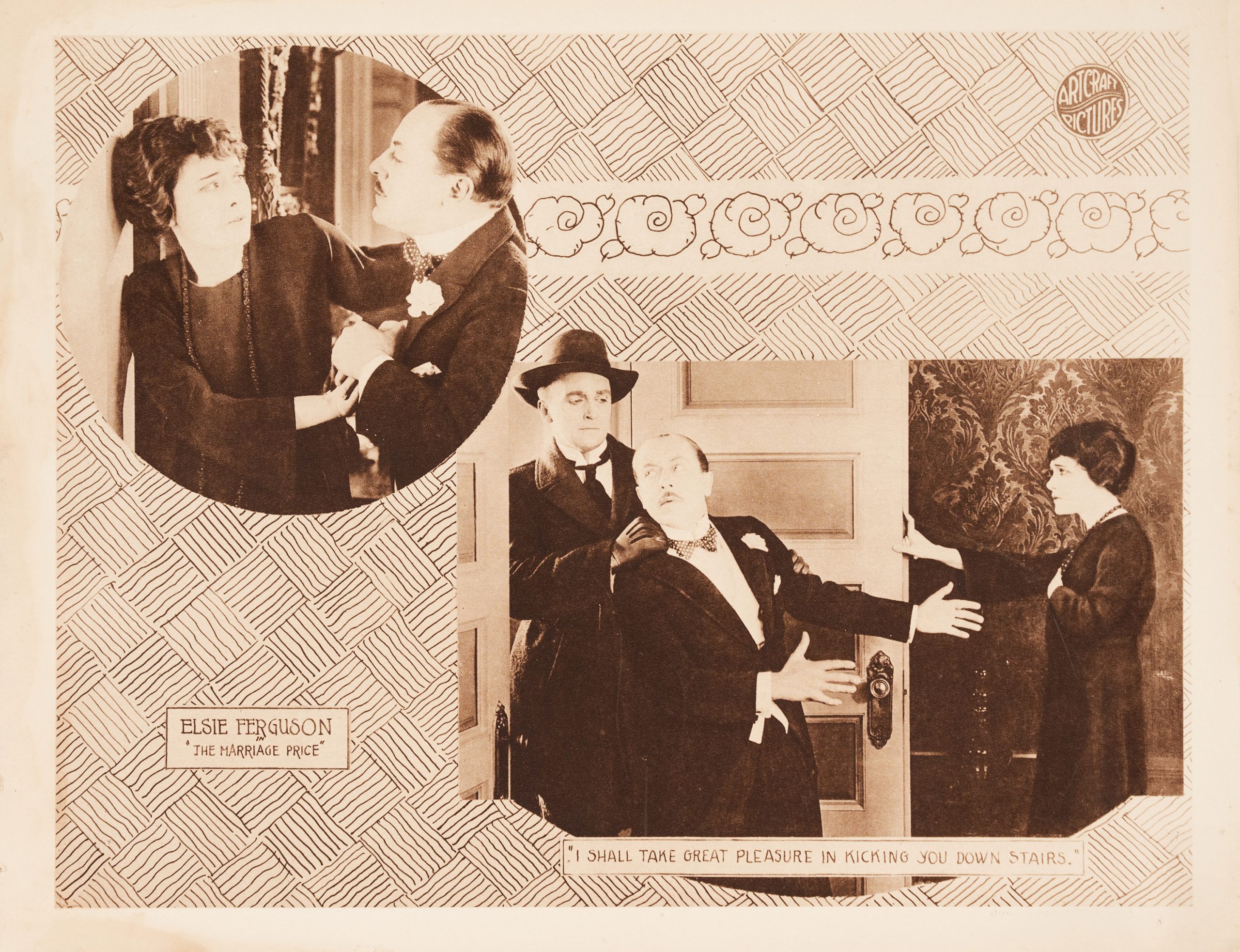
The Marriage Price, 1919

Lost Film
Director: Émile Chautard (1864–1934)
Scenario: Eve Unsell (1879–1937)
Star: Elsie Ferguson (1883–1961)

  • Eve Unsell wrote more than 90 screenplays during her career, working in screenwriter positions in both the United States and London during the 1910s. In 1916, she became the head of scenarios at the newly formed Famous Players-Lasky Corporation where she worked with the young Alfred Hitchcock; he designed the titles for her film The Call of Youth (1921), among others. Five years later, she founded Eve Unsell Photoplay Staff, Inc.
  • These monotone lobby cards feature stills from the film surrounded by ornamental motifs. They were most likely printed through the rotogravure process, involving an etched plate on a round drum press. Comprising eight cards, this is the most complete set in the exhibition, and summarizes the entire plot of the film.

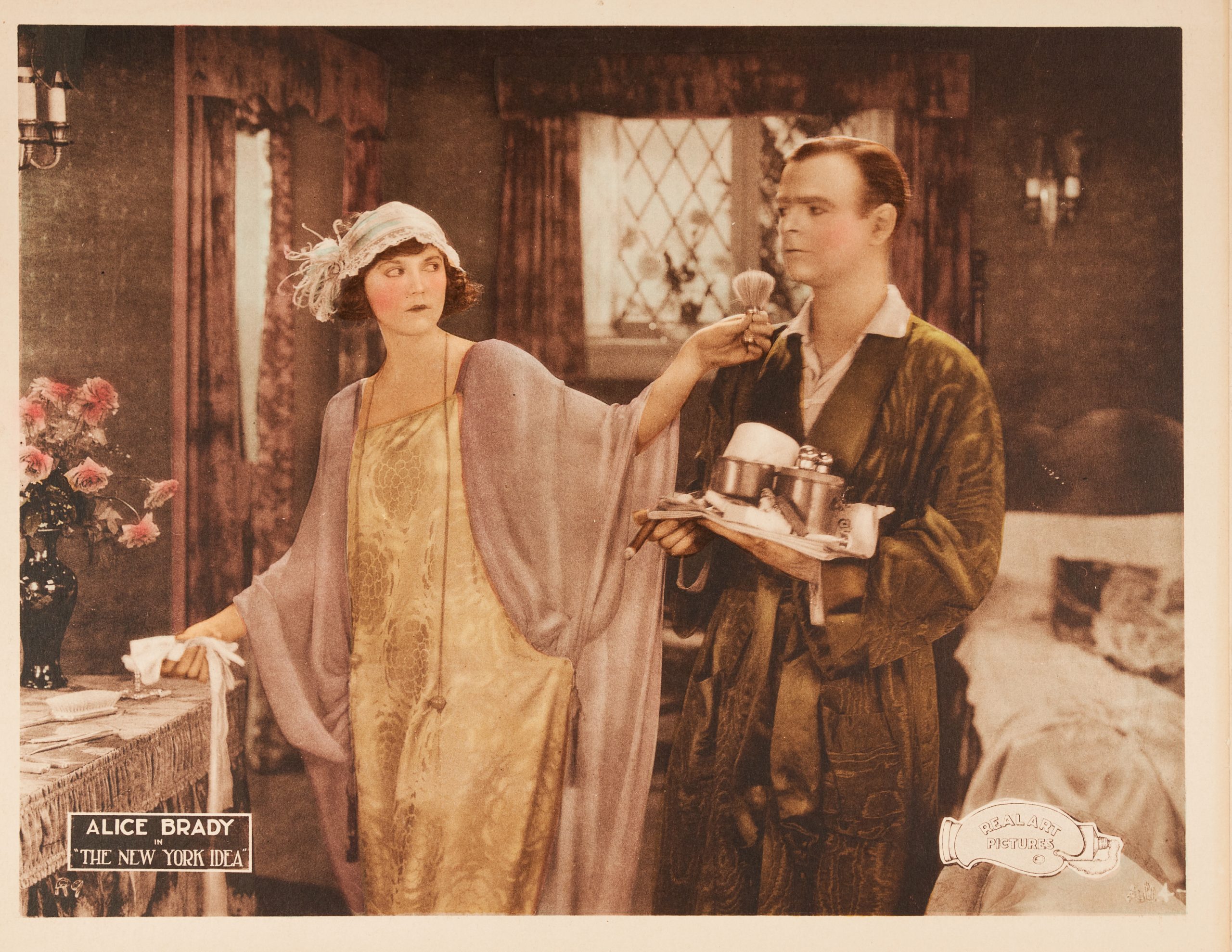
A colored-in lobby card showing a man and woman in a bedroom. She holds a makeup brush to his chin.

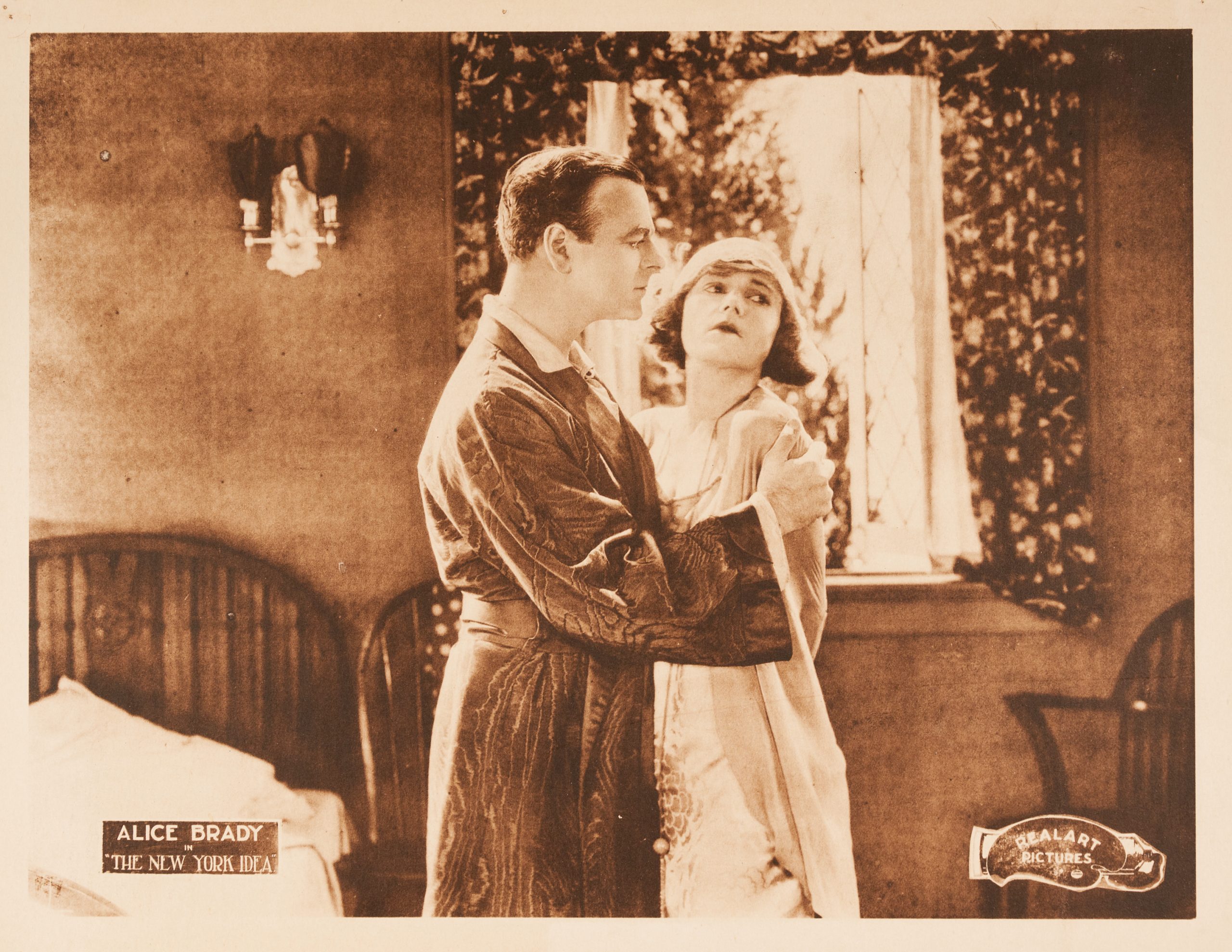
A sepia lobby card of a man reassuring a forlorn-looking woman with an embrace.

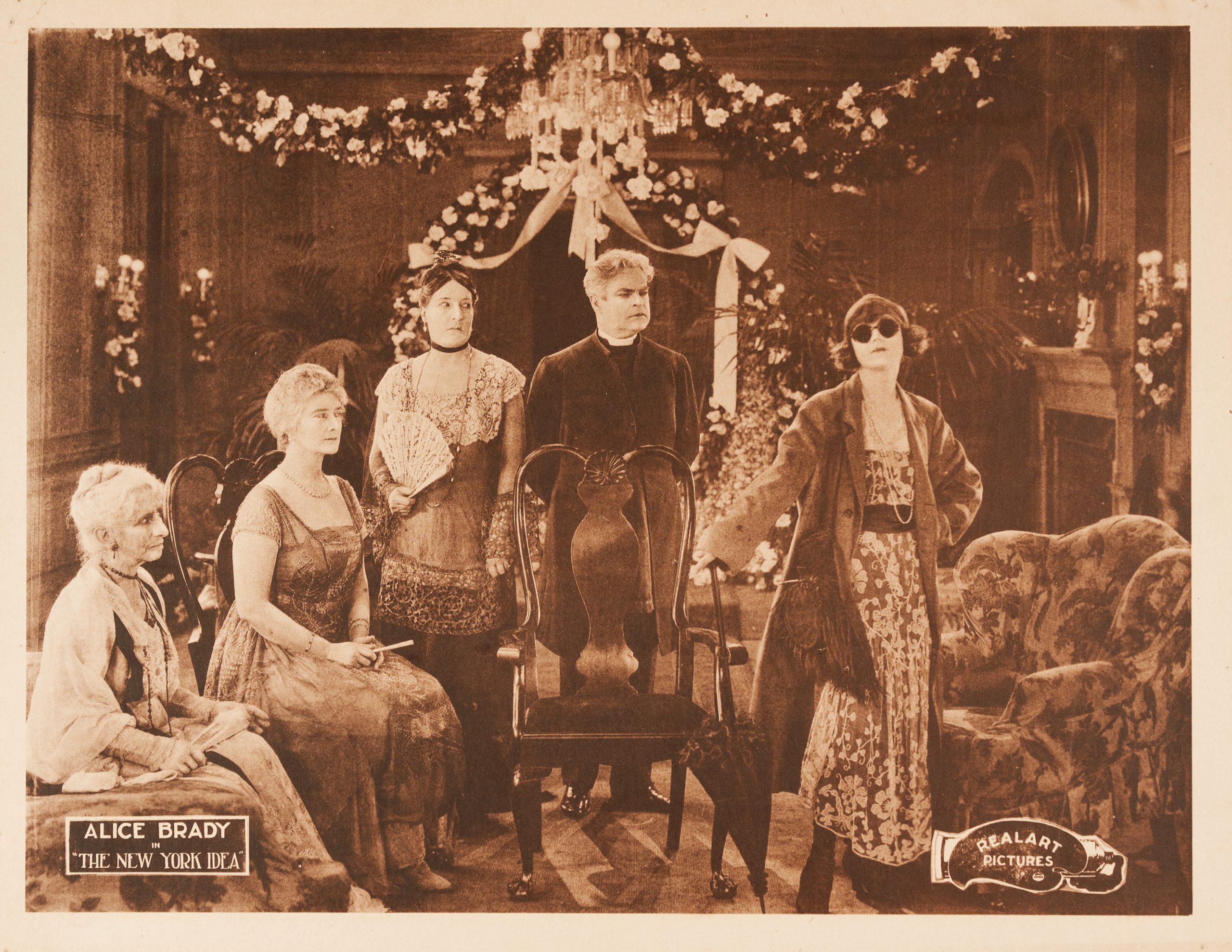
A sepia lobby card showing a group of adults looking disapprovingly at a self-posessed woman in sunglasses.

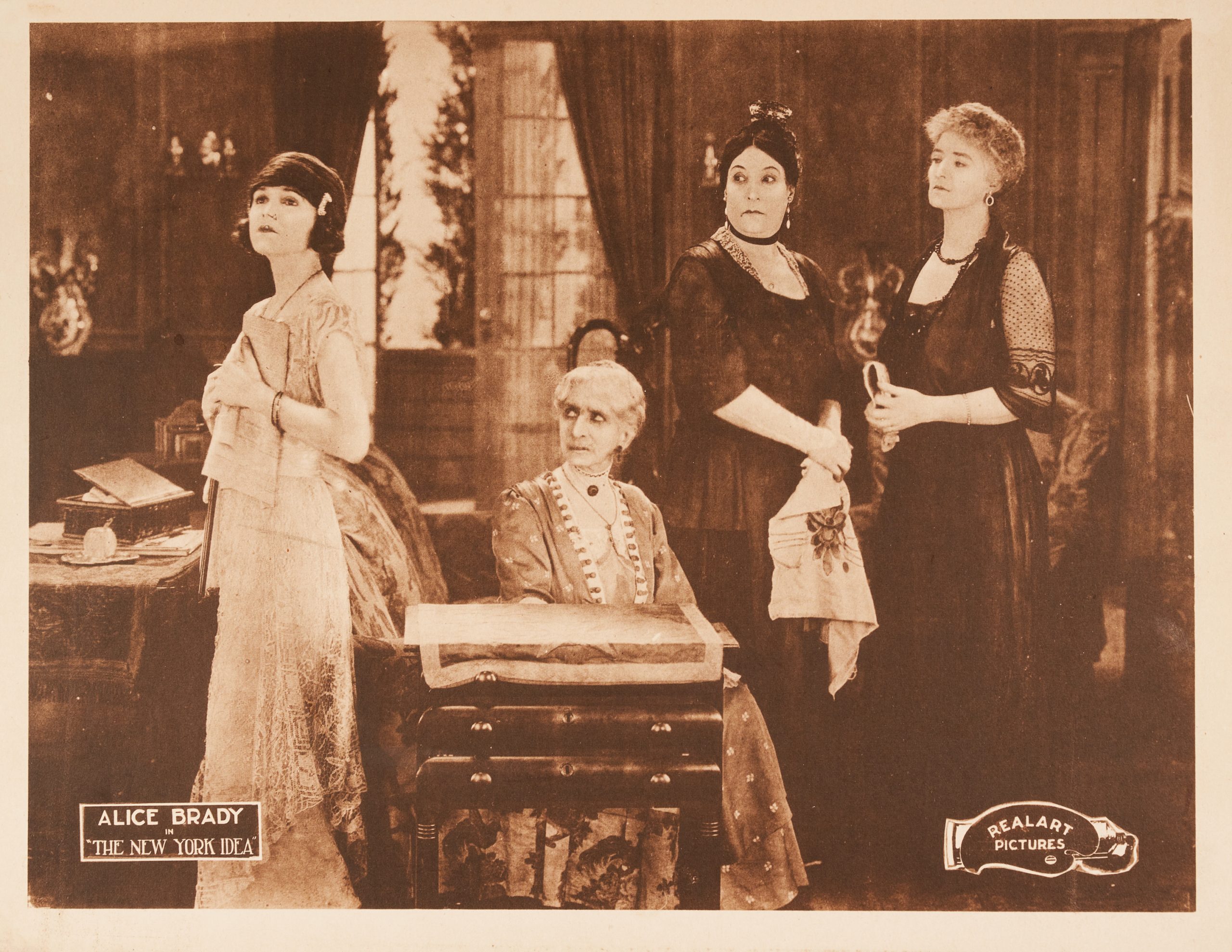
A sepia lobby card featuring three older women giving judgemental looks at a proud-looking woman.

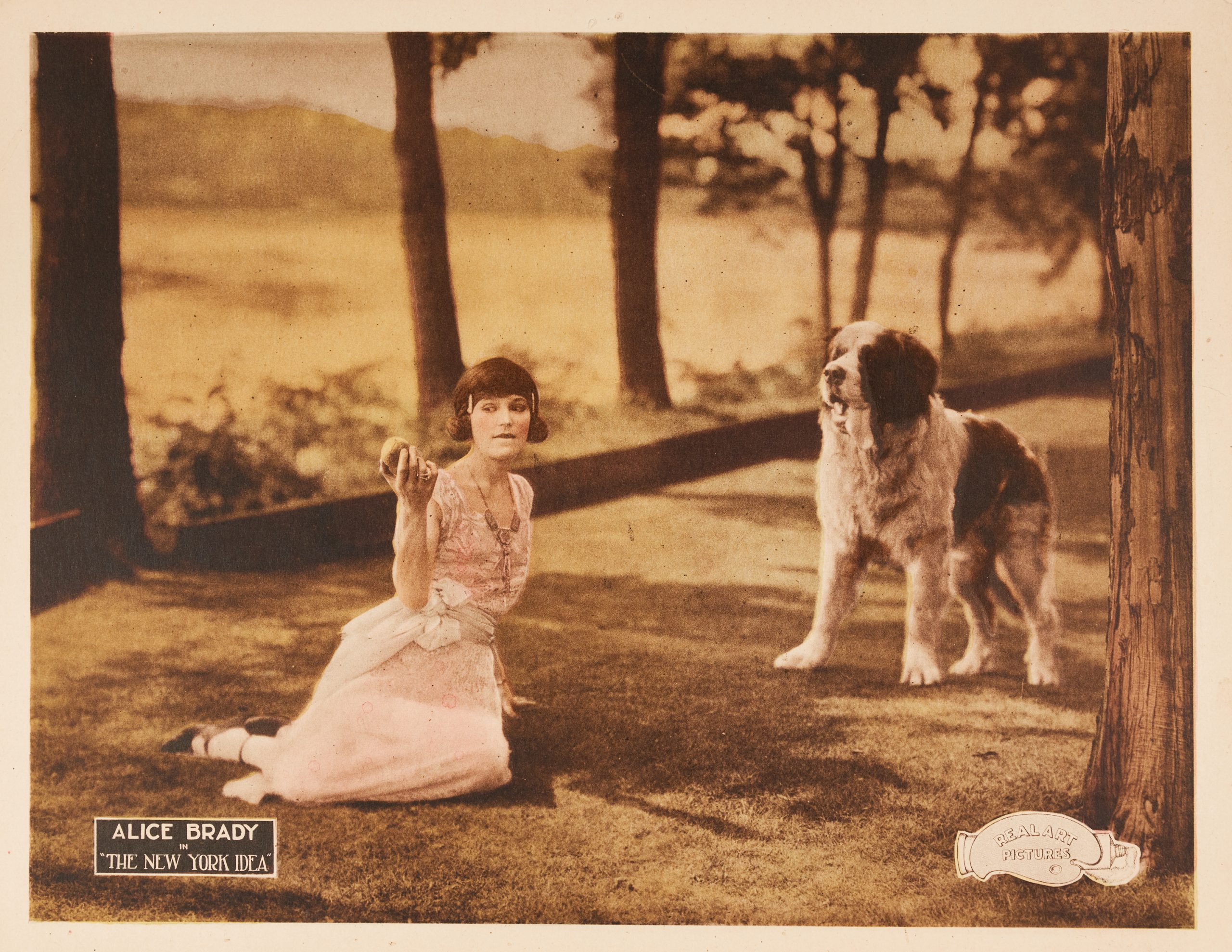
A lobby card featuring a woman sitting in the grass with a dog.

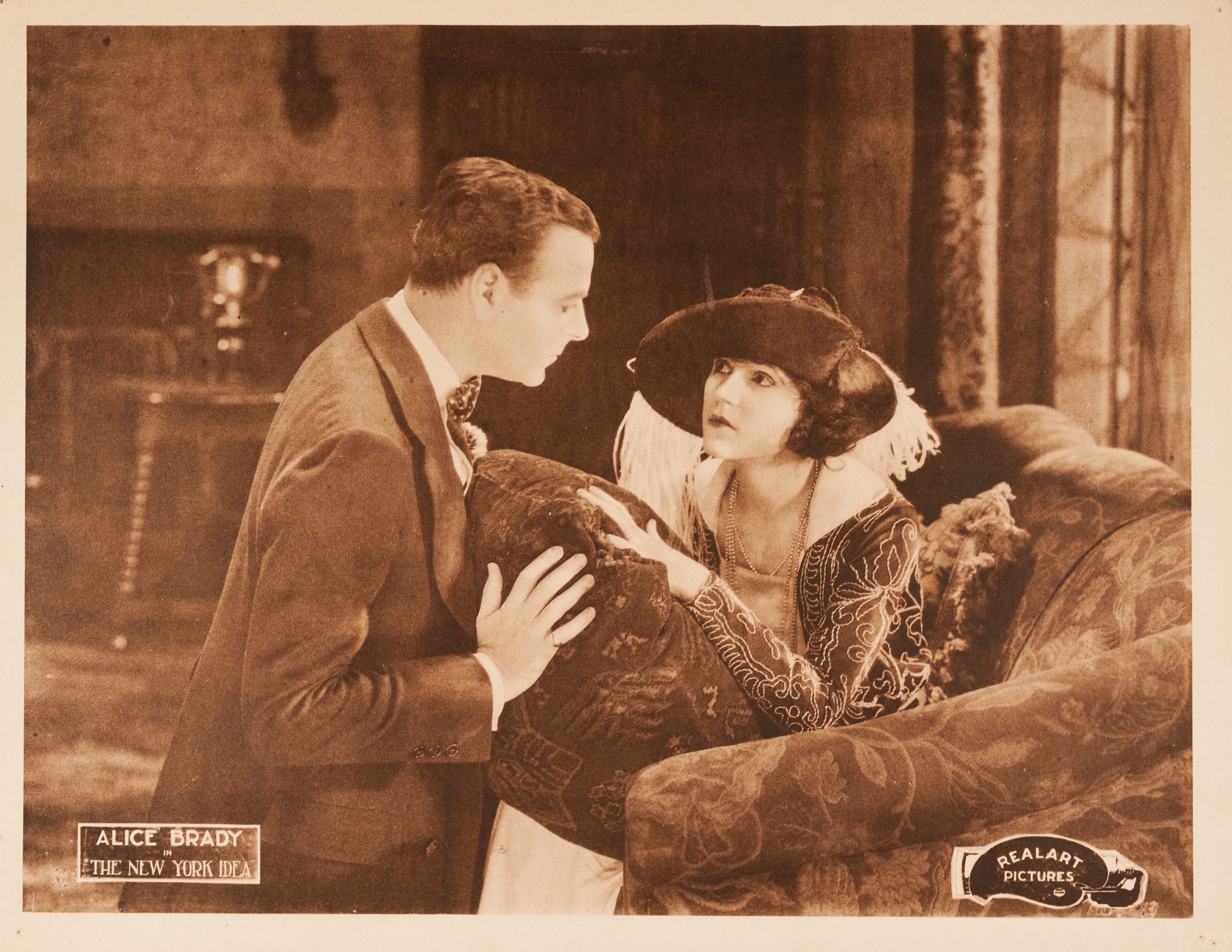
A sepia lobby card showing a man and woman looking intensely at each other on the couch.

The New York Idea, 1920

Survives Complete
Director: Herbert Blaché (1882–1953)
Writer: Mary Murillo (1888–1944)
Star: Alice Brady (1892–1939)
Costume Design: Lucy Duff-Gordon (1863–1935)

  • Written by Mary Murillo, The New York Idea follows a young bride who decides to divorce her husband because he is too much admired by other women. While the concept of a wife proposing divorce would have been seen as progressive at the time, the movie ends (unsurprisingly) with reconciliation, reinforcing the status quo. 
  • In 1910, Alice Guy Blaché (the wife of the film’s director) founded Solax, her own production studio, doing well enough to build a new facility in Fort Lee, New Jersey the following year. She retained ownership of the studio through its various iterations, even after 1918 when she moved to Hollywood as the film industry was becoming more centered on the West Coast. She separated from her husband in 1920, but they maintained an amicable professional relationship.
  • Despite Alice Guy Blaché’s trailblazing success as a director, screenwriter, and producer, her Hollywood career ended two years after this film was released, and she returned to France. Like many women in the industry, she was unable to find work, and fought unsuccessfully to get her films preserved and remembered up until her death.

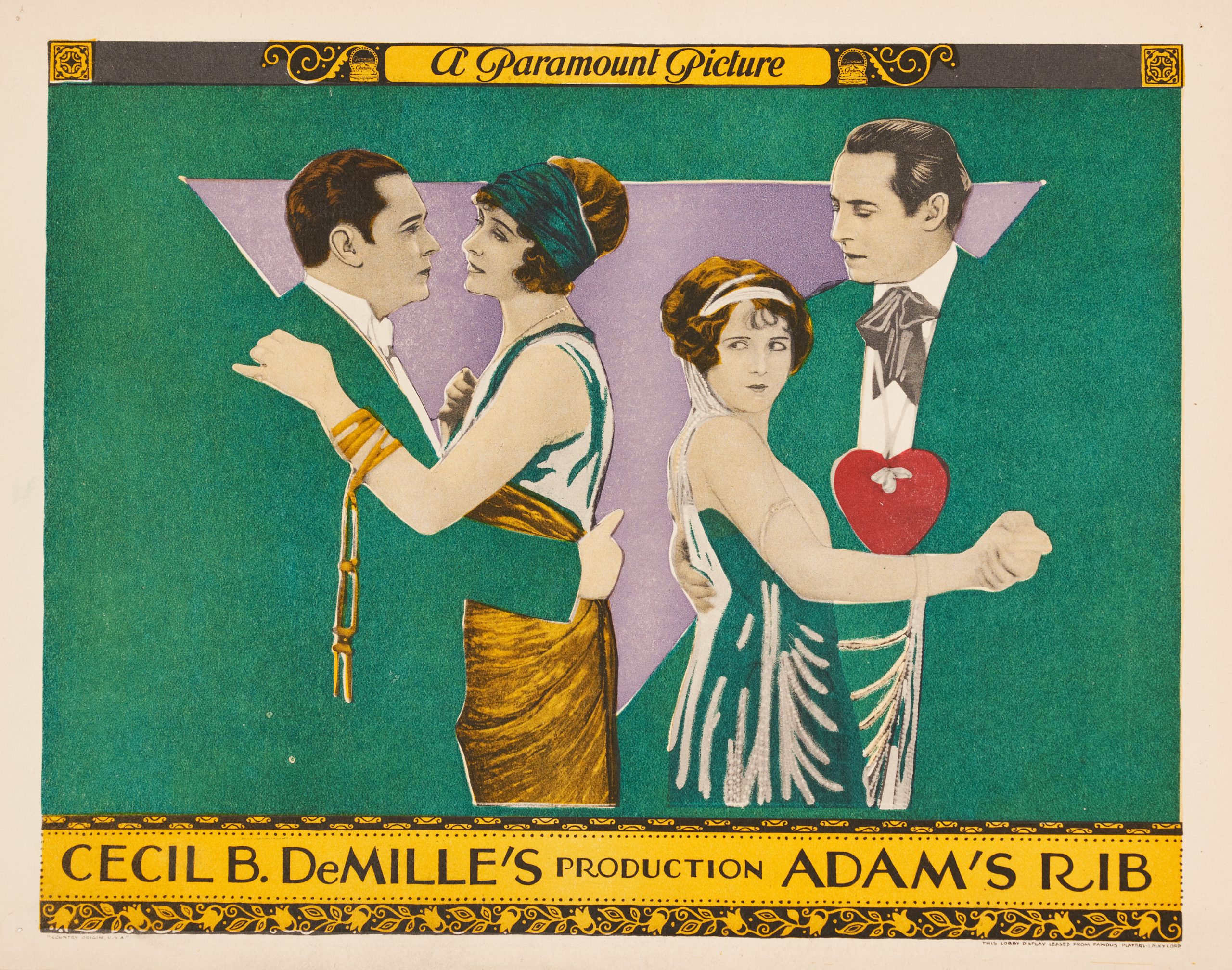
An illustrated lobby card showing two couples dancing. One woman looks over her shoulder at the other couple suspiciously.

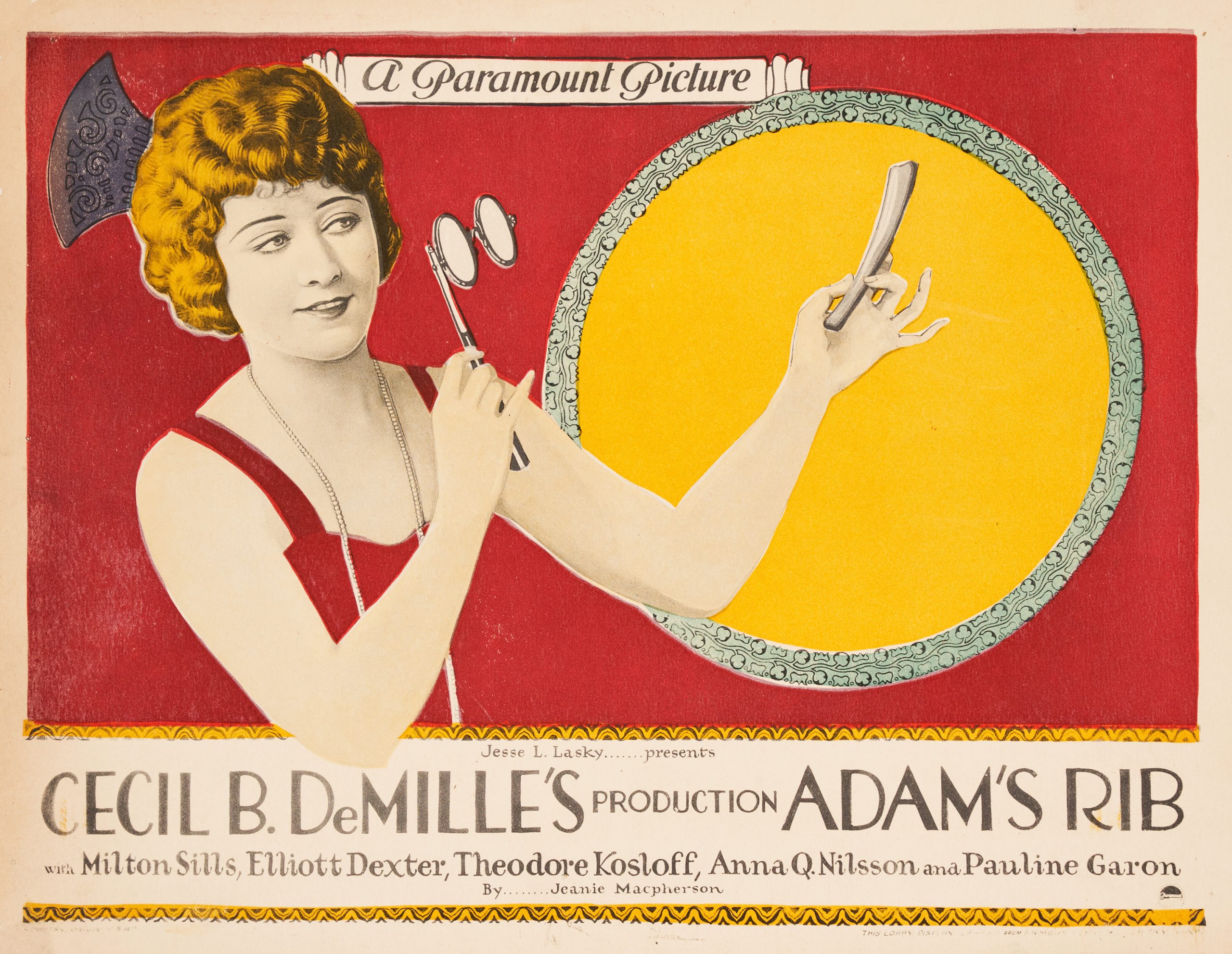
An illustrated lobby card showing a woman using glasses to look at a rib bone held at arm's length.

Adam’s Rib, 1923

Survives Complete
Director: Cecil B. DeMille (1881–1959)
Story/Screenplay: Jeanie Macpherson (1886–1946)
Film Editing: Anne Bauchens (1882–1967)
Costume Design: Clare West (1889–1980)
Star: Anna Q. Nilsson (1888–1974)

  • Many women were involved behind the camera in the production of Adam’s Rib, including the screenwriter Jeanie Macpherson, the film editor Anne Bauchens, and the costume designer Clare West. 
  • Macpherson had a long partnership with the powerful director Cecil B. DeMille, writing more than 30 of his films. It was revealed only after DeMille’s death, however, that Macpherson had been one of his many mistresses, underscoring the complexities of her influence on Paramount Pictures in its various guises.
  • In 1940, Anne Bauchens became the first woman to win the Academy Award for editing—an area of filmmaking in which women have historically flourished, even as films made the transition to sound. The director is often seen as playing the central role in the shaping of a film but the editor is just as crucial to the final version of the story. 
  • These lobby cards are the most colorful in the exhibition, and are printed through lithography rather than being hand tinted.
“In its heyday, Hollywood reflected, if it did not actually produce, the sexual climate of our land.”Anita Loos, screenwriter 

A lobby title card featuring portraits of the lead actor and actress with colored-in yellow accents.
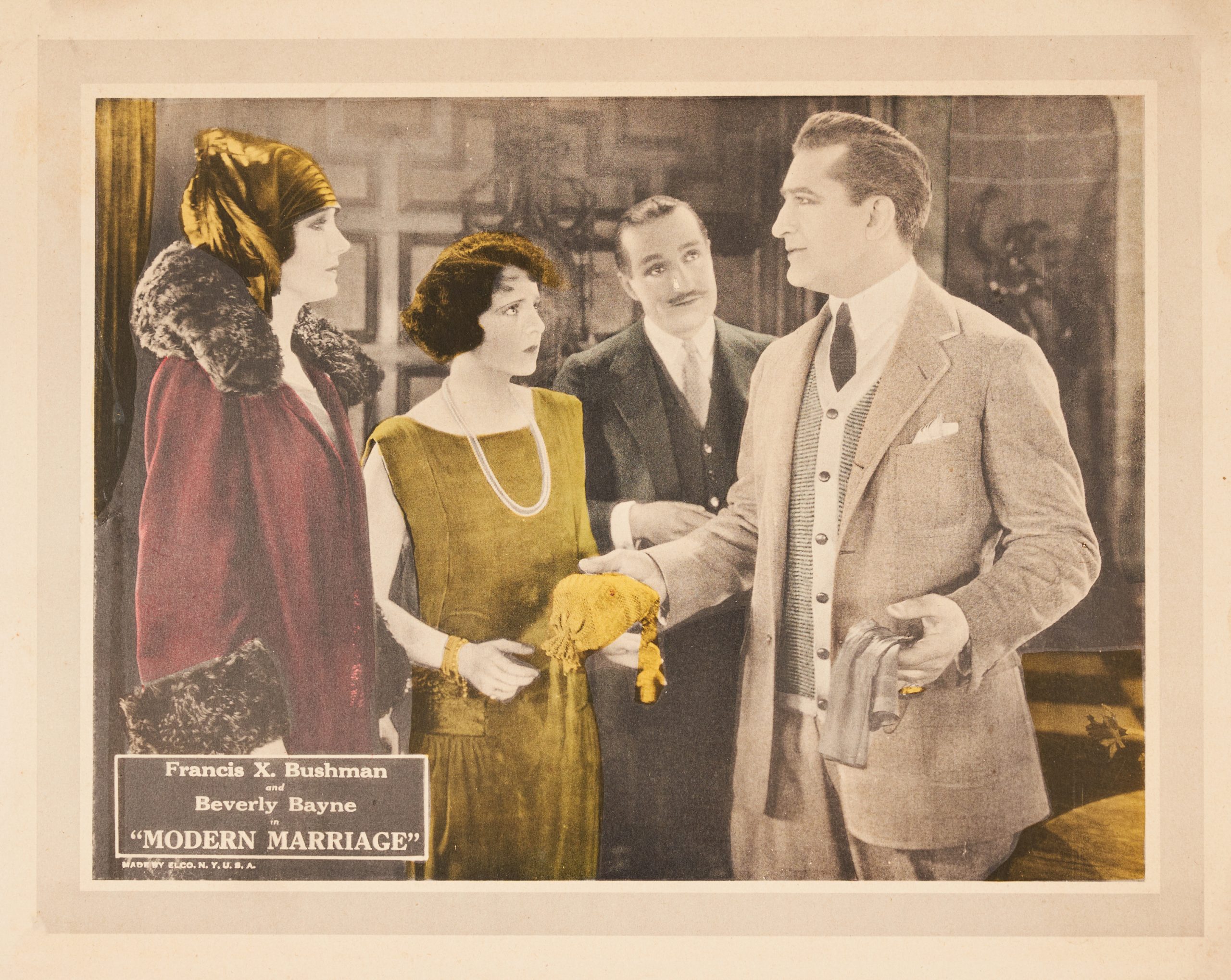
Partially colored-in lobby card with two women and two men. Man on the right holds out a yellow bag.

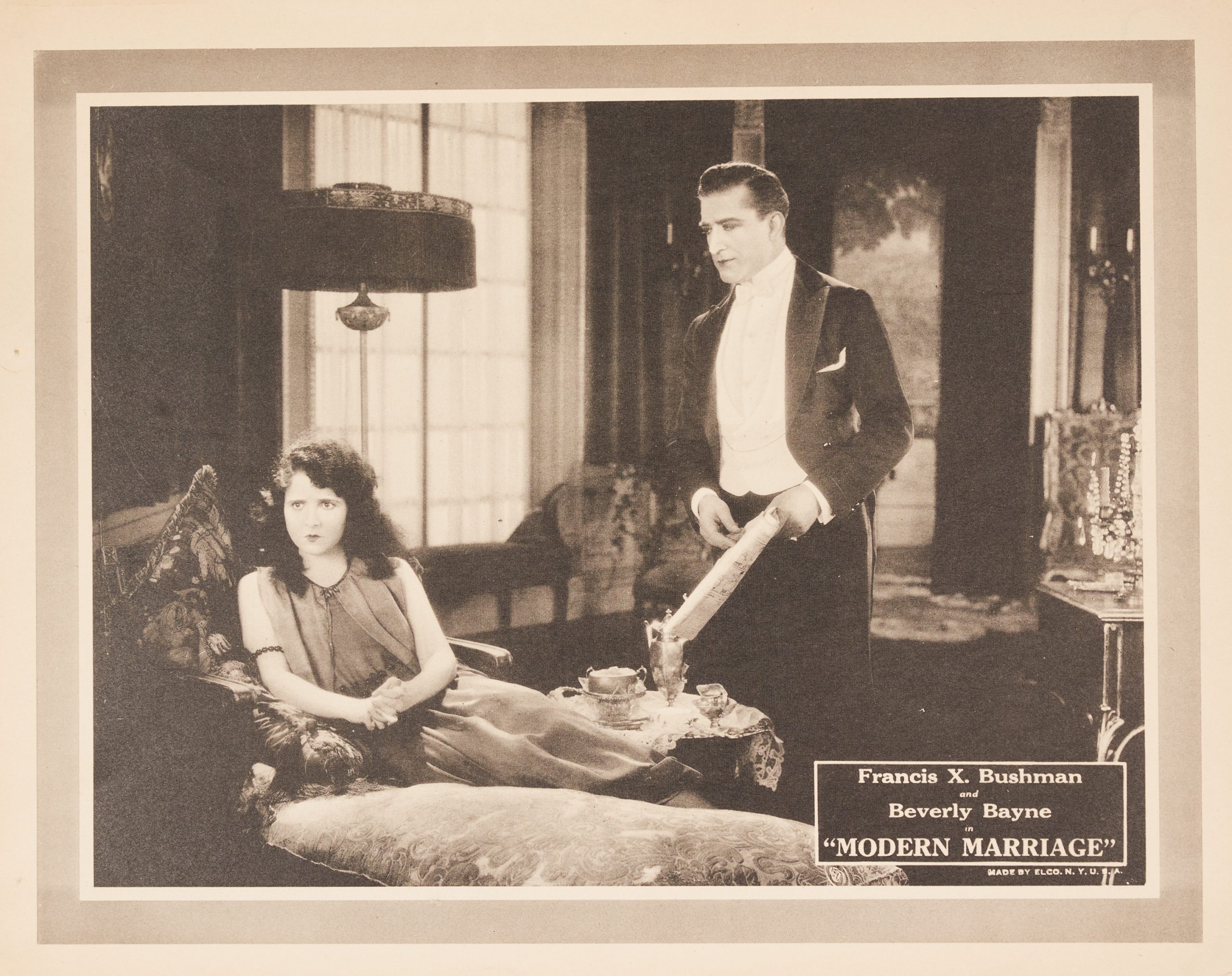
A lobby card showing a woman sitting, looking upset and gazing ahead, while a man looks over her.

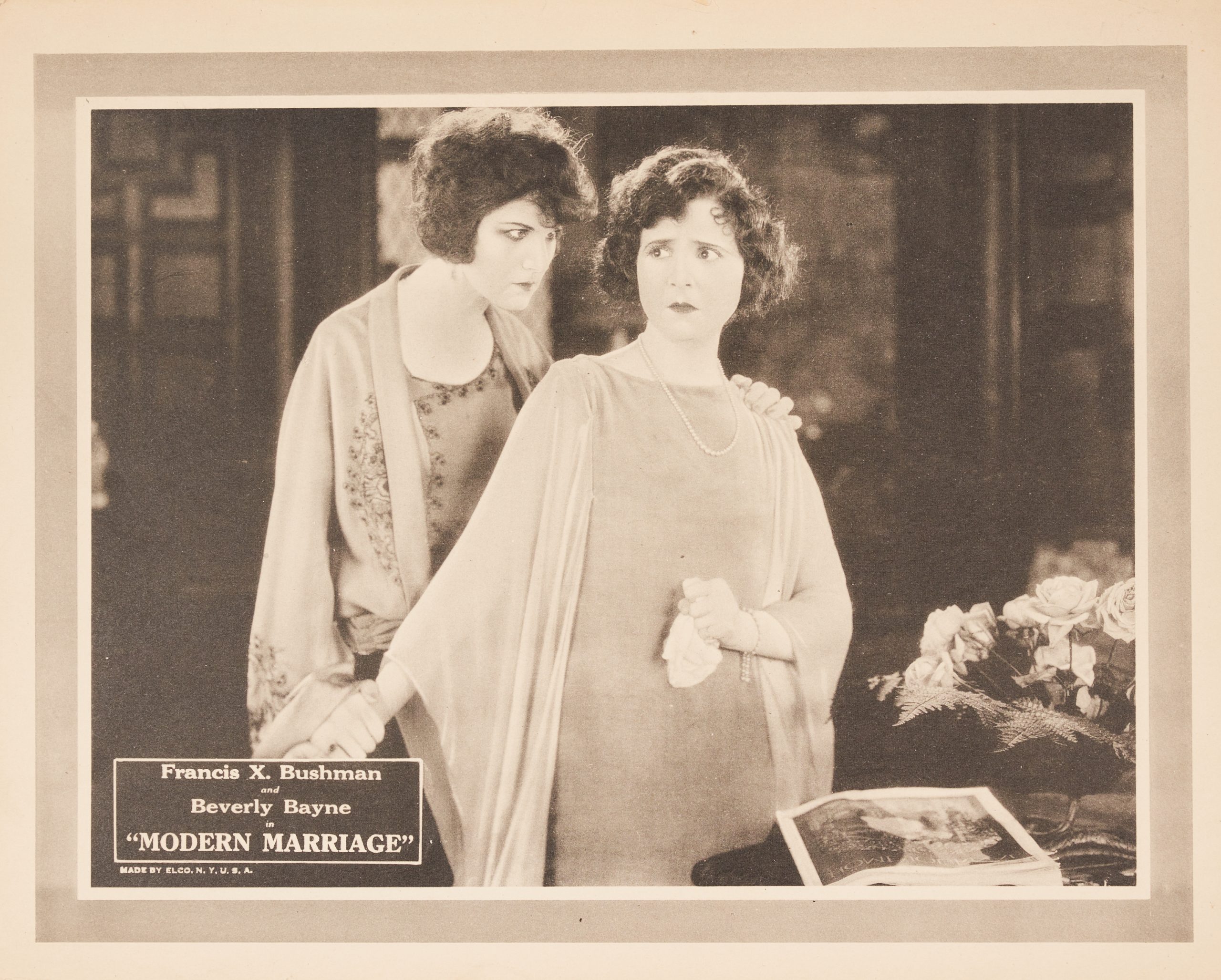
A lobby card with a woman looking upset while another woman clutches and gazes at her menacingly.

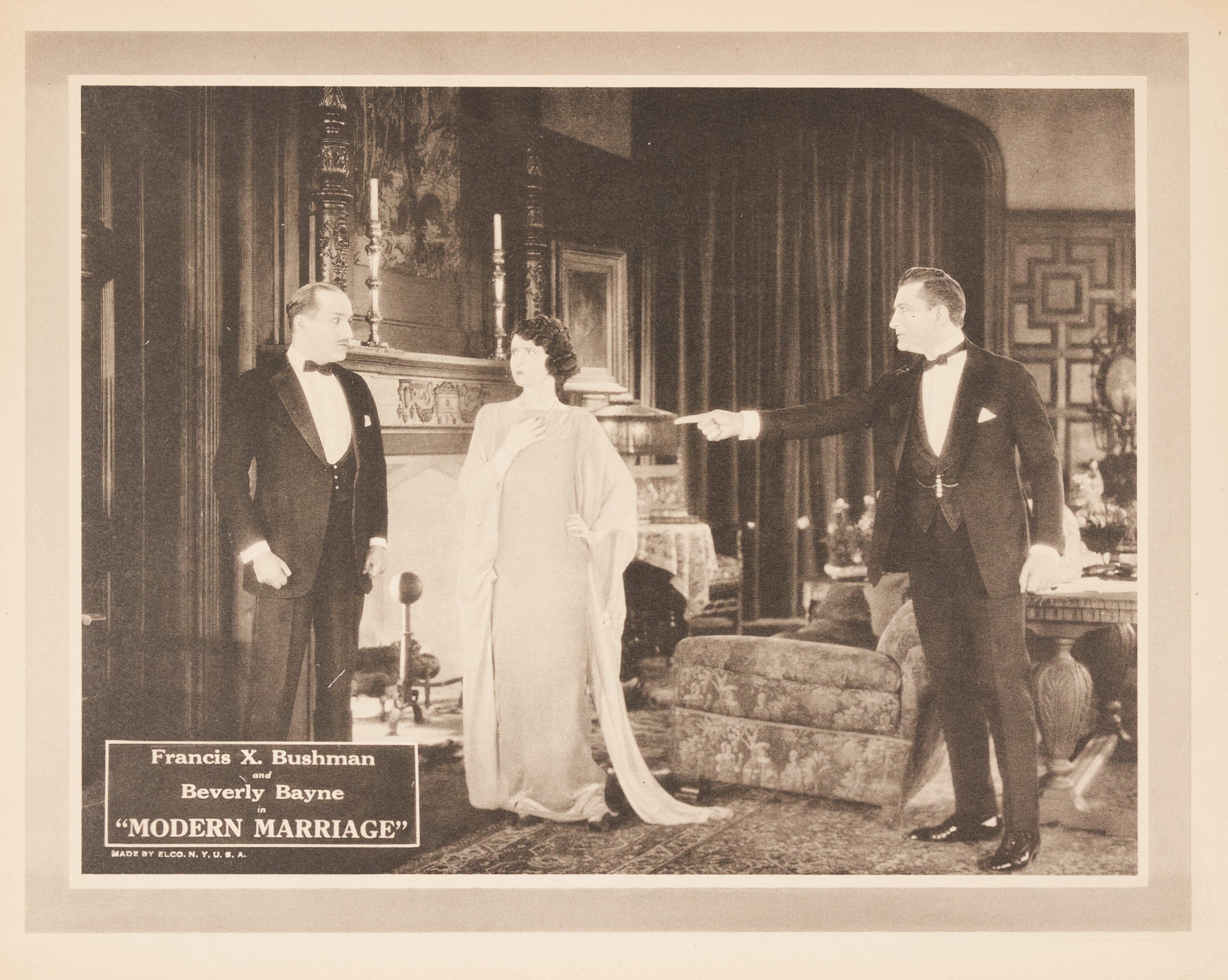
A lobby card with a woman and two men in a parlour. One man points his finger at the other man.

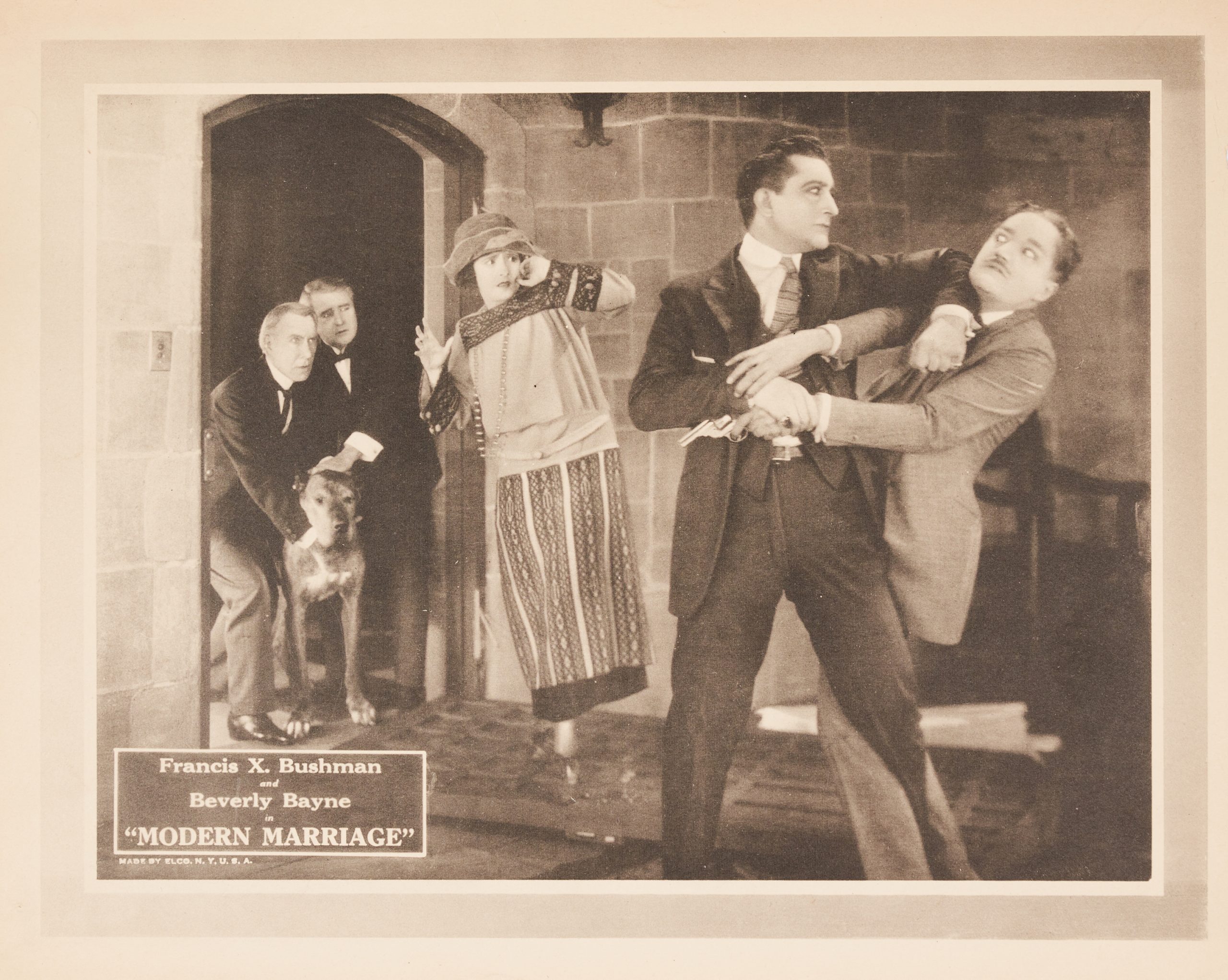
A lobby card showing two men fighting while a woman recoils and two other men hold back a dog.

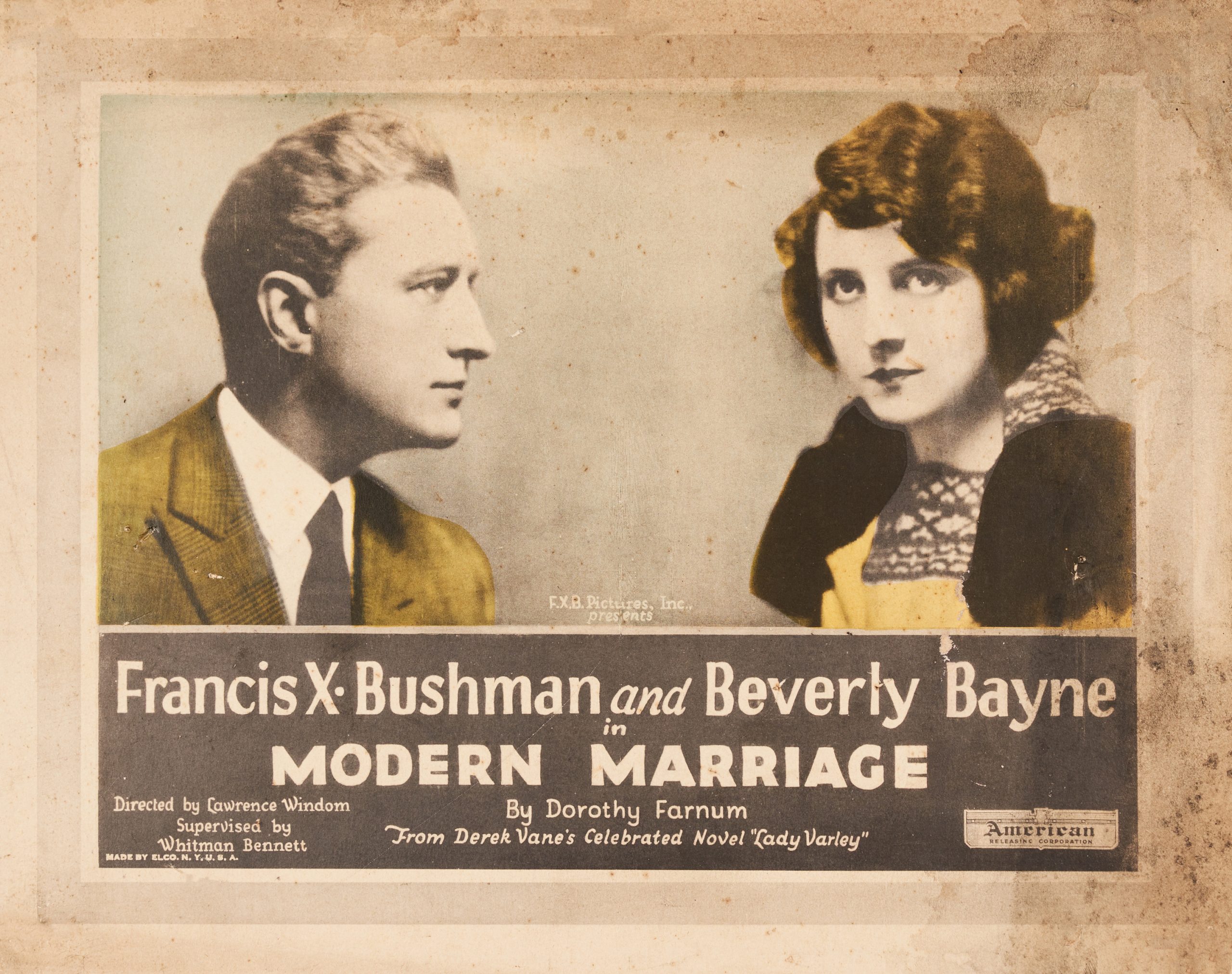
Modern Marriage, 1923

Survives Complete
Director: Lawrence C. Windom (1872–1957)
Adaption: Dorothy Farnum (1900–70)
Art Director: Elsa Carmen Lopez (Dates Unknown)
Star: Beverly Bayne (1894–1982)

  • Dorothy Farnum was a longstanding screenwriter in Hollywood, writing scenarios for MGM, Warner Brothers, and United Artists. At her peak in the late ’20s, she was earning $2,500 a week (equivalent to around $40,000 today). 
  • Much less is known about the art director Elsa Lopez, whose credits include just three movies. Many women who worked behind the scenes were written out of film history, or had work that was undervalued, ignored, or marginalized as the industry moved into the era of talking pictures and the film canon as it is known today was formed. 
  • The melodramatic plot of Modern Marriage deals with infidelity, blackmail, and murder. Off-camera, the stars themselves were attempting to remedy a public relations nightmare: Francis X. Bushman had divorced his wife to marry lead actress Beverly Bayne, and the public scandal was threatening to destroy their respective careers. While salacious content in film typically resulted in excellent ticket sales, such behavior in real life tended to be met with outrage.

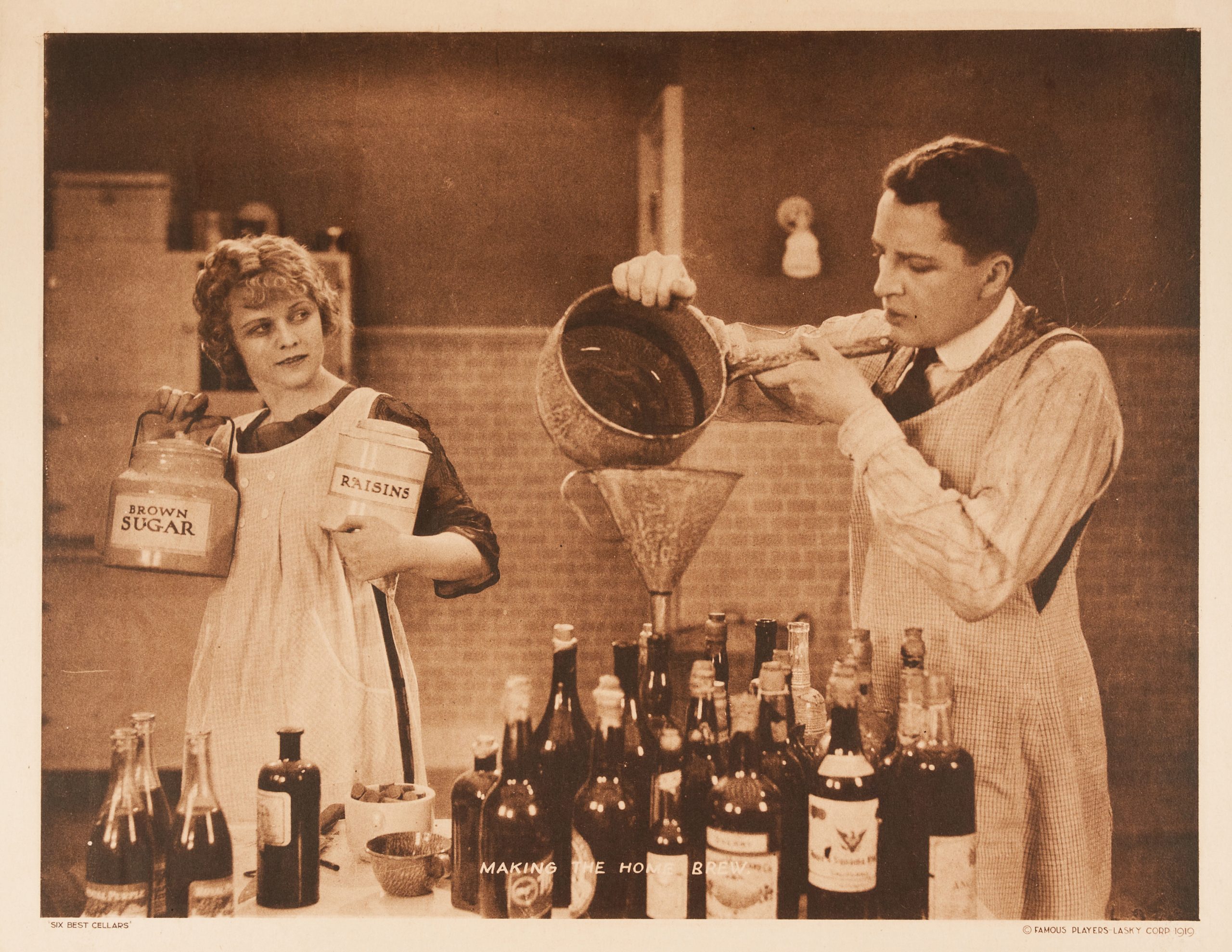
A sepia lobby card of a couple in a wine cellar. The man pours liquid into a funnel amid several bottles.

Six Best Cellars, 1920

Lost Film
Director: Donald Crisp (1882–1974)
Editing: Dorothy Arzner (1897–1979)
Star: Wanda Hawley (1895–1963)

  • While only an editor on this film, Dorothy Arzner would go on to have an illustrious career as a director in Hollywood, becoming the first woman to join the newly formed Director’s Guild of America, in 1933. She was, however, an outlier in the profession after the 1920s, when unions and studio investors deemed women not reliably profitable. 
  • This is one of the simplest lobby cards on display, lacking any decorative details in the margins or descriptive text relating to the plot. The image is nevertheless intriguing, showing the couple attempting to fill liquor bottles with an unknown substance.

Acknowledgements

Curation
Melissa Walker

Exhibition Design
Ola Baldych

Special Thanks
Kate Saccone, The Women Film Pioneers Project