Tokyo Olympiad: A Global Film
The 1964 Tokyo Olympics represented a turning point in the modern Olympic games. They were the first to be held in Asia, as well as the first to be broadcast around the globe via satellite, with many viewers able to tune in and watch in full color for the first time. The Allied Occupation of Japan following World War II had only ended in 1952, and Japan was now poised to reintroduce itself on the world stage as a modern, sophisticated, and peaceful country. Never before had so much rested on the public’s perception of a host city.
Traditionally, the International Olympic Committee (IOC) pays for each Games to be filmed as a matter of historic record. Eager to be seen in a positive light, the Japanese government opted to fund the film itself, originally hiring Akira Kurosawa (best known for such legendary films as Rashomon and Seven Samurai) to direct. However, his creative demands, including an inflated budget and control over the Opening Ceremony, ultimately led to his dismissal, with Kon Ichikawa (The Burmese Harp, Fires on the Plain) taking over as his replacement. The result was a movie that turned the traditional notion of documentary filmmaking on its head, redefined the genre, and has come to be known as one of the greatest sports films of all time.
Like the organizers of the Games in Japan, Ichikawa saw Tokyo Olympiad as an opportunity to embrace cutting-edge technology. He hired hundreds of camera operators and technicians, providing them with more than 250 different types of lenses, high-speed cameras, and other state-of-the-art equipment to capture the action on 322,933 feet of celluloid. The subsequent widescreen CinemaScope footage—edited down to just 18,000 feet—is a dramatic mix of montage, intercutting, close-ups, freeze-frames, shadow shots, and slow motion, all of which come together to create a psychological impression of the Olympics rather than a purely documentary one. The final, three-hour cut released a few months after the conclusion of the Games was decried by the Japanese government as insufficiently patriotic, since it focused equally on winners and losers and failed to present a narrative record of the event.
Despite this, Tokyo Olympiad remained the highest-grossing film in Japan until 2001. It won a special award at the 1965 Cannes Film Festival where it received its international premiere, as well as the Olympic Diploma of Merit and two BAFTAs—one of which was the United Nations Award for embodying the principles of its 1952 charter. Indeed, the movie is more than just a record of the Olympics; it is a celebration of the grit, drive, and humanity of the athletes as they come together from around the world to strive for excellence. It is a story of unity and determination across borders, genders, races, and creeds.
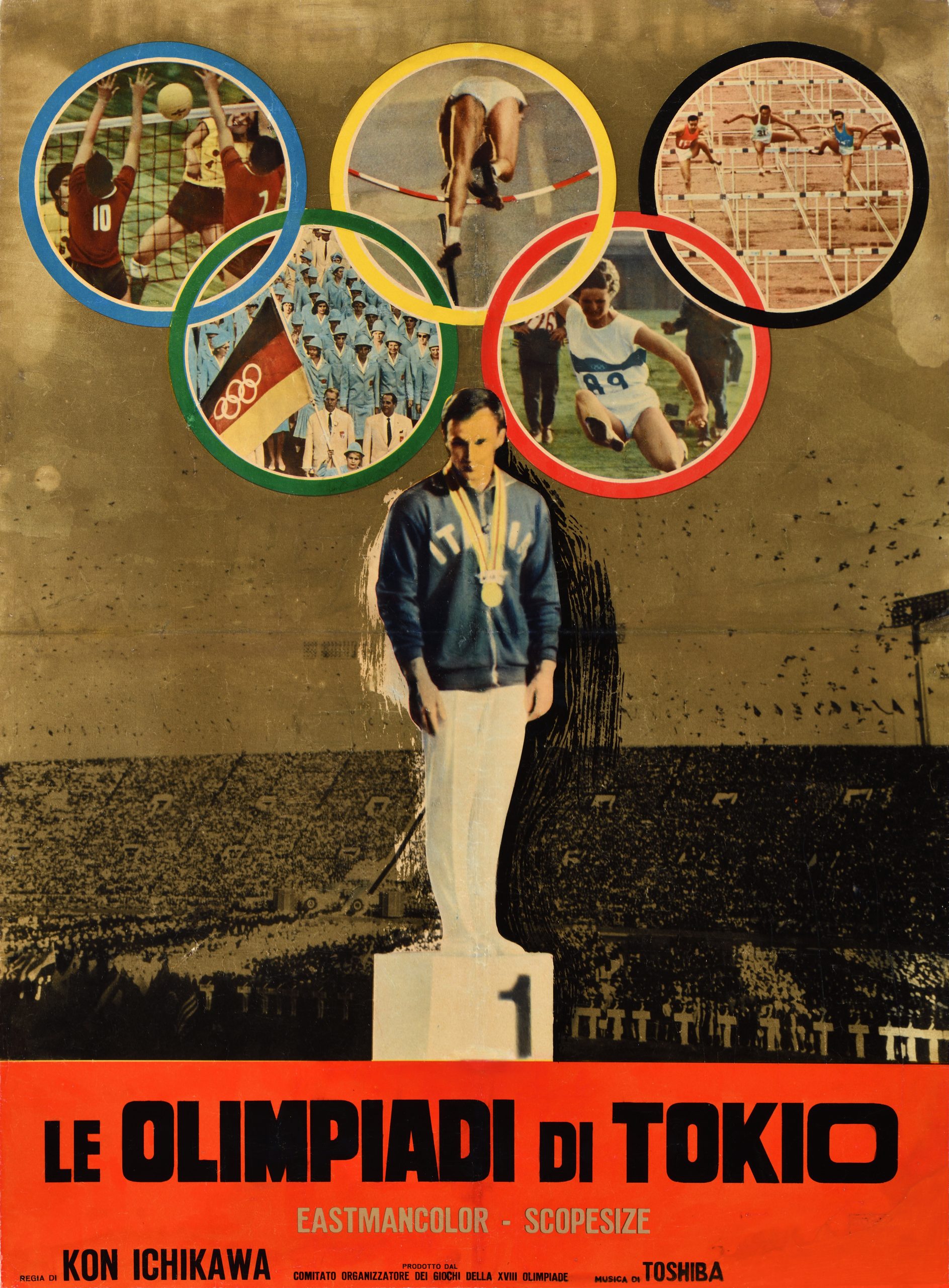
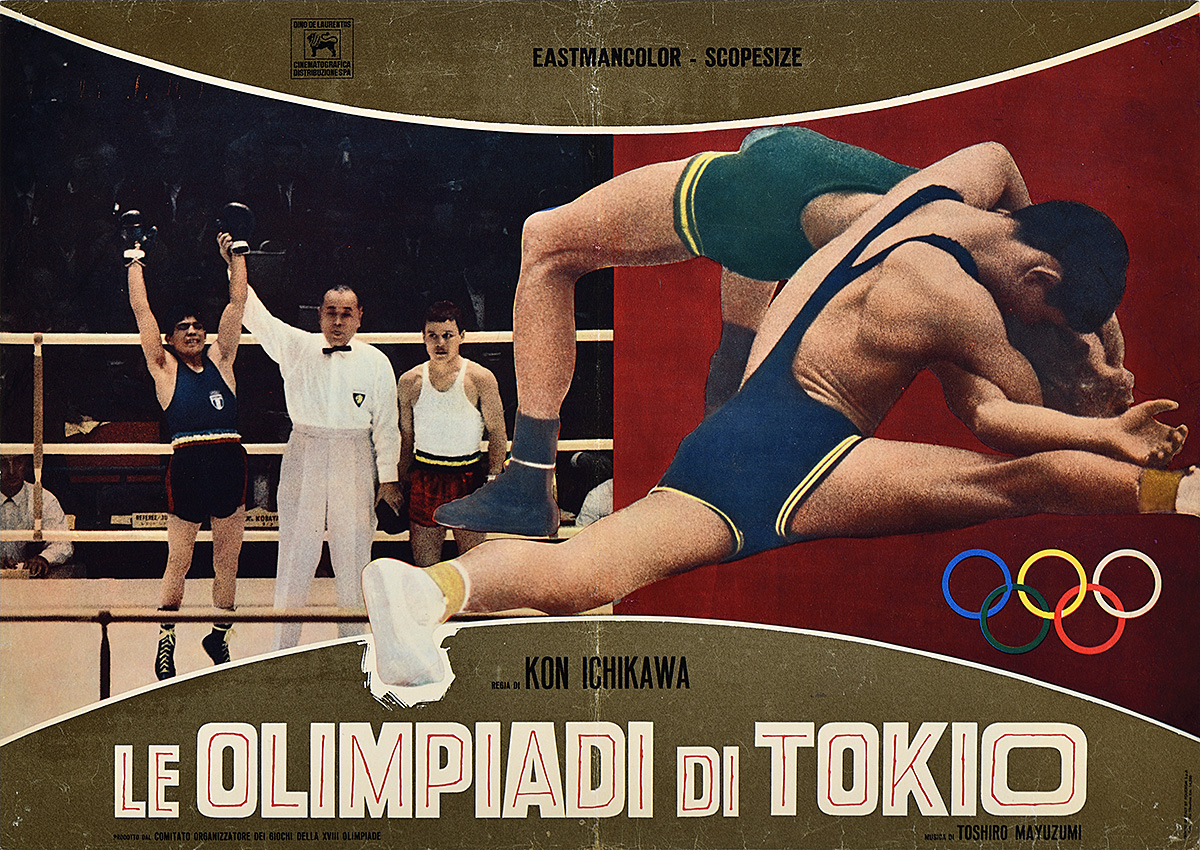
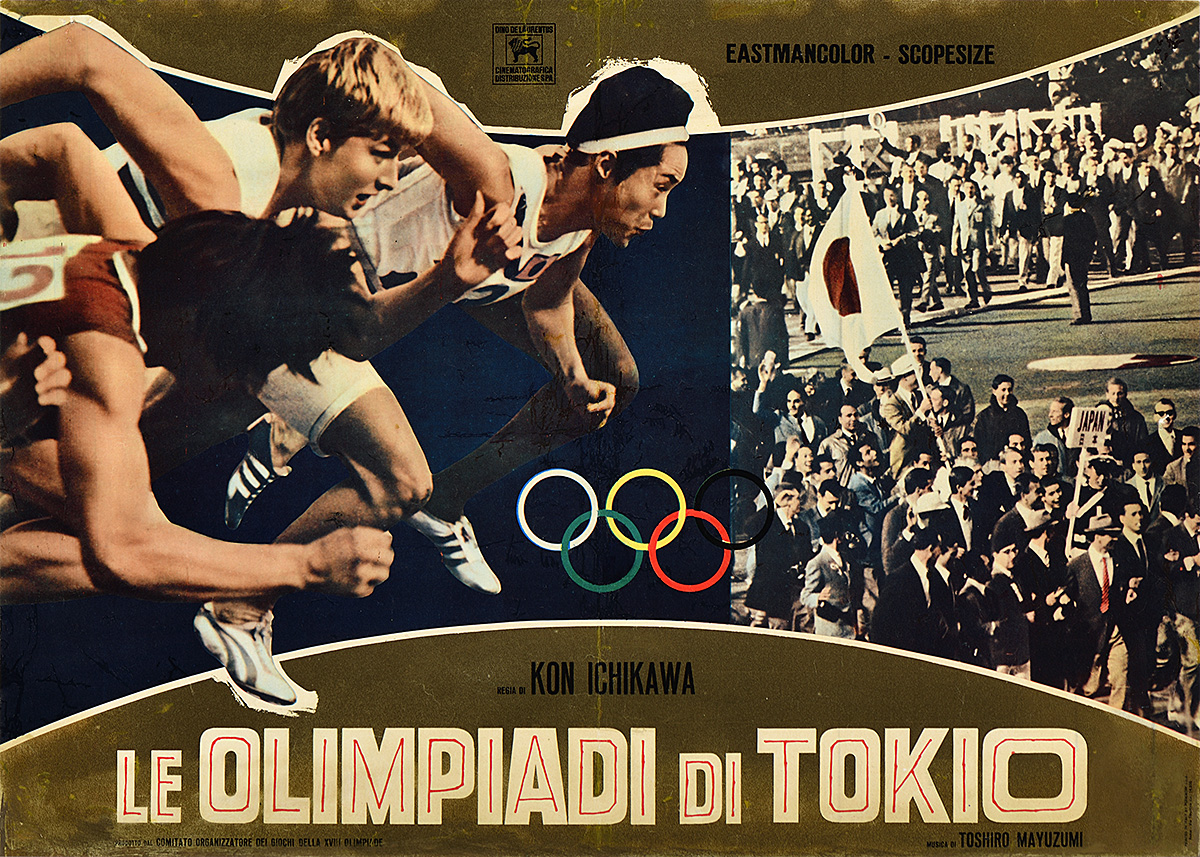
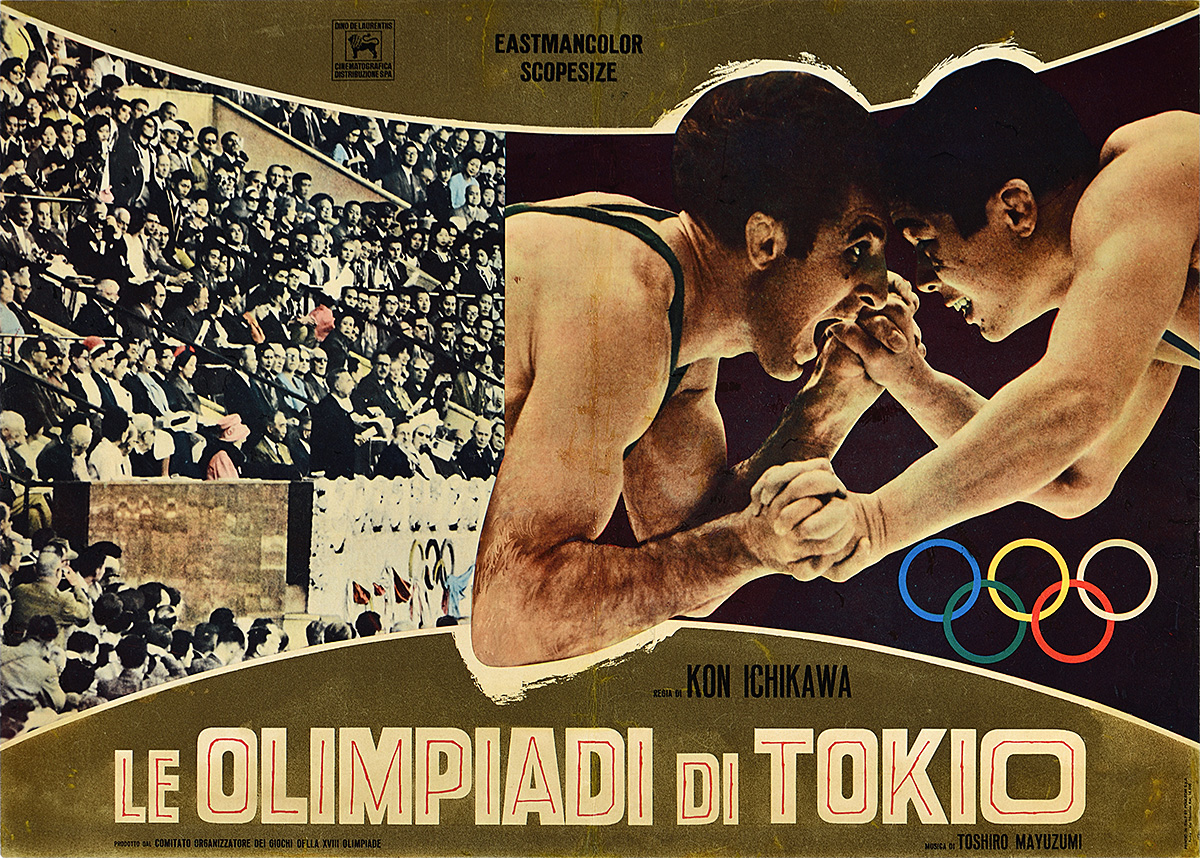
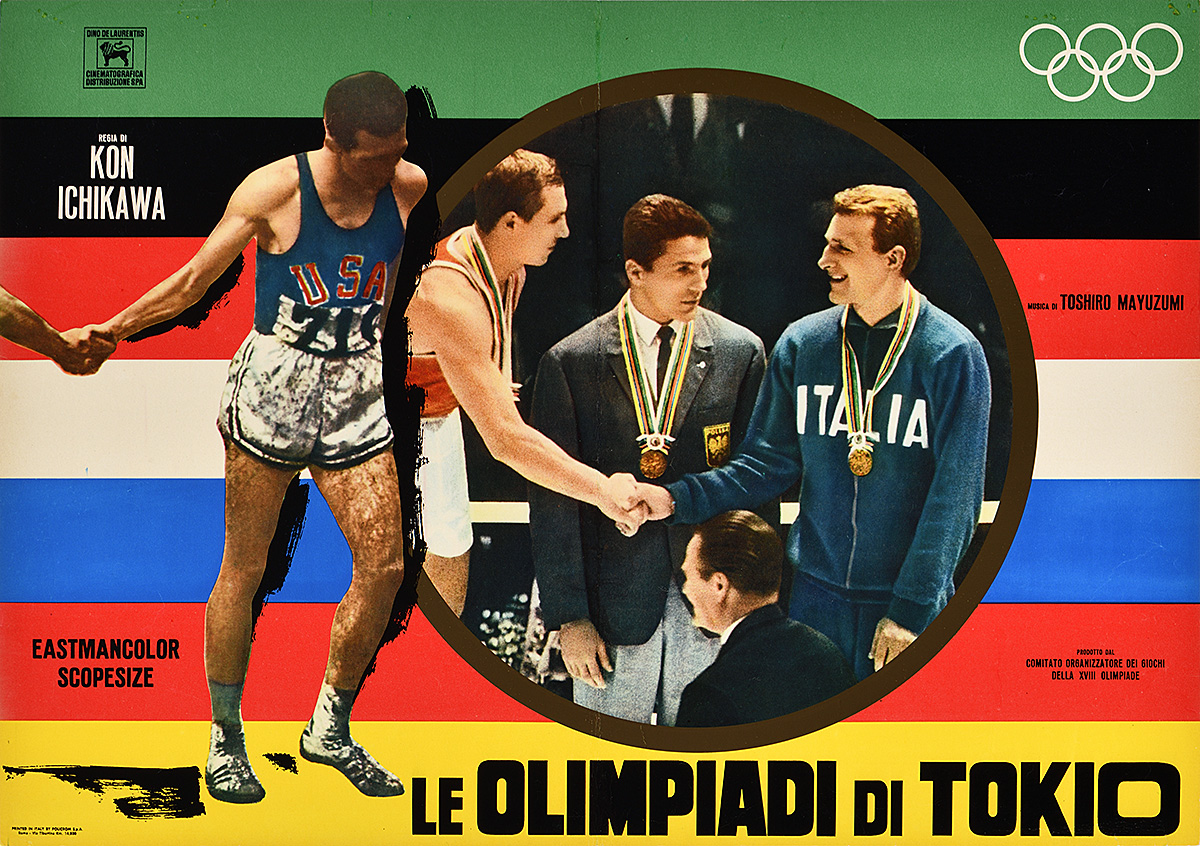
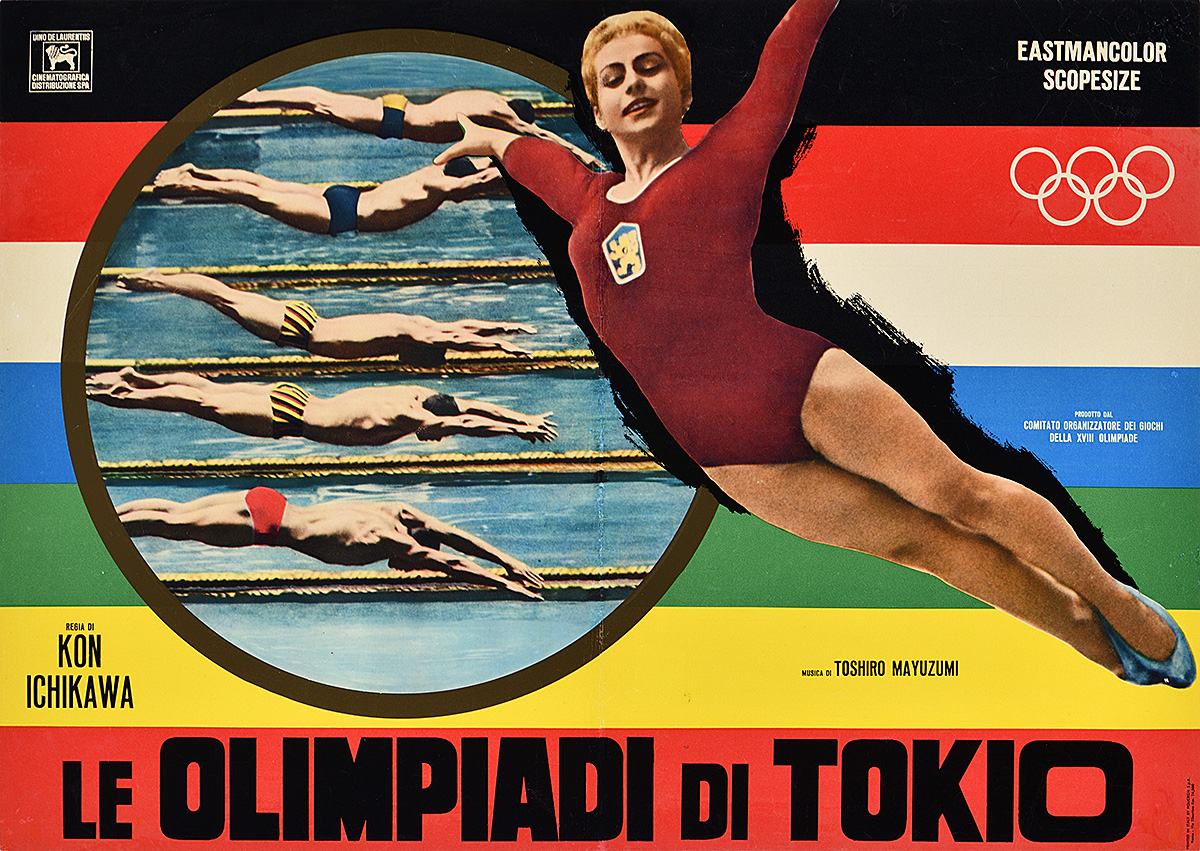
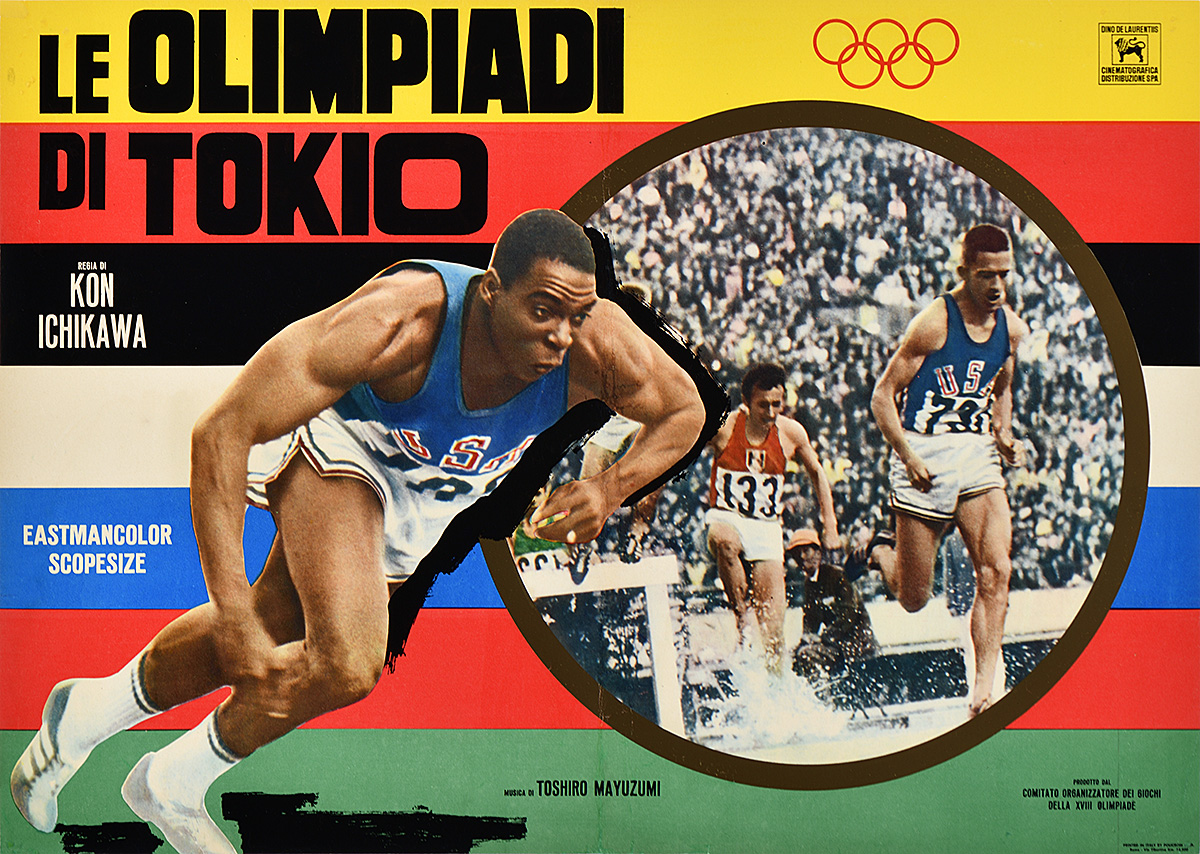
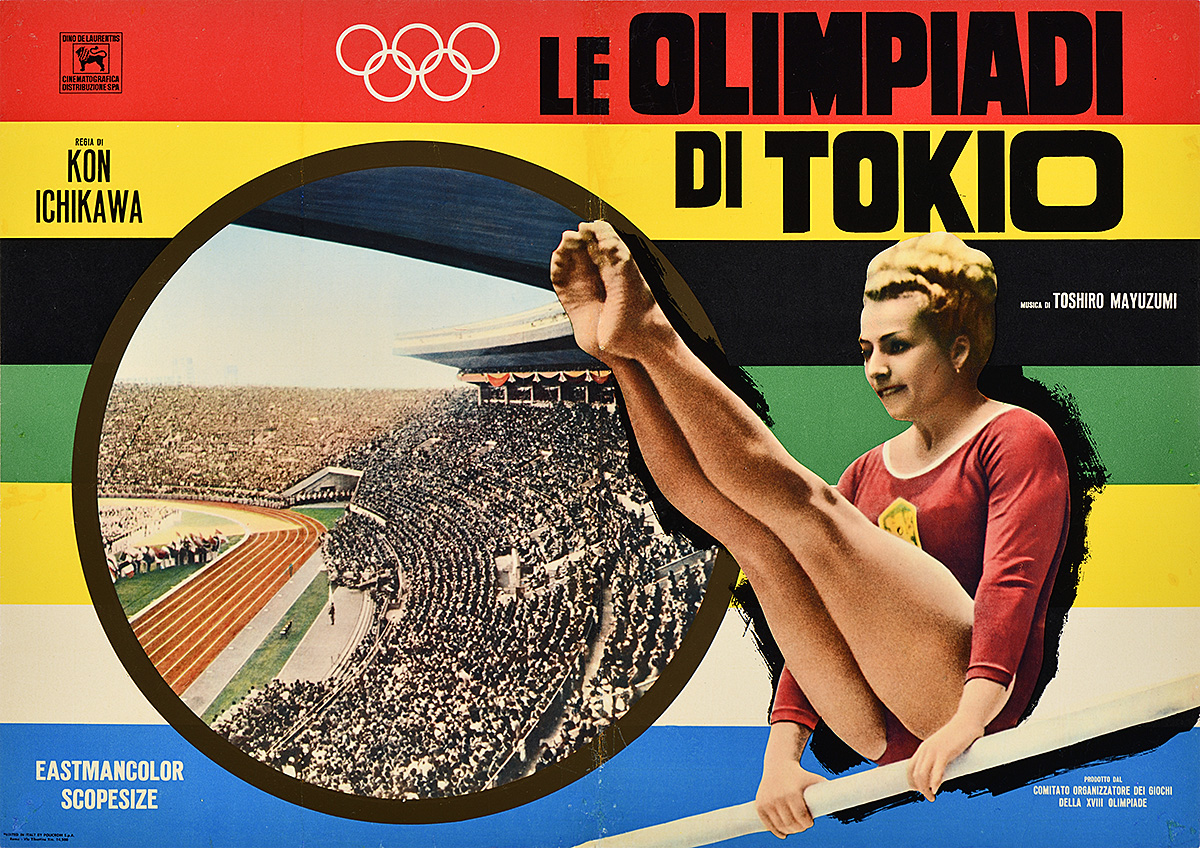
The posters on view here are for the Italian release of the film in November 1965 (eight months after its Japanese release but still a year before its premiere in the United States). As the film traveled around the world, distributors in each country produced their own posters, typically incorporating stills from the film. The design of these posters, put out by Dino De Laurentiis Distribuzione and printed by Policrom, is not credited to a specific individual but certainly reflects larger trends in Italian cinema posters of the time, including photomontage, saturated color, and the incorporation of painted or otherwise hand-produced elements. They are also the most distinctive of all the posters designed for the film’s global release, and feature athletes from a full range of sports and countries.
All posters are part of the Poster House Permanent Collection.